What to Eat When a GLP-1 Makes You Nauseated
Small meals and steady fluids can make eating more manageable, though evidence on which foods relieve GLP-1 nausea is limited.
Start with small amounts of food you can tolerate and keep drinking fluids. Try smaller meals at regular times rather than waiting until you’re very hungry.1 These are coping strategies, not proven treatments. Seek prompt medical advice for dehydration signs or repeated vomiting that keeps you from drinking.37 Sudden, severe abdominal pain calls for emergency care.7
Start with what feels possible
Nausea is a common gastrointestinal side effect of GLP-1 medicines, including semaglutide and liraglutide, and of the related medicine tirzepatide. In a review of randomized trials involving adults receiving these medicines alongside dietary or lifestyle guidance, gastrointestinal symptoms remained common. That’s why a food plan can help you get through a rough stretch without promising to make the nausea disappear.5
If you feel queasy but can eat, make the next meal smaller and simpler. For example, you might try a few crackers or plain toast, then see whether yogurt, a banana or an egg sounds manageable later. These are options to try, not a tested GLP-1 nausea menu or foods specifically identified as bland in the general guidance. That guidance favors bland foods and suggests avoiding spicy or fatty foods when they make symptoms worse. A joint professional advisory on GLP-1 nutrition favors regular, small meals, flexibility in food choices and adequate fluids over large meals or long stretches without eating.31
There’s no need to force the same food every day. If a rich takeout meal sounds unappealing, a smaller serving of a familiar food may be easier to face. If smells set off your nausea, choosing food with less cooking odor is another reasonable adjustment; strong smells can be a nausea trigger.3
Keep fluids in the picture
When eating is difficult, drinking still matters. If you’re having trouble keeping liquids down, try small amounts of clear liquid often. Small sips of water or ice chips may feel more manageable than a full glass. Vomiting and too little fluid intake can both lead to dehydration.34
Pay attention to what happens after you drink, not just what happens after you eat. Dry mouth, urinating less often or dark urine are signs to contact a care provider promptly. If you repeatedly vomit and can’t keep fluids down, get urgent medical advice rather than relying on another food swap.37
Build back toward varied meals
Plain food may be all that appeals to you during a bad spell. Once you can eat more comfortably, add variety rather than treating crackers as a long-term meal plan. For example, you could pair toast with an egg, have yogurt with fruit, or try a small portion of fish or tofu alongside a food you already tolerate. The GLP-1 nutrition advisory emphasizes fruits, vegetables, whole grains and protein-containing foods, while allowing food choices to flex with your needs. Tofu and other soy foods are protein options if meat doesn’t appeal to you.12
The tradeoff is simple: keeping food mild and portions small may make a meal more approachable, but eating too little for an extended period can make it hard to meet your nutritional needs. If nausea keeps shrinking what you’re able to eat, tell your prescriber. A registered dietitian can also help adapt meals to your preferences and nutritional needs.1
When food changes aren’t enough
A brief note on your phone can help you describe what’s happening: when nausea starts, whether you’ve vomited, what food and fluid you kept down, any abdominal pain, and whether symptoms changed after a medication dose change. It won’t diagnose the cause. It gives your prescriber more useful information than “I feel sick sometimes.” Gastrointestinal side effects can be dose-related, but nausea can have other causes too.53
Contact a care provider promptly if you have signs of dehydration, such as dry mouth, urinating less often or dark urine. If vomiting or abdominal symptoms persist, tell your prescriber rather than trying another food change. Don’t wait to see whether food changes help if abdominal pain is sudden and severe: seek emergency care. Abdominal pain with vomiting should not automatically be attributed to the medicine; nausea and vomiting can have other causes, including intestinal obstruction. Reports of delayed stomach emptying during GLP-1 treatment have also included vomiting, abdominal pain and difficulty tolerating food, although those reports cannot tell us how often that complication occurs.367
If pregnancy is possible, contact a care provider for assessment rather than assuming the nausea is from your GLP-1 medicine. Pregnancy is another potential cause of nausea and vomiting, and a pregnancy test may be part of the evaluation. Bring persistent symptoms to your prescriber so you can reassess the plan together.3
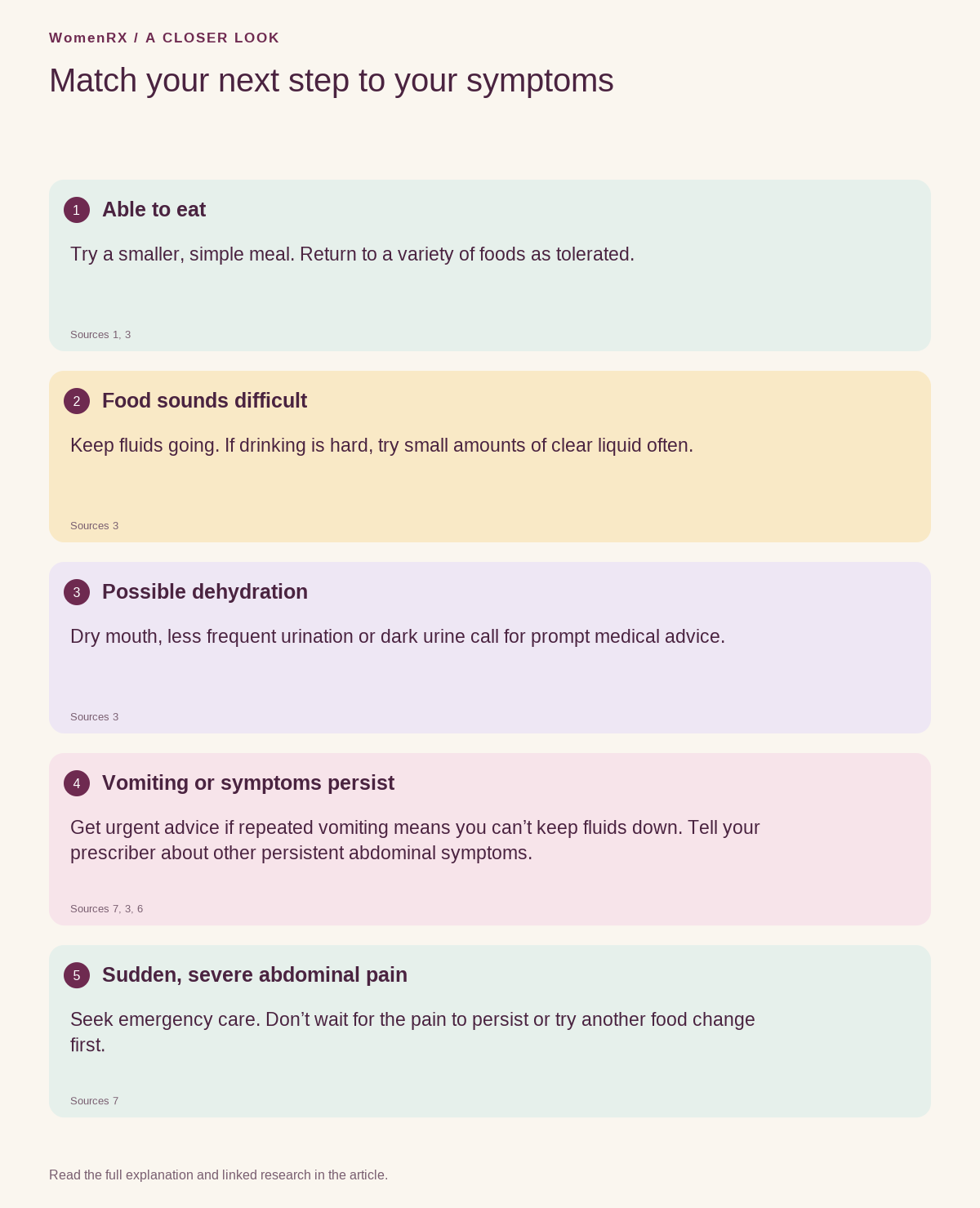
Match your next step to your symptoms
Able to eat: Try a smaller, simple meal. Return to a variety of foods as tolerated.13
Food sounds difficult: Keep fluids going. If drinking is hard, try small amounts of clear liquid often.3
Possible dehydration: Dry mouth, less frequent urination or dark urine call for prompt medical advice.3
Vomiting or symptoms persist: Get urgent advice if repeated vomiting means you can’t keep fluids down. Tell your prescriber about other persistent abdominal symptoms.736
Sudden, severe abdominal pain: Seek emergency care. Don’t wait for the pain to persist or try another food change first.7
Read the figure as text
Start with what you can keep down, then check whether symptoms call for care rather than another food change.- Able to eat: Try a smaller, simple meal. Return to a variety of foods as tolerated.13
- Food sounds difficult: Keep fluids going. If drinking is hard, try small amounts of clear liquid often.3
- Possible dehydration: Dry mouth, less frequent urination or dark urine call for prompt medical advice.3
- Vomiting or symptoms persist: Get urgent advice if repeated vomiting means you can’t keep fluids down. Tell your prescriber about other persistent abdominal symptoms.736
- Sudden, severe abdominal pain: Seek emergency care. Don’t wait for the pain to persist or try another food change first.7
More questions, answered
Does ginger or peppermint tea treat GLP-1 nausea?
The joint GLP-1 nutrition advisory lists ginger or peppermint tea among food and drink options, but it isn’t evidence that either tea treats medication-related nausea. If one appeals to you, think of it as a fluid you might tolerate, not a replacement for medical review when symptoms persist.1
Sources you can check
- Nutritional priorities to support GLP-1 therapy for obesity: four-society joint advisory2025Return to first citation
- MedlinePlus: Protein in diet, including tofu and other plant sourcesAccessed 2026-09-25Return to first citation
- Nausea | Vomiting | MedlinePlusAccessed 2026-09-25Return to first citation
- Dehydration: MedlinePlusAccessed 2026-09-25Return to first citation
- Dietary Strategies and Nutritional Management in Patients Receiving GLP-1 and Dual GIP/GLP-1 Receptor Agonists as Adjuncts to Lifestyle Interventions: A Systematic Review of Randomised Clinical Trials.de Paulo RS, Bonifácio DB, de Carvalho MHL, Bressan J. · Diabetes, obesity & metabolism · 2026Return to first citation
- Gastroparesis induced by glucagon-like peptide-1 receptor agonists: A systematic review of clinical features, diagnosis, management, and outcomes.Olubodun T, Osundina MA, Soyoye DO, de Oliveira NMB, Olubodun AB, Ogundele OO. · PloS one · 2026Return to first citation
- Diarrhoea and vomiting - NHSAccessed 2026-09-25Return to first citation