A Practical Lunch When You’re Taking a GLP-1
A smaller appetite doesn’t have to mean a less nourishing lunch: choose a format that fits your day and leaves room to stop when you’re full.
Start with a lunch you can adjust, such as a packed snack-style box, a reheatable bowl, or a no-cook yogurt-and-fruit meal. Include a protein food and some produce or whole grains, then serve an amount that feels manageable. GLP-1 treatment can reduce how much you want at one sitting, while large meals may be harder to tolerate. 15
Build a lunch you don’t have to finish at once
The most useful GLP-1 lunch isn’t a particular recipe. It’s one that gives you worthwhile food choices without requiring you to eat a large portion when your appetite is low. In a review of placebo-controlled meal tests, adults receiving GLP-1 or related therapy ate less at a standardized lunch than those receiving placebo. Those tests don’t tell us exactly what someone will eat during a workday, but they help explain why an old lunch routine might suddenly feel like too much. The results do not establish a women-specific effect. 5
A four-society nutrition advisory recommends attention to protein, varied nutrient-rich foods, fluids, and smaller meals rather than large ones during GLP-1 therapy. It also notes that personal protein needs vary. So think of the examples below as ways to assemble lunch, not measured meal plans. 1
Match the format to your day
Portable, with pieces you can eat separately: Pack an egg or tofu, whole-grain crackers, and cut vegetables or fruit. If you get full partway through, you can stop without having to abandon a single large sandwich. This format works when lunch might be interrupted by meetings, travel, or caregiving. Eggs and tofu are protein foods; produce and whole grains add variety. 12
Reheatable, with flexible portions: Try a bowl of lentils, vegetables, and brown rice, or leftover fish or poultry with vegetables and a whole grain. Put an amount you expect to manage in your lunch container and keep any extra as a separate meal. That’s easier than treating yesterday’s full dinner portion as today’s required lunch. Beans, fish, poultry, vegetables, and whole grains all fit the advisory’s food-group guidance. 1
No-cook, for a short break: Greek yogurt with fruit and nuts, or cottage cheese with fruit and whole-grain toast, can make lunch possible when cooking or reheating won’t happen. If dairy doesn’t suit you, tofu or edamame can be part of a plant-based lunch instead. Choose the version that fits your preferences. 123
These formats solve different problems. A snack-style box is easy to pause; a bowl makes leftovers useful; a no-cook lunch asks little of a busy day. No one format will fit every appetite and schedule.
When your appetite changes mid-lunch
If you often feel full before finishing, consider starting with the protein food rather than leaving it until last. That’s a practical suggestion from the nutrition advisory because getting enough protein can be harder when appetite drops. It doesn’t mean forcing yourself to finish or relying on protein alone: varied foods and adequate fluids still matter. 1
For example, you might eat some of the tofu and rice bowl at lunch and have the rest later. Or you might take a few items from a packed box and return to the others when you’re ready. A flexible lunch can have a place in your day without becoming a rigid eating schedule. The advisory favors smaller, fairly regular eating opportunities over long stretches without food followed by a large meal, while also recommending flexibility with food choices. 1
Nausea or other digestive symptoms can change which foods appeal to you. Rather than declaring any one food a universal ‘GLP-1-safe’ choice, keep a couple of workable lunch formats in mind and notice what you tolerate. If symptoms repeatedly keep you from eating or drinking enough, tell your prescribing care team; nutrition and hydration may need reassessment. 1 For people taking liraglutide, its US prescribing information warns that persistent or severe abdominal pain, sometimes spreading to the back and with or without vomiting, needs prompt medical attention rather than a lunch adjustment. 4
Keep the bigger picture in view
A small lunch can still contribute to a varied day of eating. In a small observational study of adults starting semaglutide or tirzepatide, food intake fell without a significant improvement in overall diet quality. Most participants at enrollment were women, but the findings do not establish a women-specific outcome or show that a particular lunch prevents nutrient or muscle loss. It does reinforce the practical question to ask when portions shrink: What foods am I still making room for? 6
If your usual lunch has become difficult, change its format before giving up on it. A bowl can become two eating opportunities; a sandwich can become a box of its components; a cooked lunch can become a no-cook one. Keep protein, variety, and fluids in the picture, and let your actual appetite guide how much you eat at a time. 1
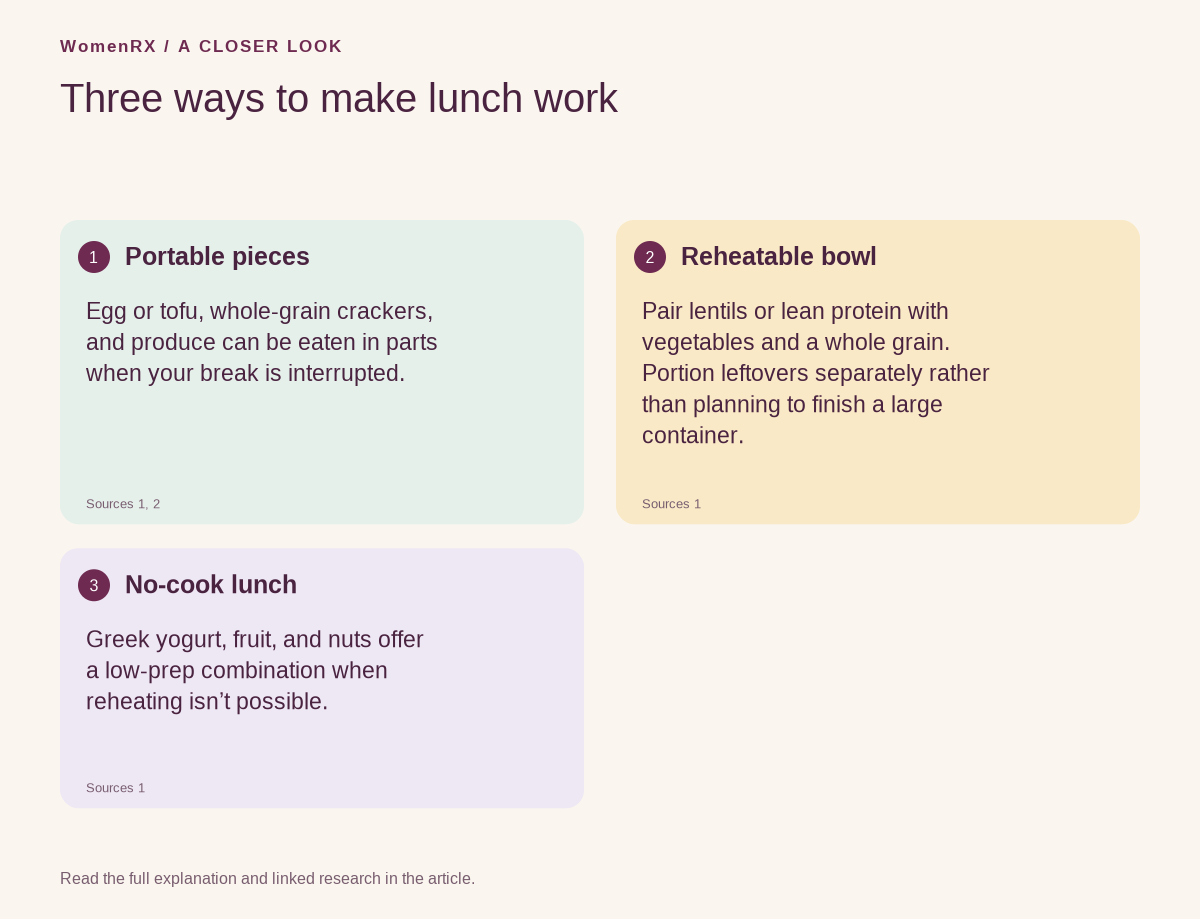
Three ways to make lunch work
Portable pieces: Egg or tofu, whole-grain crackers, and produce can be eaten in parts when your break is interrupted.12
Reheatable bowl: Pair lentils or lean protein with vegetables and a whole grain. Portion leftovers separately rather than planning to finish a large container.1
No-cook lunch: Greek yogurt, fruit, and nuts offer a low-prep combination when reheating isn’t possible.1
Read the figure as text
Choose the format that fits your break and preparation options; each can be portioned to suit your appetite.- Portable pieces: Egg or tofu, whole-grain crackers, and produce can be eaten in parts when your break is interrupted.12
- Reheatable bowl: Pair lentils or lean protein with vegetables and a whole grain. Portion leftovers separately rather than planning to finish a large container.1
- No-cook lunch: Greek yogurt, fruit, and nuts offer a low-prep combination when reheating isn’t possible.1
More questions, answered
Can a protein shake count as lunch?
It can be a useful option when eating is difficult, but a shake isn’t automatically a complete replacement for varied meals. The nutrition advisory says some people use fortified shakes to help meet protein needs and recommends reassessing overall food and fluid intake during treatment. 1
Sources you can check
- Nutritional priorities to support GLP-1 therapy for obesity: four-society joint advisory2025Return to first citation
- MedlinePlus: Protein in diet, including tofu and other plant sourcesAccessed 2026-09-25Return to first citation
- MedlinePlus: Managing weight with healthy eatingAccessed 2026-09-25Return to first citation
- SAXENDA (LIRAGLUTIDE) INJECTION, SOLUTION [NOVO NORDISK PHARMACEUTICAL INDUSTRIES, LP] | US prescribing information and patient instructionsAccessed 2026-09-25Return to first citation
- Nutritional intake changes during GLP-1 receptor agonist therapy: A systematic review and meta-analysis.Quan AT, Nguyen HL, Nguyen TMT. · Diabetes & metabolic syndrome · 2026Return to first citation
- Changes in food cravings, dietary quality, body composition, and dietary intake during GLP-1 receptor agonist therapy: The CRAVE study.Babazadeh D, Therrien S, Fitch AK, Steinberg FM. · Obesity pillars · 2026Return to first citation