A Flexible Week of Meals on a GLP-1 Medication
When your appetite changes, a few mix-and-match meals can make eating well easier than following a rigid menu.
Plan the week around small, regular meals rather than a fixed calorie target. Keep protein-containing foods, produce you tolerate, whole grains, and drinks available, then adjust portions to how you feel. If nausea or fullness means you’re regularly missing meals or struggling to drink, your care team or a registered dietitian can help tailor the plan. 1
A GLP-1 medication may make a usual-sized meal feel like too much. That doesn’t mean you need seven different recipes or a rule for how much to eat at each sitting. The more useful plan is to have a few nourishing combinations ready, with the option to eat a smaller portion and come back to food later. Professional nutrition guidance for people using GLP-1 therapy favors regular, small meals, adequate fluids, and flexible food choices. 1
Build the week from a few repeatable choices
Pick foods from each group that you enjoy and can prepare easily:
- Protein-containing foods: eggs, yogurt, fish, poultry, tofu, tempeh, beans, or lentils. Plant foods can provide protein too; you don’t need meat at every meal. 12
- Produce: fruit and vegetables you currently tolerate, whether that’s berries with breakfast, carrots alongside lunch, or cooked vegetables at dinner. 1
- Whole grains: options such as oatmeal, brown rice, or whole-grain bread that can be paired with the foods above. 1
- Drinks: keep fluids within reach, especially if smaller meals also mean you’re drinking less. 1
Then make a short rotation instead of assigning a mandatory meal to every day. For example, breakfast could alternate between yogurt with fruit and oatmeal, or eggs with whole-grain toast. Lunch could be a smaller serving of a rice-and-tofu bowl one day and vegetables with hummus plus another food you enjoy the next. Dinner might be fish or lentils with a grain and vegetables. 123
Before the week starts, choose a couple of protein foods and produce options you can use in more than one meal. Keeping an easy snack pairing, such as yogurt with fruit or an apple with cheese, gives you another chance to eat if a full meal doesn’t appeal. 3 You can repeat meals. The goal is to make nourishing food available when you feel able to eat it.
Seven days to make your own
Here’s an optional week you can repeat or adapt. Swap ingredients you don’t enjoy and choose portions that fit your appetite and nutrition needs. The meals are examples, not required servings. 123
| Day | Breakfast | Lunch | Dinner |
|---|---|---|---|
| Monday | Plain yogurt, berries, and oatmeal | Chickpeas, brown rice, and chopped vegetables | Salmon, brown rice, and broccoli |
| Tuesday | Eggs and whole-grain toast | Leftover salmon and rice with vegetables | Tofu with cooked vegetables and quinoa |
| Wednesday | Yogurt with fruit and oats | Lentil soup with whole-grain bread | Chicken, brown rice, and cooked carrots |
| Thursday | Eggs with toast and fruit | Leftover chicken, rice, and vegetables | Bean and vegetable soup with whole-grain bread |
| Friday | Yogurt, berries, and oatmeal | Tofu and quinoa with vegetables | Fish with brown rice and green beans |
| Saturday | Eggs and whole-grain toast | Chickpeas and chopped vegetables with whole-grain bread | Lentils with cooked vegetables and rice |
| Sunday | Yogurt with fruit and oats | Leftover lentils, vegetables, and rice | Chicken or tofu with quinoa and broccoli |
To simplify shopping, choose one grain for several meals and use the same vegetables in a bowl, soup, and dinner. Keep a second easy protein option available for days when the planned food does not appeal. If Tuesday’s tofu dinner feels too large, put some aside for later; if tofu doesn’t appeal at all, the eggs and toast already on your list are another option.
Let symptoms change the portion, not erase the meal
If you feel full quickly, start with a smaller serving of a familiar combination and leave the rest for later. Try not to let an unexpectedly small lunch turn into a long stretch without food: regular small meals are one way the joint advisory suggests supporting intake while accommodating gastrointestinal symptoms. It also recommends limiting large meals. 1
On a queasy day, flexibility matters more than completing the meal you planned on Sunday. You might choose a smaller amount of a food that feels manageable, then try another protein-containing food or some produce later. Keep offering yourself fluids, too. These adjustments are ways to make room for eating; they aren’t a promise that any particular food will stop nausea. Gastrointestinal side effects can occur with GLP-1 medicines and can sometimes be severe. 14
If you repeatedly can’t manage meals or drinks, let your prescribing team know rather than trying to solve the problem with an ever-smaller menu. Persistent or severe abdominal pain, particularly if it reaches your back, needs prompt medical assessment, whether or not you’re vomiting. That symptom is identified in liraglutide prescribing information as a possible sign of pancreatitis. 4
Think beyond the amount on your plate
With less room for food, variety and nutrient adequacy still matter. The joint advisory recommends reassessing food and fluid intake during treatment and adjusting nutrition advice to tolerance, nutrient status, and the rate of weight loss. It also notes that protein alone is unlikely to preserve muscle without strength-focused activity. 1 A registered dietitian can help you work out an eating pattern that fits your needs, particularly if your intake stays limited or you have other dietary or medical considerations. 1
A systematic review found that adults receiving these therapies ate less than those receiving placebo in standardized lunch tests, but habitual eating outside those tests was underreported. That finding is consistent with eating less at a meal; it doesn’t tell you what your personal calorie or protein target should be. 5
Pregnant, planning pregnancy, or nursing? Treat medication questions as separate from this everyday meal template. Ask your prescribing team for advice about your specific medication and situation rather than using a weight-loss meal plan to answer a pregnancy or lactation safety question.
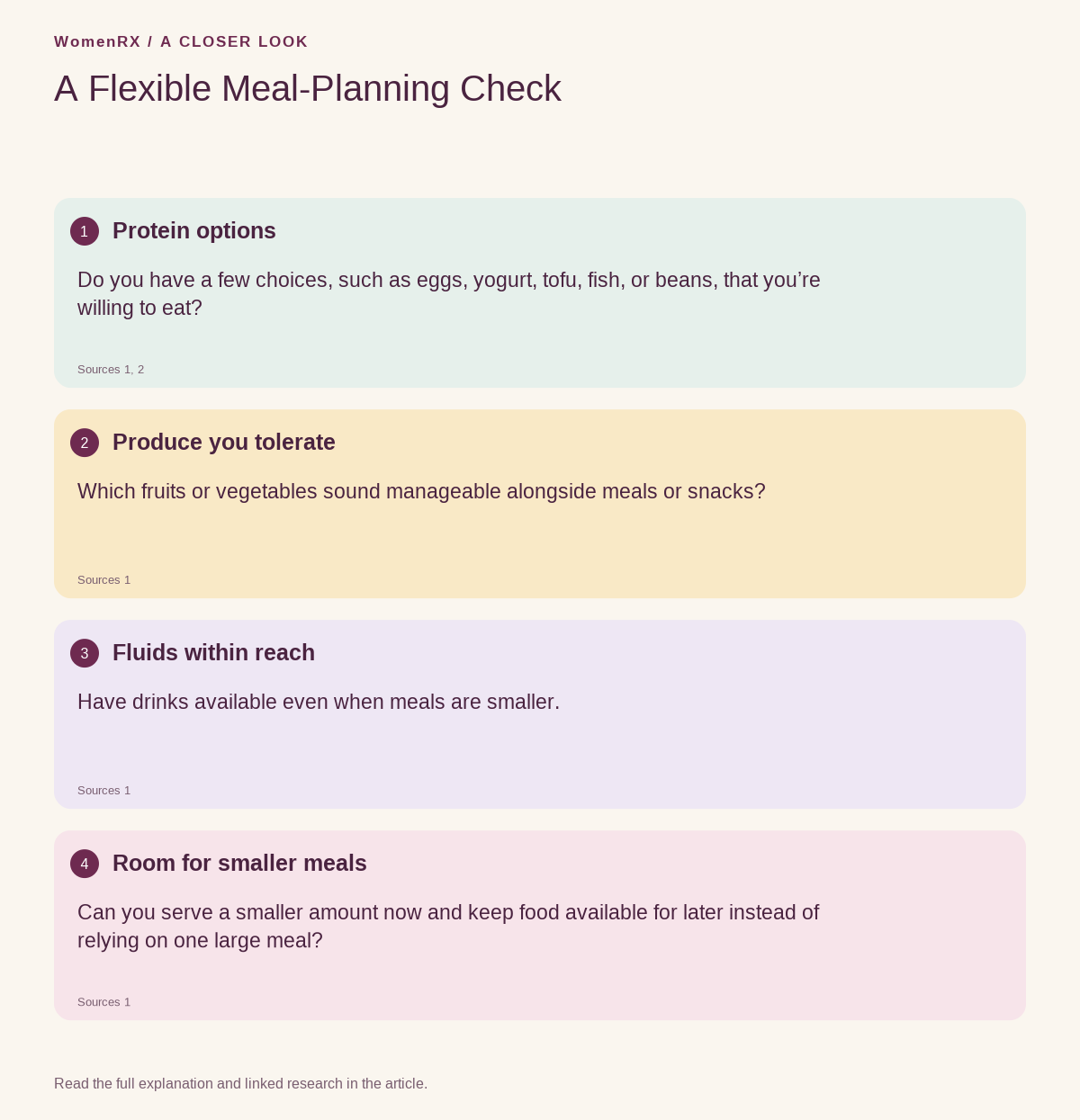
A Flexible Meal-Planning Check
Protein options: Do you have a few choices, such as eggs, yogurt, tofu, fish, or beans, that you’re willing to eat?12
Produce you tolerate: Which fruits or vegetables sound manageable alongside meals or snacks?1
Fluids within reach: Have drinks available even when meals are smaller.1
Room for smaller meals: Can you serve a smaller amount now and keep food available for later instead of relying on one large meal?1
Read the figure as text
Use these four questions when choosing foods for the week, then adjust portions to what you can comfortably eat.- Protein options: Do you have a few choices, such as eggs, yogurt, tofu, fish, or beans, that you’re willing to eat?12
- Produce you tolerate: Which fruits or vegetables sound manageable alongside meals or snacks?1
- Fluids within reach: Have drinks available even when meals are smaller.1
- Room for smaller meals: Can you serve a smaller amount now and keep food available for later instead of relying on one large meal?1
More questions, answered
Do I need meat to get protein at every meal?
No. Eggs, dairy, fish, and poultry are options, but tofu, tempeh, beans, lentils, nuts, and seeds are protein-containing foods too. A dietitian can help tailor choices if eating enough has become difficult. 12
Sources you can check
- Nutritional priorities to support GLP-1 therapy for obesity: four-society joint advisory2025Return to first citation
- MedlinePlus: Protein in diet, including tofu and other plant sourcesAccessed 2026-09-25Return to first citation
- MedlinePlus: Managing weight with healthy eatingAccessed 2026-09-25Return to first citation
- SAXENDA (LIRAGLUTIDE) INJECTION, SOLUTION [NOVO NORDISK PHARMACEUTICAL INDUSTRIES, LP] | US prescribing information and patient instructionsAccessed 2026-09-25Return to first citation
- Nutritional intake changes during GLP-1 receptor agonist therapy: A systematic review and meta-analysis.Quan AT, Nguyen HL, Nguyen TMT. · Diabetes & metabolic syndrome · 2026Return to first citation