Build a Flexible Dinner During GLP-1 Treatment
A mix-and-match dinner can make room for changing appetite without turning one meal into a pass-or-fail nutrition test.
Appetite and food intake can change during GLP-1 treatment, but eating less doesn’t automatically improve diet quality. 2 3 For a flexible dinner, try a protein-containing food, a fruit or vegetable, and a familiar grain or starchy food. Serve an amount that feels manageable and save extra components for later. These are practical options, not a treatment for side effects or a weight-loss guarantee.
Build the meal from components
Think of dinner as a set of choices, not a prescribed plate size. Start with a protein-containing food, add a fruit or vegetable, and choose a familiar grain or starchy food. Add a sauce or other flavor you enjoy if it suits you. These are flexible examples, not required proportions.
For example, you might pair eggs or tofu with cooked vegetables and rice, or serve chicken, beans, or fish with a vegetable and potatoes or bread. These are examples, not a ranking of foods. If a component doesn’t appeal or sit well that evening, swap it for another familiar option rather than forcing a particular menu.
Protein is worth considering when choosing what makes it onto the plate. A small meta-analysis found that GLP-1 and related treatment reduced how much adults ate at standardized test lunches, while a small real-world study found lower overall intake, including protein and other nutrients, during treatment. The observational study did not find that diet quality automatically improved. That makes food quality and adequate intake separate considerations from changes in appetite or weight. 2 3
Adjust the serving, not the whole plan
When appetite is lower, serve a modest amount of the components you want most and keep the rest separate. You can pause and decide whether you want more, or save the untouched parts for another meal. This is a practical serving strategy, not evidence that smaller dinners prevent nausea or other side effects.
If a full mixed meal sounds unappealing, simplify it: choose one food that feels manageable, then add another component if you want it. On a better-appetite evening, bring out more of the same meal or assemble a fuller combination. The point is to keep options open without expecting your appetite to be identical every day.
A meal doesn’t have to be elaborate to add variety. Leftovers can become a different dinner component the next day, such as adding cooked vegetables to eggs or serving leftover beans alongside a grain. These examples are convenient ways to reuse foods, not a specific therapeutic routine.
Let your own tolerance guide swaps
GLP-1 medicines can affect appetite, and gastrointestinal reactions can sometimes be severe. Research on what people habitually eat during treatment is still limited, so there isn’t a well-established dinner menu that works for everyone. Notice which foods feel comfortable for you, and make a simple swap when something doesn’t appeal. Don’t treat a particular meal as a substitute for care if symptoms are significant. 1 2 5
Get urgent medical attention for persistent or severe abdominal pain, especially pain that radiates to your back, with or without nausea or vomiting. This can be a sign of acute pancreatitis described in liraglutide prescribing information. 1
If you’re pregnant, trying to become pregnant, or breastfeeding while taking or considering a GLP-1 medicine, ask your prescriber for guidance specific to the medication and your life stage. A dietary study described in the research excluded pregnant and lactating people, so it doesn’t establish nutrition guidance for those situations. 4
Keep the goal useful and realistic
A satisfying dinner doesn’t need to hit a perfect target. Choose components that offer variety, serve an amount that feels manageable, and leave room to eat more later if you want. The research suggests appetite and total intake may change during treatment, but it doesn’t establish a single ideal dinner or show that a particular menu will prevent nutrient shortfalls. 2 3 5
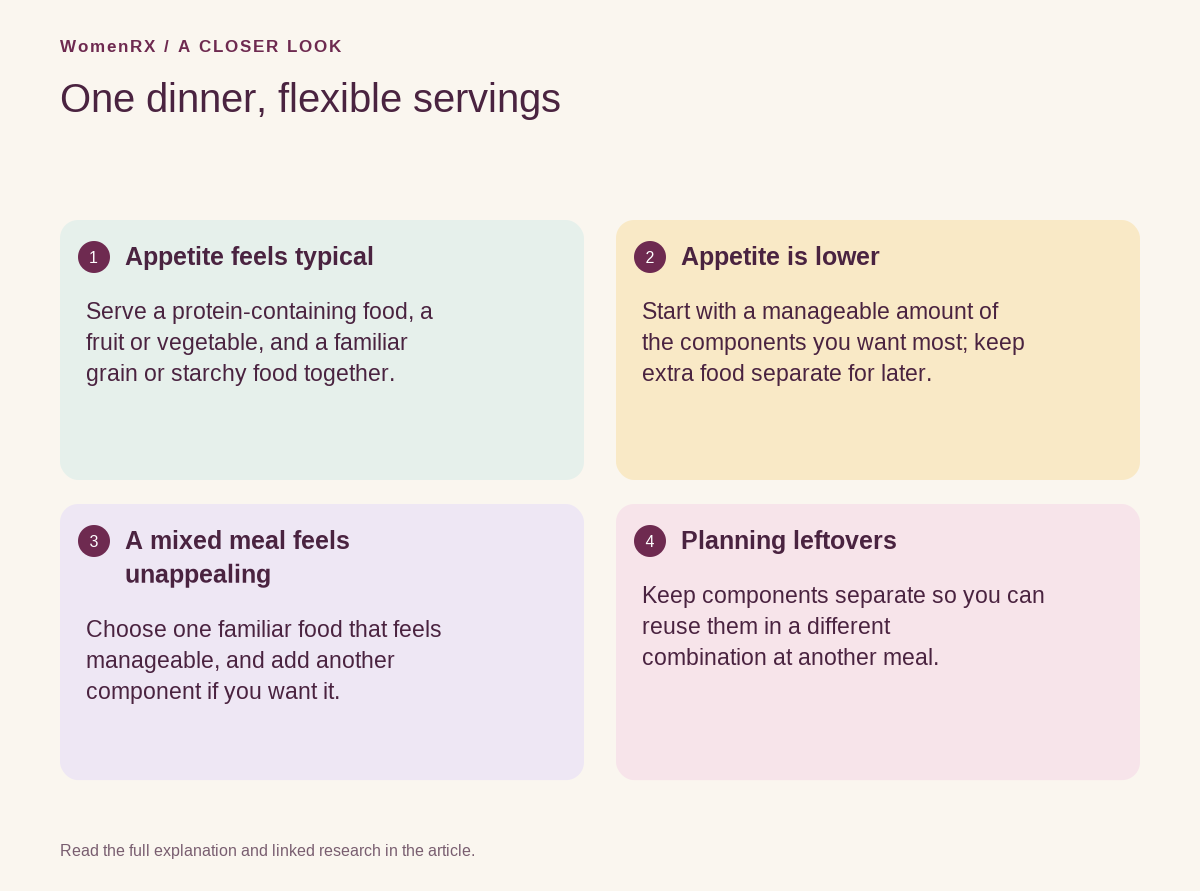
One dinner, flexible servings
Appetite feels typical: Serve a protein-containing food, a fruit or vegetable, and a familiar grain or starchy food together.
Appetite is lower: Start with a manageable amount of the components you want most; keep extra food separate for later.
A mixed meal feels unappealing: Choose one familiar food that feels manageable, and add another component if you want it.
Planning leftovers: Keep components separate so you can reuse them in a different combination at another meal.
Read the figure as text
These guide-created examples show ways to use the same meal components at different appetite levels. The serving and leftover suggestions are practical ideas, not strategies tested in the cited studies, symptom treatments, or prescribed portions.- Appetite feels typical: Serve a protein-containing food, a fruit or vegetable, and a familiar grain or starchy food together.
- Appetite is lower: Start with a manageable amount of the components you want most; keep extra food separate for later.
- A mixed meal feels unappealing: Choose one familiar food that feels manageable, and add another component if you want it.
- Planning leftovers: Keep components separate so you can reuse them in a different combination at another meal.
More questions, answered
Do I need to eat a full dinner if my appetite is low?
This guide doesn’t establish a required dinner size. You can start with a manageable serving and keep other components available if you want more later. If you’re often struggling to eat enough or are concerned about nutrient intake, ask your care team about nutrition support; structured nutrition counseling has been recommended alongside treatment. 2 3
Sources you can check
- SAXENDA (LIRAGLUTIDE) INJECTION, SOLUTION [NOVO NORDISK PHARMACEUTICAL INDUSTRIES, LP] | US prescribing information and patient instructionsAccessed 2026-09-25Return to first citation
- Nutritional intake changes during GLP-1 receptor agonist therapy: A systematic review and meta-analysis.Quan AT, Nguyen HL, Nguyen TMT. · Diabetes & metabolic syndrome · 2026Return to first citation
- Changes in food cravings, dietary quality, body composition, and dietary intake during GLP-1 receptor agonist therapy: The CRAVE study.Babazadeh D, Therrien S, Fitch AK, Steinberg FM. · Obesity pillars · 2026Return to first citation
- Exploring Dietary Intake in Adults with Type 2 Diabetes Using GLP-1 Receptor Agonists: A Cross-Sectional Analysis.Ponzo V, Vitale M, Bo S, Broglio F, Goitre I, Cioffi I. · Nutrients · 2025Return to first citation
- A Systematic Review Identifying Critical Evidence Gaps in Reporting Dietary Change in Randomized Controlled Trials Prescribing Liraglutide, Semaglutide, or Tirzepatide.Jansson AK, Gómez-Martín M, Hedin L, Clarke ED, Cross V, Stanford J, Taylor RM, Bogl LH, De Vlieger N, Koochek A, Löf M, Asher RC, Burrows T, Bucher T, Sullivan C, Nowicka P, Colli... · Obesity reviews : an official journal of the International Association for the Study of Obesity · 2026Return to first citation