Build Habits That Work Alongside Your GLP-1 Medication
When your appetite changes, a few repeatable eating and strength habits can help you care for yourself without treating the medication as a test of willpower.
Start with two habits you can repeat even when your appetite varies: make room for regular, nourishing meals and choose a manageable form of strength activity. GLP-1 medication can reduce food intake, but eating well and maintaining strength still need attention.15 If nausea limits what you can eat or drink, adjust the plan and get help rather than pushing through it.14
Let the medication help, but give your habits a different job
A GLP-1 medication can change how much you want to eat. Liraglutide, for example, reduces body weight through decreased calorie intake.5 That change may make some food decisions easier. It doesn't, by itself, tell you whether you're getting enough fluids, eating a useful variety of foods, or keeping up your strength. A four-society clinical advisory recommends paying attention to dietary intake, hydration, and muscle preservation during treatment.1
Think of the medication and your habits as doing different jobs. The medication affects appetite and other body processes. Your habits give you a way to eat and move that still makes sense on a low-appetite day, a busy day, or a day when treatment changes. You don't need to build the whole routine at once.
First, make eating possible on low-appetite days
Choose one simple meal habit: give yourself regular chances to eat rather than waiting until you're very hungry. The GLP-1 advisory favors regular, smaller meals, adequate fluids, and flexibility with food choices, while discouraging long stretches without meals and large meals.1 You can use that guidance without setting a rigid clock or forcing a large plate.
For example, a smaller meal might be tofu with rice and cooked vegetables, or yogurt with fruit and oats. These are examples of how to combine protein foods with other foods, not a tested GLP-1 menu or a prescription for how much to eat. Tofu, yogurt, beans, eggs, fish, and other foods can contribute protein; plant foods can meet protein needs too.12 If a full meal feels unappealing, a snack such as yogurt with fruit or vegetables with hummus may be easier to manage.3
Notice the difference between I'm comfortably satisfied and I'm regularly unable to eat enough to get through my day. If nausea is getting in the way, smaller, more frequent meals may help.4 If vomiting or very low intake makes it hard to stay hydrated, contact your care team. Dry mouth, infrequent urination, and dark urine are signs of dehydration that call for prompt medical attention.4 Persistent or severe abdominal pain, sometimes spreading to the back and sometimes accompanied by vomiting, also needs prompt assessment because it can be a sign of pancreatitis in someone taking a GLP-1 medication.5
Then, build a strength habit you can keep
Choose an activity you can return to, rather than an ambitious schedule you can only manage briefly. For example, that might mean a short, repeatable strength session at home or a class that fits your week. Keep walking or another activity you enjoy in the picture, too. The distinction is that aerobic activity alone has a smaller effect on preserving lean mass during weight reduction than structured strength or mixed training. The advisory also cautions that extra protein alone is unlikely to preserve muscle without resistance exercise.1
You don't have to judge this habit only by the scale. Being able to keep doing your usual activities and noticing whether strength work feels more or less manageable are useful things to bring up during follow-up. The advisory notes that muscle measurements don't necessarily capture muscle function and that clinicians can reassess intake and nutrition needs as treatment progresses.1 If eating less is leaving you too weak or unwell to do activities you normally manage, ask for help with both the food plan and the treatment plan.
Keep a version of the plan for treatment changes
An interruption or decision to stop medication isn't a failure of habit-building. It's a change in conditions. Appetite may feel different, so revisit what you're eating rather than assuming the smaller portions that suited you on treatment will always fit. Keep the repeatable parts, such as having workable meals available and a strength activity you can return to, while discussing medication changes with the clinician who prescribes it.
Habits are not a guaranteed substitute for treatment. In a small observational study, 25 women with PCOS and obesity received semaglutide alongside metformin and lifestyle intervention, then continued metformin and lifestyle support after stopping semaglutide. Their weight rose from the end-of-treatment level over two years, although most remained below their starting weight. Because metformin and lifestyle support continued and there was no comparison group, the study cannot tell us which habit prevented regain or predict what will happen for another woman.6 A separate randomized study in 29 people with a particular fatty liver condition found some different metabolic effects from liraglutide and matched lifestyle-induced weight loss; it wasn't a test of whether a personal habit plan replaces medication over the long term.7
Reconsider the plan when your circumstances change
If you're planning pregnancy, pregnant, or breastfeeding, bring the specific medication and your eating plan into a conversation with your prescribing and pregnancy-care teams. A general GLP-1 habit plan isn't a way to decide whether to continue treatment, and it can't supply a stop date or a breastfeeding safety answer.
In perimenopause or postmenopause, you don't need to assume GLP-1 medication calls for a different set of habits simply because of your life stage. Do pay attention if low intake or declining strength is making everyday activity harder. Food adequacy and strength are worth reassessing throughout treatment, rather than relying on appetite or weight alone to tell you how you're doing.1
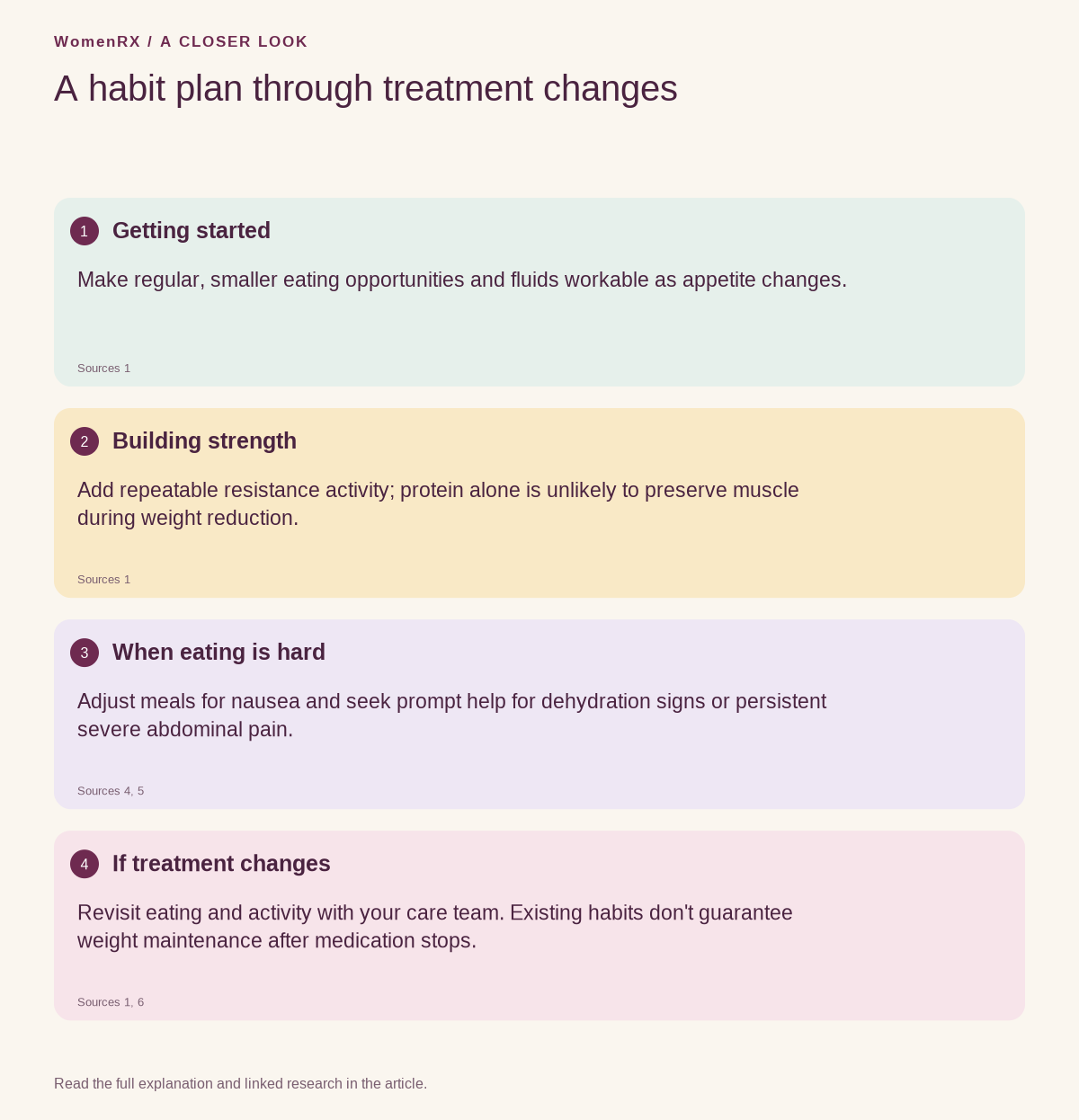
A habit plan through treatment changes
Getting started: Make regular, smaller eating opportunities and fluids workable as appetite changes.1
Building strength: Add repeatable resistance activity; protein alone is unlikely to preserve muscle during weight reduction.1
When eating is hard: Adjust meals for nausea and seek prompt help for dehydration signs or persistent severe abdominal pain.45
If treatment changes: Revisit eating and activity with your care team. Existing habits don't guarantee weight maintenance after medication stops.16
Read the figure as text
These are planning stages, not a medication schedule or a prediction of weight change.- Getting started: Make regular, smaller eating opportunities and fluids workable as appetite changes.1
- Building strength: Add repeatable resistance activity; protein alone is unlikely to preserve muscle during weight reduction.1
- When eating is hard: Adjust meals for nausea and seek prompt help for dehydration signs or persistent severe abdominal pain.45
- If treatment changes: Revisit eating and activity with your care team. Existing habits don't guarantee weight maintenance after medication stops.16
More questions, answered
Should I aim for a particular protein amount?
Not from a general article. Protein needs vary, and the GLP-1 advisory treats proposed targets as individualized rather than universal. A dietitian can help work out a pattern that fits your intake, preferences, and treatment response. Protein is only one part of preserving muscle; strength activity matters too.1
Sources you can check
- Nutritional priorities to support GLP-1 therapy for obesity: four-society joint advisory2025Return to first citation
- MedlinePlus: Protein in diet, including tofu and other plant sourcesAccessed 2026-09-25Return to first citation
- MedlinePlus: Managing weight with healthy eatingAccessed 2026-09-25Return to first citation
- Nausea | Vomiting | MedlinePlusAccessed 2026-09-25Return to first citation
- SAXENDA (LIRAGLUTIDE) INJECTION, SOLUTION [NOVO NORDISK PHARMACEUTICAL INDUSTRIES, LP] | US prescribing information and patient instructionsAccessed 2026-09-25Return to first citation
- The maintenance of long-term weight loss after semaglutide withdrawal in obese women with PCOS treated with metformin: a 2-year observational study.Jensterle M, Ferjan S, Janez A. · Frontiers in endocrinology · 2024Return to first citation
- Randomised trial comparing weight loss through lifestyle and GLP-1 receptor agonist therapy in people with MASLD.Moolla A, Poolman T, Othonos N, Dong J, Smith K, Cornfield T, White S, Ray DW, Mouchti S, Mózes FE, Thomaides-Brears H, Neubauer S, Cobbold JF, Hodson L, Tomlinson JW. · JHEP reports : innovation in hepatology · 2025Return to first citation