Dry Mouth on GLP-1 Medication: What to Check
Dry mouth has been reported as an oral concern during GLP-1 treatment, but that doesn’t prove the medication directly caused it.
Dry mouth has been mentioned in reviews of GLP-1 medicines, but the evidence doesn’t establish it as a direct, predictable effect of the whole drug class. It can have several causes. If stomach symptoms have left you drinking less, reduced fluid intake is one possibility, but dry mouth alone doesn’t diagnose dehydration. Check what changed and raise persistent or disruptive symptoms with your prescriber or dentist. 342
First, separate the symptom from its possible cause
Dry mouth means your mouth doesn’t feel wet enough. You might notice a sticky feeling, trouble speaking or swallowing, or difficulty chewing. Saliva also helps protect your teeth, so ongoing dryness is worth addressing. 1
Some reviews of GLP-1 medicines mention dry mouth among possible oral concerns. But that doesn’t establish that the medication directly reduces saliva or that dry mouth is a confirmed effect across the class. The evidence is limited, and symptoms can have overlapping causes. 34
If stomach symptoms have made it harder to drink, reduced fluid intake is one possible contributor to dry mouth. That’s a general dehydration possibility, not proof that GLP-1 treatment directly causes the symptom. 2
Use this short check to look for a pattern
- When did it start? Note whether it began after starting treatment or changing the dose. A timing link is useful context, not proof of cause.
- Has your intake changed? If you’ve been drinking less, consider that as one possible contributor; dehydration can cause dry mouth. 2
- Did anything else change? Some medicines, including certain medicines for blood pressure, depression, and bladder control, can cause dry mouth. Don’t stop a prescribed medicine on your own. 12
- Are there other possible causes? Dehydration, breathing through your mouth at night, anxiety, and some mouth conditions can also contribute. 12
- What else are you noticing? Trouble eating or speaking, sore white patches, dry eyes, or needing to urinate a lot are reasons to get the symptom assessed rather than assuming it’s from the medication. 2
Try simple relief while you assess it
Take regular sips of water, and consider sugar-free gum or candy to encourage saliva. Alcohol-free mouthwash and steady brushing and flossing can help protect your mouth and teeth while it feels dry. 12
If dryness is persistent, interfering with eating or speaking, or not improving after a few weeks of self-care, contact your prescriber or dentist. They can review your symptoms and medicines and consider other causes. Don’t change or stop your GLP-1 medicine without discussing it with your prescriber. 12
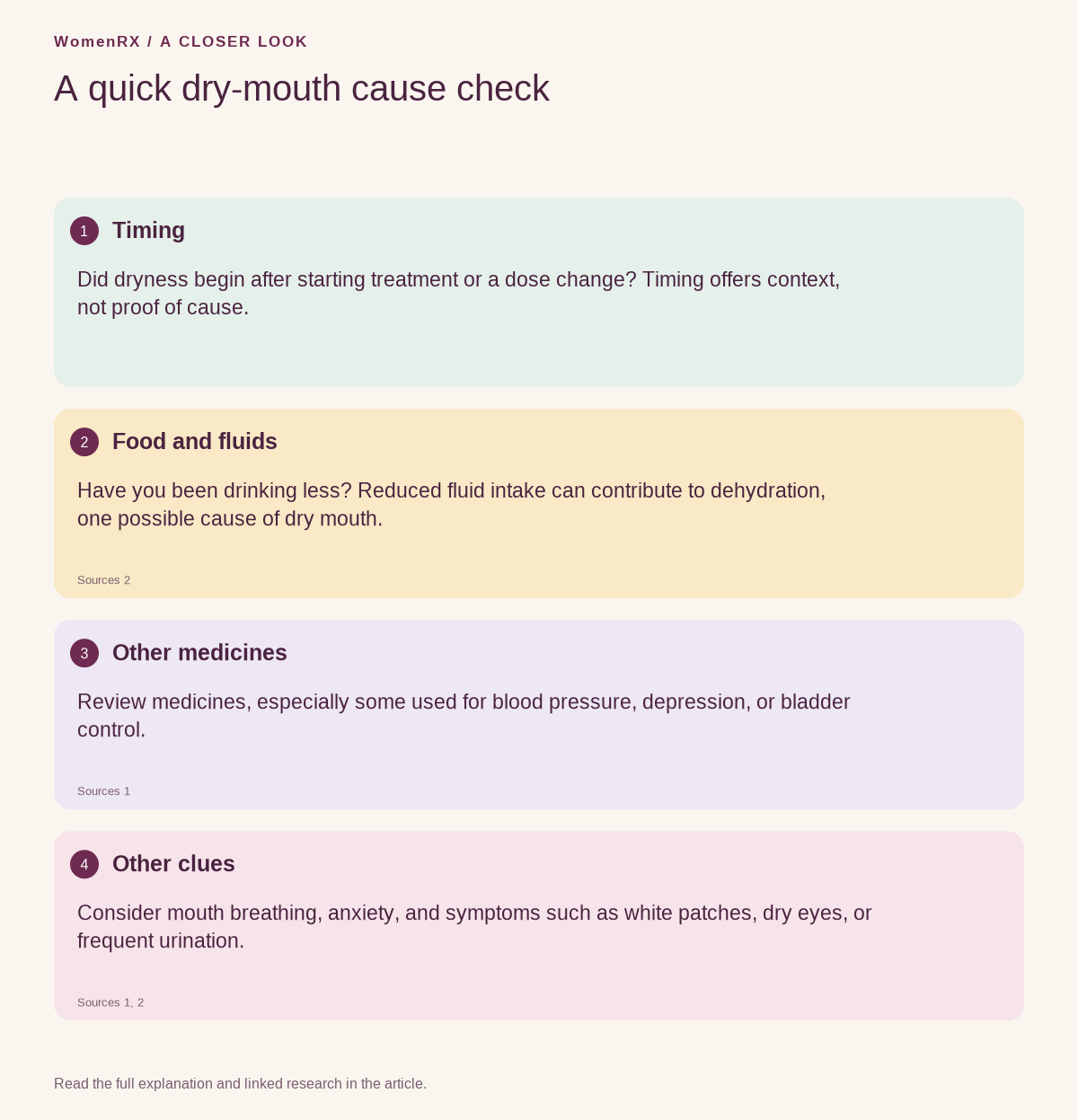
A quick dry-mouth cause check
Timing: Did dryness begin after starting treatment or a dose change? Timing offers context, not proof of cause.
Food and fluids: Have you been drinking less? Reduced fluid intake can contribute to dehydration, one possible cause of dry mouth.2
Other medicines: Review medicines, especially some used for blood pressure, depression, or bladder control.1
Other clues: Consider mouth breathing, anxiety, and symptoms such as white patches, dry eyes, or frequent urination.12
Read the figure as text
Use these prompts to notice possible contributors without treating dry mouth alone as proof of dehydration or a medication effect.- Timing: Did dryness begin after starting treatment or a dose change? Timing offers context, not proof of cause.
- Food and fluids: Have you been drinking less? Reduced fluid intake can contribute to dehydration, one possible cause of dry mouth.2
- Other medicines: Review medicines, especially some used for blood pressure, depression, or bladder control.1
- Other clues: Consider mouth breathing, anxiety, and symptoms such as white patches, dry eyes, or frequent urination.12
More questions, answered
Does dry mouth by itself mean I’m dehydrated?
No. Dry mouth has several possible causes, including medicines and mouth breathing, so the sensation alone can’t identify dehydration. Consider whether you’ve been drinking less or have had stomach symptoms, and seek advice if the dryness persists or comes with other symptoms. 12
Should I stop my GLP-1 medication if my mouth feels dry?
Don’t stop or change a prescribed medicine on your own. If the symptom began during treatment, tell your prescriber and review other medicines and possible causes with them. 2
Sources you can check
- Dry Mouth: MedlinePlusAccessed 2026-09-25Return to first citation
- Dry mouth - NHSAccessed 2026-09-25Return to first citation
- GLP-1 Receptor Agonists in Periodontology: Mechanisms, Clinical Evidence, and Implications for Care.Sufaru IG, Vasiliu BC, Hancianu M, Stratul SI, Tatarciuc MS, Iovan G, Tatarciuc D, Rudnic I, Hanu D, Paduraru S, Solomon SM. · Biomolecules · 2026Return to first citation
- Potential oral and maxillofacial adverse events associated with glucagon-like peptide-1 receptor agonist administration: a narrative review.Brooks JK, Sultan AS. · Quintessence international (Berlin, Germany : 1985) · 2026Return to first citation