Dry Mouth on a GLP-1 Medicine: What to Check
A dry mouth can happen alongside GLP-1 treatment, but it doesn’t by itself show that the medicine caused dehydration.
Dry mouth means your mouth doesn’t have enough saliva to stay comfortable; dehydration means your body has lost more fluid than it takes in. They can occur together, especially if nausea, vomiting, or diarrhea make drinking harder, but dry mouth alone doesn’t prove dehydration. GLP-1 medicines have been mentioned in a review of possible oral effects, but that doesn’t establish how often they cause dry mouth or prove the medicine is responsible. 1 3 4
First, separate mouth dryness from fluid loss
Dry mouth, or xerostomia, is a feeling of too little saliva. It can make chewing, swallowing, speaking, or tasting uncomfortable, and ongoing dryness raises the risk of tooth decay and mouth infections. Dehydration is a whole-body fluid deficit: you’re losing more fluid than you take in. Thirst, dry mouth, peeing less than usual, and dizziness can occur with dehydration, but mouth dryness alone can’t tell you whether you’re dehydrated. 1 3
A GLP-1 medicine could be part of the picture, but that review doesn’t establish dry mouth as a proven class effect. A 2026 narrative review identified xerostomia among oral effects reported in literature it reviewed; it also noted that overlapping conditions can make the cause hard to pin down. That isn’t the same as showing that these medicines cause dry mouth, or how likely it is. 4
Look for what changed around the same time
If the dryness began after starting or changing a medicine, note the timing and bring a complete medication list to a pharmacist or prescriber. Many medicines can reduce saliva, including some used for high blood pressure, depression, and bladder control. Don’t stop a prescribed medicine on your own; a clinician or pharmacist can help assess whether a medication change is appropriate. 1 2
Also consider whether you’re drinking less because you feel nauseated, or losing fluid through vomiting or diarrhea. Those symptoms are common adverse effects discussed in the GLP-1 review, and fluid loss can contribute to dehydration. A blocked nose or breathing through your mouth at night, as well as alcohol or tobacco use, can also contribute to mouth dryness. 2 3 4
Menopause or another life-stage change may be relevant history to mention if it coincides with dry mouth, but the evidence cited here doesn’t establish menopause as the cause of your symptoms or show that GLP-1-related dryness differs by sex or life stage.
A practical check for the next few days
Notice whether the main issue is a sticky or dry mouth, strong thirst, or both. Pay attention to whether you’re urinating less than usual or feeling dizzy, and whether nausea, vomiting, or diarrhea is making it hard to keep fluids down. These details help distinguish isolated mouth discomfort from possible fluid loss. If you’re feeling sick, small sips may be easier to manage than trying to drink a lot at once. 1 3
For mouth comfort, take regular sips of water, keep water nearby at night, and brush twice daily. An alcohol-free mouthwash may be less drying. A pharmacist can suggest products to keep the mouth moist; ask which option suits you. 2
When to get help
Ask a dentist or medical clinician about dryness that lasts for weeks despite self-care, makes eating or speaking difficult, or comes with sore white patches. Persistent dry mouth can have several causes, and reviewing your mouth and medicines can help identify them. 1 2
Seek urgent medical help if you have signs of serious dehydration, such as confusion or shock. If vomiting or diarrhea is making it hard to keep liquids down, contact a clinician for advice rather than assuming mouth dryness is the only issue. 3
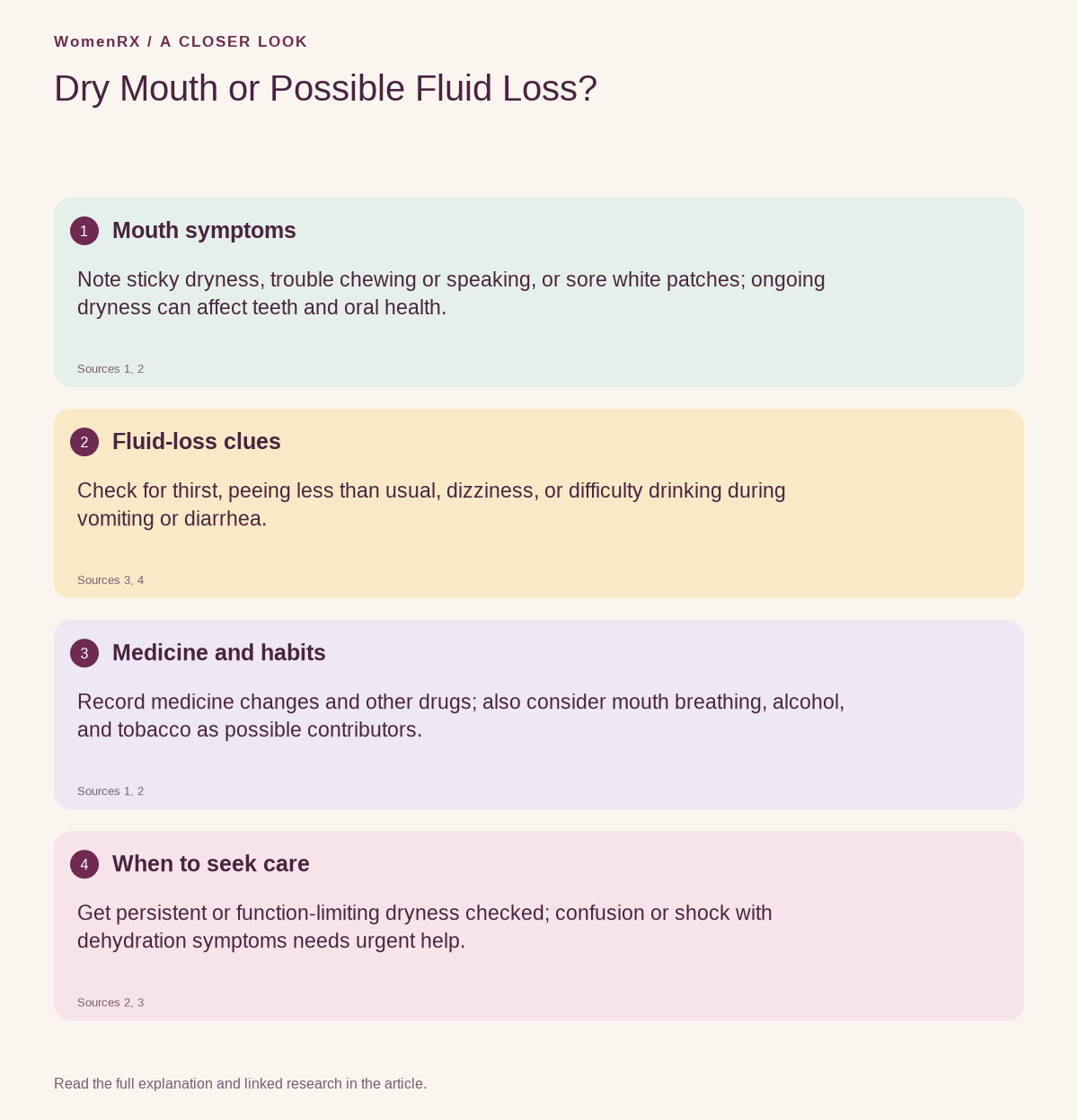
Dry Mouth or Possible Fluid Loss?
Mouth symptoms: Note sticky dryness, trouble chewing or speaking, or sore white patches; ongoing dryness can affect teeth and oral health.12
Fluid-loss clues: Check for thirst, peeing less than usual, dizziness, or difficulty drinking during vomiting or diarrhea.34
Medicine and habits: Record medicine changes and other drugs; also consider mouth breathing, alcohol, and tobacco as possible contributors.12
When to seek care: Get persistent or function-limiting dryness checked; confusion or shock with dehydration symptoms needs urgent help.23
Read the figure as text
Use these checks to describe what’s happening and decide whether mouth care, a medication review, or medical attention may be needed.- Mouth symptoms: Note sticky dryness, trouble chewing or speaking, or sore white patches; ongoing dryness can affect teeth and oral health.12
- Fluid-loss clues: Check for thirst, peeing less than usual, dizziness, or difficulty drinking during vomiting or diarrhea.34
- Medicine and habits: Record medicine changes and other drugs; also consider mouth breathing, alcohol, and tobacco as possible contributors.12
- When to seek care: Get persistent or function-limiting dryness checked; confusion or shock with dehydration symptoms needs urgent help.23
More questions, answered
Does dry mouth mean I should stop my GLP-1 medicine?
No. Dry mouth alone doesn’t establish that the medicine is the cause. Don’t stop a prescribed medicine without medical advice; ask your prescriber or pharmacist to review the timing and your other medicines. 1 2 4
Can dry mouth affect my teeth?
Yes. Saliva helps protect the mouth, and ongoing dryness raises the risk of tooth decay and mouth infections. Regular brushing and getting persistent symptoms checked can help address that risk. 1 2
Sources you can check
- Dry Mouth: MedlinePlusAccessed 2026-09-25Return to first citation
- Dry mouth - NHSAccessed 2026-09-25Return to first citation
- Dehydration: MedlinePlusAccessed 2026-09-25Return to first citation
- Potential oral and maxillofacial adverse events associated with glucagon-like peptide-1 receptor agonist administration: a narrative review.Brooks JK, Sultan AS. · Quintessence international (Berlin, Germany : 1985) · 2026Return to first citation