Dizzy on a GLP-1? Check These Causes First
Dizziness can follow too little fluid or food, a glucose low, a blood-pressure drop, or another problem, so the clues around each episode matter.
A GLP-1 medicine isn’t the only possible explanation for dizziness. Nausea or vomiting can make it harder to eat and drink; diabetes medicines taken alongside it can also affect blood sugar. Sit or lie down, avoid driving, and, if you have diabetes, check your glucose if you can. Don’t change your medicines on your own. 1 3 4 5
Start with safety
If you feel dizzy, sit or lie down until it passes, then get up slowly. Don’t drive, climb, or use machinery while you feel off-balance or faint. 3
Get emergency help if someone with possible low blood sugar has a seizure, becomes unconscious, or isn’t responding normally. Don’t give food or drink to someone who can’t swallow safely. Arrange medical assessment for new weakness or numbness, vision changes, fainting, or collapse. 1 3
Check what was happening around the episode
Were you eating and drinking less than usual, or having nausea or vomiting? GLP-1 medicines have been associated with gastrointestinal symptoms, and dizziness has been reported in poison-center cases involving these medicines. If you’re taking in less fluid than you’re losing, dehydration can cause dizziness. The poison-center findings describe reported exposures, not the chance that any individual user will become dizzy or proof that the medicine directly caused it. 4 5
If you’re able, take small sips of fluid when you’re having trouble keeping drinks down. Contact your care team if you can’t keep fluids down or dizziness continues; dehydration can become serious. 4
Do you have diabetes, and could your glucose be low? If you have diabetes and symptoms that could be a low, check your blood glucose if you can and follow your personal diabetes plan. Many people with diabetes use below 70 mg/dL as a low-glucose threshold, but your care team may set a different one. Insulin and some other diabetes medicines can cause low blood sugar. A GLP-1 medicine taken with other glucose-lowering medicines is a reason to consider checking, not a reason to assume every dizzy spell is a low. 1 2
If your glucose is below your personal threshold, follow the treatment plan you’ve been given. Fast-acting carbohydrate is commonly used for a low, but a person who is unconscious or can’t swallow safely should not be given food or drink. Repeated lows are a reason to contact your diabetes care team. Don’t adjust or stop other diabetes medicines without your prescriber’s guidance. 1 2
Does it happen when you stand up? Feeling dizzy just after standing can be a clue to a sudden blood-pressure drop. Note whether the sensation is faintness or lightheadedness, rather than a spinning feeling, and whether it settles when you sit or lie down. Dizziness can also come from causes such as inner-ear problems, migraine, or iron-deficiency anemia, so the medicine may not be the explanation. 3
When to follow up
Contact your prescriber if dizziness keeps returning, doesn’t go away, started after a medication change, or comes with vomiting or difficulty keeping fluids down. Tell them which medicines you take, including diabetes medicines, and whether episodes follow missed or smaller meals, fluid loss, or standing up. That context can help separate possible causes without making a medication change on your own. Dizziness that keeps recurring or comes with hearing changes, fainting, vision changes, or numbness or weakness also deserves medical assessment. 3 4
If pregnancy is possible or your menstrual bleeding has changed, include that context when discussing your symptoms and medicines. Iron-deficiency anemia is another possible cause of dizziness, but dizziness alone can’t identify it. 3
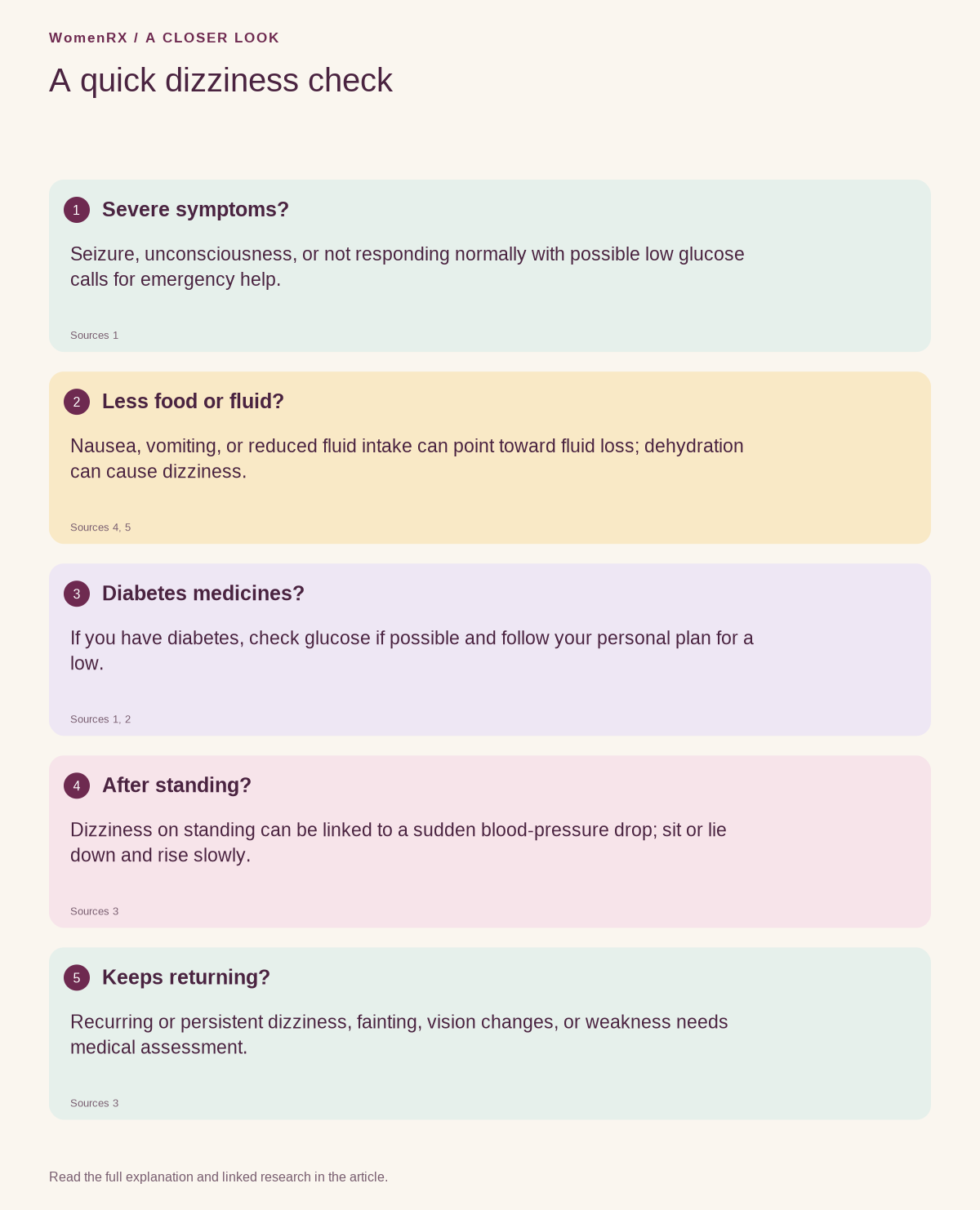
A quick dizziness check
Severe symptoms?: Seizure, unconsciousness, or not responding normally with possible low glucose calls for emergency help.1
Less food or fluid?: Nausea, vomiting, or reduced fluid intake can point toward fluid loss; dehydration can cause dizziness.45
Diabetes medicines?: If you have diabetes, check glucose if possible and follow your personal plan for a low.12
After standing?: Dizziness on standing can be linked to a sudden blood-pressure drop; sit or lie down and rise slowly.3
Keeps returning?: Recurring or persistent dizziness, fainting, vision changes, or weakness needs medical assessment.3
Read the figure as text
Use the surrounding clues to decide what to check first; this flow doesn’t diagnose the cause.- Severe symptoms?: Seizure, unconsciousness, or not responding normally with possible low glucose calls for emergency help.1
- Less food or fluid?: Nausea, vomiting, or reduced fluid intake can point toward fluid loss; dehydration can cause dizziness.45
- Diabetes medicines?: If you have diabetes, check glucose if possible and follow your personal plan for a low.12
- After standing?: Dizziness on standing can be linked to a sudden blood-pressure drop; sit or lie down and rise slowly.3
- Keeps returning?: Recurring or persistent dizziness, fainting, vision changes, or weakness needs medical assessment.3
More questions, answered
Does dizziness mean my blood sugar is low?
Not by itself. Dizziness has several possible causes. If you have diabetes and can check your glucose, use that reading and your personal plan rather than guessing from the symptom alone. 2 3
Should I stop my GLP-1 medicine or change my diabetes medicines?
Don’t change diabetes medicines on your own. Contact your prescriber to review recurring symptoms, low glucose readings, or trouble keeping fluids down. 1 2 4
Sources you can check
- Low blood sugar (hypoglycaemia) - NHSAccessed 2026-09-25Return to first citation
- Hypoglycemia: MedlinePlusAccessed 2026-09-25Return to first citation
- Dizziness - NHSAccessed 2026-09-25Return to first citation
- Dehydration: MedlinePlusAccessed 2026-09-25Return to first citation
- Changes in Glucagon-Like Peptide-1 Receptor Agonist (GLP-1 RA) Exposures Following Recent Demand for Weight Management: A Retrospective Review of California Poison Control System Data.Ho RY, Regelman H, Ma A, Lee SY, Sandhu S, Shapiro S, Lewis J, Tsutaoka B, Apollonio DE. · The Journal of pharmacy technology : jPT : official publication of the Association of Pharmacy Technicians · 2025Return to first citation