Feeling Tired on a GLP-1 Medication? Check These First
Fatigue can happen during treatment, but its timing and accompanying symptoms offer better clues than the medication name alone.
First, note when the fatigue began, whether it followed a dose change, and what else changed: eating, drinking, nausea, bowel habits, sleep, or other medicines. Fatigue was reported more often with Wegovy injection than placebo in weight-reduction trials, but that doesn’t establish the cause of your tiredness. Ongoing vomiting or diarrhea deserves prompt attention because dehydration can affect the kidneys. 52
Start with the pattern, not an assumption
If you began feeling drained after starting treatment or changing a dose, write down that timing. Then ask a second question: What changed alongside the fatigue? The answer may be as ordinary as disrupted sleep, or it may point to a problem that needs attention sooner.
Fatigue is a reported adverse reaction with at least one weight-management medication. In Wegovy injection weight-reduction trials, 11% of participants receiving semaglutide reported fatigue, compared with 5% receiving placebo. That comparison shows the symptom can occur more often during treatment; it can’t tell you why any one person feels tired. The reported figures aren’t women-specific. 5
A short record is more useful than trying to decide immediately whether the medication is to blame. Note when fatigue started, when it’s worst, whether it affects your usual activities, and whether it changed after a treatment change. A fatigue diary can help reveal patterns across the day. 2
Check food and fluids together
Think back over a few days. Are you eating much less than usual? Have nausea, vomiting, or diarrhea changed what you can manage? Record what’s happening rather than assuming that eating less explains the fatigue. Appetite and daily habits are among the details used to investigate tiredness, while nausea, vomiting, and diarrhea matter for a separate reason: they can lead to dehydration during treatment. 256
Dehydration happens when your body loses more fluid than it takes in. Both Wegovy and Zepbound prescribing information warn that gastrointestinal symptoms leading to dehydration have been associated with kidney injury. If nausea, vomiting, or diarrhea doesn’t go away, contact your prescribing clinician promptly rather than waiting to see whether the tiredness passes. If you feel sick and can keep fluids down, small sips may be easier than a full drink at once. 156
Look for clues that point elsewhere
Sleep is worth checking even when the fatigue began around a dose change. How much are you sleeping, and is the sleep restorative? Lack of sleep, sleep disorders, stress, other medicines, anemia, diabetes, and thyroid disease are among the possible causes of fatigue. For example, daytime tiredness with loud snoring or gasping during sleep points to a different question than tiredness accompanied by shortness of breath and noticeable heartbeats. Neither pattern is a diagnosis, but each is useful to describe. 24
If you have type 2 diabetes and check your glucose, include any readings that changed around the time you felt unwell. Hypoglycemia was reported in the type 2 diabetes subgroup of Wegovy’s weight-reduction trials. That finding doesn’t mean every episode of fatigue on a GLP-1 medication is a glucose problem, or that results from one product apply to every treatment. 5
Your life stage belongs in the picture, too. Pregnancy can be one possible contributor to fatigue, while recovery and limited rest after childbirth can complicate the picture postpartum. Neither should be treated as an automatic explanation for new or persistent exhaustion. If pregnancy or recent childbirth is relevant, mention it when you describe the symptom. 23
Decide what needs attention now
Don’t wait for a routine fatigue discussion if you have persistent or severe abdominal pain, especially pain that travels toward your back, with or without vomiting. Wegovy and Zepbound prescribing information identify this as a possible sign of pancreatitis that needs prompt medical assessment. Ongoing vomiting or diarrhea also warrants prompt contact because of the dehydration risk. 56
If the fatigue lasts for weeks, keeps you from doing normal activities, or comes with other symptoms, arrange an evaluation even if its start seemed to match your treatment. Bring the timing, your recent food and fluid intake, sleep changes, accompanying symptoms, and other medicines. That gives you and your clinician a way to investigate the cause without overlooking either the treatment or the rest of your health. 24
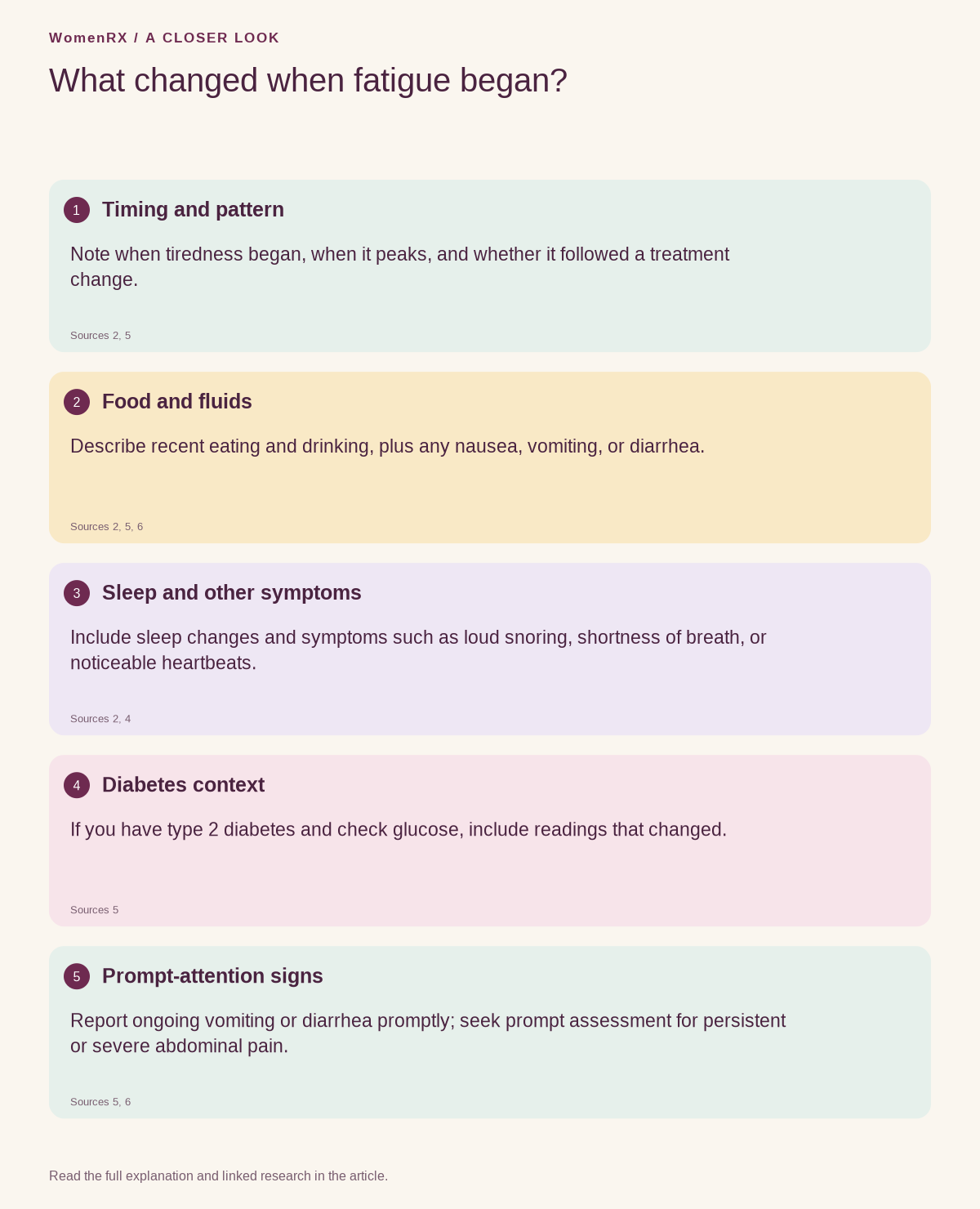
What changed when fatigue began?
Timing and pattern: Note when tiredness began, when it peaks, and whether it followed a treatment change.25
Food and fluids: Describe recent eating and drinking, plus any nausea, vomiting, or diarrhea.256
Sleep and other symptoms: Include sleep changes and symptoms such as loud snoring, shortness of breath, or noticeable heartbeats.24
Diabetes context: If you have type 2 diabetes and check glucose, include readings that changed.5
Prompt-attention signs: Report ongoing vomiting or diarrhea promptly; seek prompt assessment for persistent or severe abdominal pain.56
Read the figure as text
These details help organize the symptom without turning the checklist into a diagnosis.- Timing and pattern: Note when tiredness began, when it peaks, and whether it followed a treatment change.25
- Food and fluids: Describe recent eating and drinking, plus any nausea, vomiting, or diarrhea.256
- Sleep and other symptoms: Include sleep changes and symptoms such as loud snoring, shortness of breath, or noticeable heartbeats.24
- Diabetes context: If you have type 2 diabetes and check glucose, include readings that changed.5
- Prompt-attention signs: Report ongoing vomiting or diarrhea promptly; seek prompt assessment for persistent or severe abdominal pain.56
More questions, answered
Does fatigue after a dose change mean the dose is too high?
Not necessarily. Timing is a useful clue, but it doesn’t identify the cause. Tell your prescriber when the fatigue began and whether nausea, vomiting, diarrhea, eating, drinking, or sleep changed at the same time. Gastrointestinal symptoms that may lead to dehydration receive particular attention during treatment initiation and dose escalation in Wegovy and Zepbound prescribing information. 56
Sources you can check
- Dehydration: MedlinePlusAccessed 2026-09-25Return to first citation
- Fatigue: MedlinePlusAccessed 2026-09-25Return to first citation
- Postpartum Care: MedlinePlusAccessed 2026-09-25Return to first citation
- Tiredness and fatigue - NHSAccessed 2026-09-25Return to first citation
- WEGOVY (SEMAGLUTIDE) INJECTION, SOLUTION WEGOVY (SEMAGLUTIDE) TABLET [NOVO NORDISK PHARMACEUTICAL INDUSTRIES, LP] | US prescribing information and patient instructionsAccessed 2026-09-25Return to first citation
- ZEPBOUND (TIRZEPATIDE) INJECTION, SOLUTION ZEPBOUND (TIRZEPATIDE) INJECTION, SOLUTION ZEPBOUND KWIKPEN (TIRZEPATIDE) INJECTION, SOLUTION [ELI LILLY AND COMPANY] | US prescribing information and patient instructionsAccessed 2026-09-25Return to first citation