Tired on a GLP-1? Check the Context
A change in appetite, sleep, bleeding, or diabetes treatment may offer a more useful clue than the timing of fatigue alone.
Feeling unusually tired after starting a GLP-1 medicine is worth paying attention to, but the timing alone doesn’t tell you what caused it. Look at whether you’re eating and drinking less, having nausea or vomiting, sleeping poorly, or taking diabetes medicines that can lower glucose. Heavy bleeding, pregnancy, and other health changes also matter. Share the pattern with your clinician rather than assuming you need a supplement or a medicine change. 1246
Start with what changed alongside the tiredness
If fatigue appeared after you started treatment, that timing is useful information. It isn’t a diagnosis. Fatigue can reflect sleep, appetite, other medicines, anemia, illness, pregnancy, or a health condition unrelated to weight treatment. A review of GLP-1 receptor agonist trials in people with type 2 diabetes and chronic kidney disease listed fatigue among its outcomes, but its reported summary does not establish whether treatment increased fatigue. 25
A more useful question is: What else changed when your energy changed? For example, if meals have become much smaller because you feel nauseated, that’s a different conversation from feeling tired despite eating as usual and sleeping well. An analysis of Facebook posts about GLP-1 medicines found mentions of fatigue and gastrointestinal symptoms. Those posts show what people discuss, not how often a medicine causes fatigue or why an individual feels tired. 6
Check food, fluids, and stomach symptoms together
Think back over a few ordinary days. Are you skipping meals, eating substantially less than you intended, or finding it hard to drink because of nausea? Have you had vomiting or diarrhea? These details are worth mentioning together, rather than reporting only “fatigue.” Gastrointestinal complaints and dehydration appeared in discussions analyzed in the social-media study, but that study cannot establish a cause-and-effect link between them and fatigue. 6
You don’t need to guess at a nutrient deficiency or start a supplement to make this information useful. Tell your clinician what eating and drinking have actually looked like and whether stomach symptoms are getting in the way. Appetite is also one of the questions clinicians may ask when assessing persistent fatigue. 2
If you have diabetes, include your glucose context
Low blood glucose is especially relevant if you use insulin or a diabetes medicine that prompts your pancreas to release insulin. It can come on quickly, and being ill or unable to eat enough can increase the concern. If you monitor glucose, share readings from around the times you feel unwell, along with your diabetes medicines and any recent changes. Don’t assume that tiredness by itself means your glucose is low. 1
Severe low glucose can lead to passing out and needs urgent help. If you have diabetes and are repeatedly seeing low readings, contact your diabetes care team about the pattern rather than adjusting medicines on your own. 1
Don’t overlook sleep, bleeding, or another illness
Poor sleep can cause fatigue even when it begins around the same time as a new medicine. So can anemia, infections, thyroid disease, depression, and other conditions. Let your clinician know if the tiredness is persistent, interferes with usual activities, or comes with other new symptoms. MedlinePlus advises contacting a healthcare provider when fatigue lasts for weeks or does not improve after several weeks. 2
Your life stage can change what’s worth raising, without providing an automatic explanation. Pregnancy is one possible context for fatigue. After childbirth, recovery and disrupted rest may be part of the picture. If you have periods, mention bleeding that has become heavier, particularly if you also often feel tired or short of breath. Heavy periods can occur after pregnancy or as menopause approaches, and a clinician may use blood tests to check for iron-deficiency anemia. 234
The aim is to bring a clear picture, not to solve the cause yourself: when the fatigue began, what else changed, whether you can eat and drink comfortably, how you’re sleeping, and which medicines you take. That gives your clinician something more useful to work with than the timing of the GLP-1 medicine alone. 12
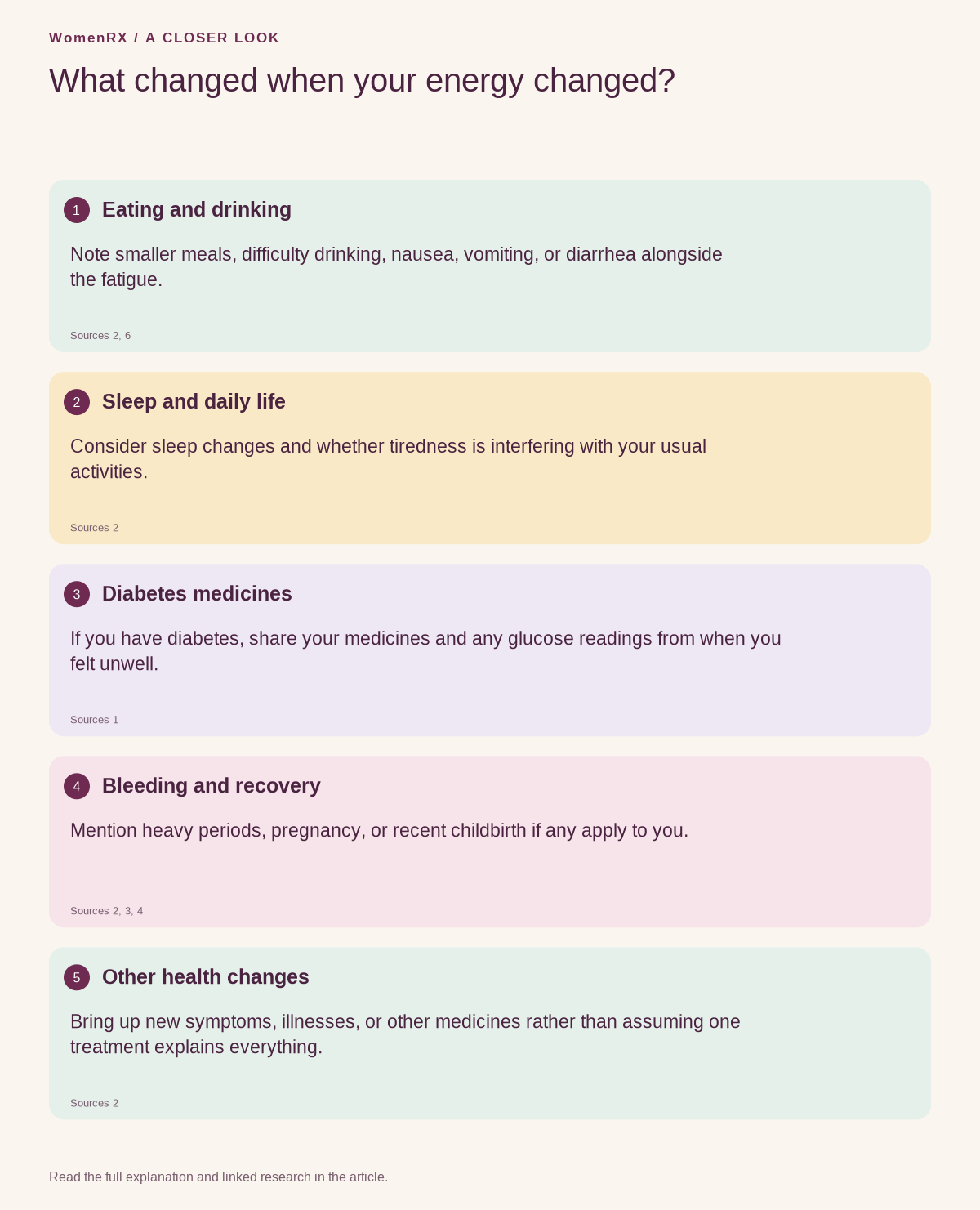
What changed when your energy changed?
Eating and drinking: Note smaller meals, difficulty drinking, nausea, vomiting, or diarrhea alongside the fatigue.26
Sleep and daily life: Consider sleep changes and whether tiredness is interfering with your usual activities.2
Diabetes medicines: If you have diabetes, share your medicines and any glucose readings from when you felt unwell.1
Bleeding and recovery: Mention heavy periods, pregnancy, or recent childbirth if any apply to you.234
Other health changes: Bring up new symptoms, illnesses, or other medicines rather than assuming one treatment explains everything.2
Read the figure as text
Use these prompts to describe the pattern. They aren’t a test for the cause of fatigue.- Eating and drinking: Note smaller meals, difficulty drinking, nausea, vomiting, or diarrhea alongside the fatigue.26
- Sleep and daily life: Consider sleep changes and whether tiredness is interfering with your usual activities.2
- Diabetes medicines: If you have diabetes, share your medicines and any glucose readings from when you felt unwell.1
- Bleeding and recovery: Mention heavy periods, pregnancy, or recent childbirth if any apply to you.234
- Other health changes: Bring up new symptoms, illnesses, or other medicines rather than assuming one treatment explains everything.2
More questions, answered
Does feeling tired mean my blood sugar is low?
No. Fatigue has many possible causes. Low blood glucose is a particular concern for people taking insulin or certain other diabetes medicines, especially when they cannot eat enough. If you monitor glucose, a reading taken when you feel unwell is more useful to share than a guess based on tiredness alone. 12
Sources you can check
- Hypoglycemia: MedlinePlusAccessed 2026-09-25Return to first citation
- Fatigue: MedlinePlusAccessed 2026-09-25Return to first citation
- Postpartum Care: MedlinePlusAccessed 2026-09-25Return to first citation
- Heavy periods - NHSAccessed 2026-09-25Return to first citation
- Glucagon-like peptide 1 (GLP-1) receptor agonists for people with chronic kidney disease and diabetes.Natale P, Green SC, Tunnicliffe DJ, Pellegrino G, Toyama T, Strippoli GF. · The Cochrane database of systematic reviews · 2025Return to first citation
- Harnessing Facebook to Investigate Real-World Mentions of Adverse Events of Glucagon-Like Peptide-1 Receptor Agonist (GLP-1 RA) Medications: Observational Study of Facebook Posts From 2022 to 2024.Alibilli AS, Jain V, Mane H, Yue X, Ratzki-Leewing A, Merchant JS, Criss S, Nguyen QC, McCoy RG, Nguyen TT. · JMIR infodemiology · 2025Return to first citation