Dizzy on a GLP-1? How to Sort Through the Causes
Dizziness can happen for several reasons during GLP-1 treatment, so the timing and accompanying symptoms matter as much as the medicine itself.
Dizziness has been reported with GLP-1 medicines, but it doesn’t prove the drug is the cause. Dehydration, a blood-pressure drop when standing, inner-ear problems, and low blood glucose in people taking certain diabetes medicines are possible contributors. Sit or lie down while dizzy. If standing dizziness won’t go away or you’re peeing much less than usual, seek urgent care; being difficult to wake alongside dehydration signs calls for emergency help. 1 3 4 5 6
Start with what “dizzy” feels like
Dizziness can mean feeling faint, unsteady, or as if the room is spinning. Those sensations can point to different causes. A brief lightheaded spell just after standing is different from spinning with nausea or a change in hearing, for example. A new medicine can be part of the picture, but dizziness alone doesn’t identify the cause. 4
Dizziness has appeared in reports about GLP-1 medicines and in a review of their adverse effects. Reports can flag a possible association, but they can’t establish that the medicine caused a person’s symptoms or how likely the effect is. In an analysis of FDA adverse-event reports, dizziness was among the neurological reporting signals. Most reports in that analysis, 89.6%, originated in the United States; the authors cautioned that reporting bias and other factors limit conclusions about cause. 5 6
Check fluids, glucose, and the episode pattern
Could you be low on fluids? Not drinking enough or losing more fluid than you take in can contribute to dehydration. If you’ve been drinking less than usual, that’s worth considering alongside the timing of the dizziness. 2
Could blood glucose be low? A GLP-1 medicine is not, by itself, proof that your blood sugar has dropped. Low blood glucose is more common in people with diabetes who take insulin or other medicines that lower glucose. In people with diabetes, being sick and unable to eat enough can also contribute. If you have diabetes and feel dizzy, check your glucose if that’s part of your care plan; a level below 70 mg/dL is a common low threshold for many people with diabetes, though your target may differ. 1
Does it happen when you stand up? Lightheadedness after getting up quickly can occur with a sudden blood-pressure drop. A spinning feeling, imbalance, or hearing symptoms may point toward an inner-ear cause instead. Dizziness can also follow a change in another prescription medicine, so consider any recent medication changes, not just the GLP-1. 4
Let the pattern guide your next step
If you’re dizzy now, sit or lie down until it passes, then get up slowly. Sip fluids if you’ve been able to drink and have no medical reason to limit fluids. Don’t drive, climb, or use machinery while dizzy. 2 4
For a recurring episode, note when it happened, whether you’d had much to drink, whether you’d just stood up, what other symptoms came with it, and any recent medication changes. If you take diabetes medicines, include your glucose reading when available. These details can help distinguish a pattern; they aren’t a way to diagnose the cause yourself.
Know when not to wait. Dizziness when you stand that does not go away, dark yellow urine, or peeing less than usual can signal serious dehydration that needs urgent care. If someone has signs of dehydration and is difficult to wake, seek emergency help. 3
Arrange a medical assessment if dizziness persists or keeps coming back. Also seek assessment if it comes with fainting or collapse, a change in your pulse, double or blurred vision, or numbness or weakness in your face, arms, or legs. The dizziness guidance identifies these as reasons to seek medical advice; it does not assign them all the same level of urgency. 4 If pregnancy is possible or your menstrual bleeding has been unusually heavy, mention that during the assessment. Neither detail establishes the cause of your dizziness or links it to the GLP-1 medicine.
The FDA reporting analysis does not establish a sex-specific risk of dizziness from GLP-1 treatment. 65.3% of neurological adverse-event reports in the analysis involved females, but it did not provide sex-stratified dizziness rates. Those reports cannot show that females have a higher rate of dizziness. 5
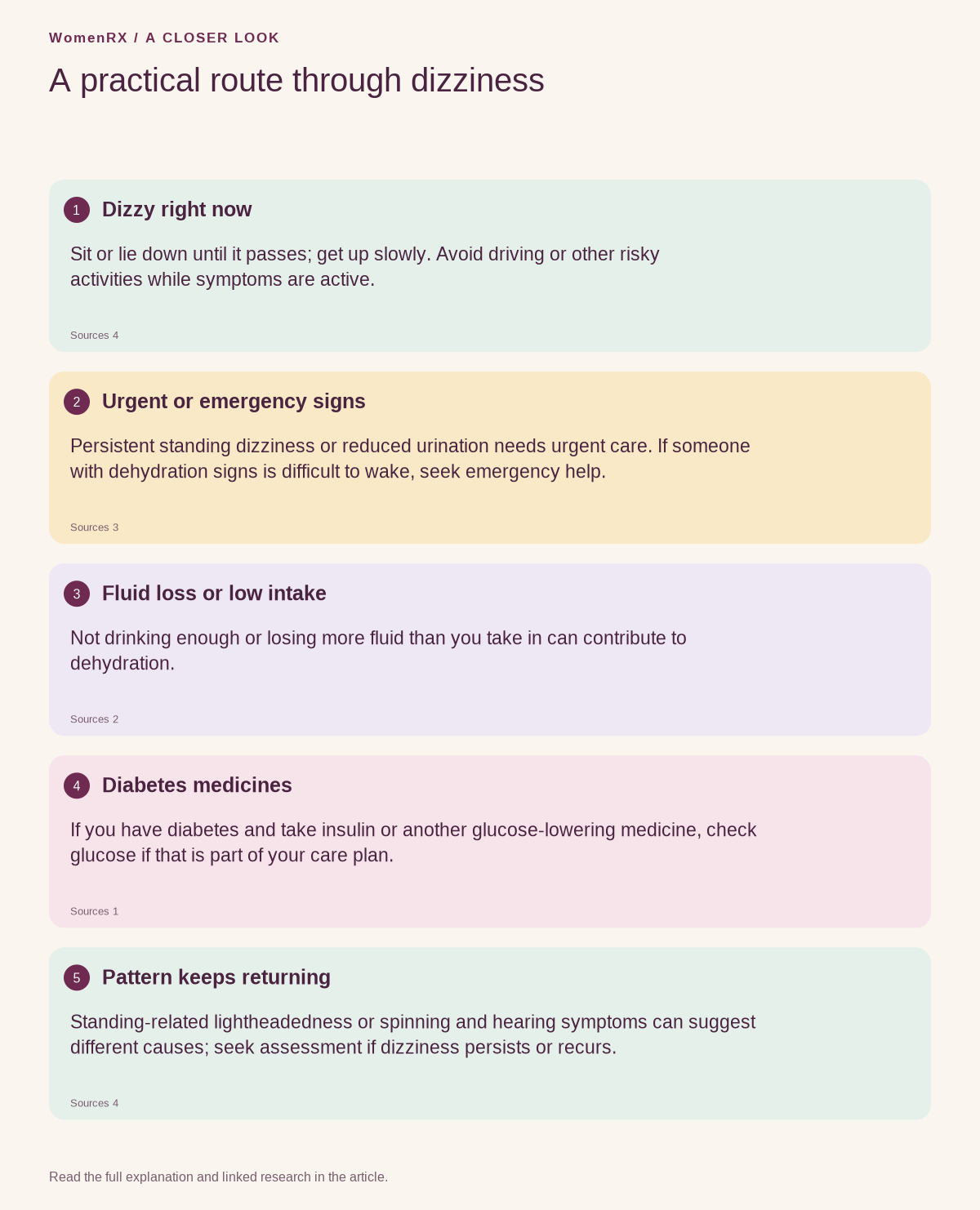
A practical route through dizziness
Dizzy right now: Sit or lie down until it passes; get up slowly. Avoid driving or other risky activities while symptoms are active.4
Urgent or emergency signs: Persistent standing dizziness or reduced urination needs urgent care. If someone with dehydration signs is difficult to wake, seek emergency help.3
Fluid loss or low intake: Not drinking enough or losing more fluid than you take in can contribute to dehydration.2
Diabetes medicines: If you have diabetes and take insulin or another glucose-lowering medicine, check glucose if that is part of your care plan.1
Pattern keeps returning: Standing-related lightheadedness or spinning and hearing symptoms can suggest different causes; seek assessment if dizziness persists or recurs.4
Read the figure as text
Use this route to identify patterns and choose a next step. It compares possibilities, not diagnoses.- Dizzy right now: Sit or lie down until it passes; get up slowly. Avoid driving or other risky activities while symptoms are active.4
- Urgent or emergency signs: Persistent standing dizziness or reduced urination needs urgent care. If someone with dehydration signs is difficult to wake, seek emergency help.3
- Fluid loss or low intake: Not drinking enough or losing more fluid than you take in can contribute to dehydration.2
- Diabetes medicines: If you have diabetes and take insulin or another glucose-lowering medicine, check glucose if that is part of your care plan.1
- Pattern keeps returning: Standing-related lightheadedness or spinning and hearing symptoms can suggest different causes; seek assessment if dizziness persists or recurs.4
More questions, answered
Does feeling dizzy mean my blood sugar is low?
No. Dizziness has several possible causes. Low blood glucose is more relevant if you have diabetes and take insulin or another medicine that lowers glucose; checking your glucose, if that’s part of your care plan, can help clarify whether it’s low. 1 4
Sources you can check
- Hypoglycemia: MedlinePlusAccessed 2026-09-25Return to first citation
- Dehydration: MedlinePlusAccessed 2026-09-25Return to first citation
- Dehydration - NHSAccessed 2026-09-25Return to first citation
- Dizziness - NHSAccessed 2026-09-25Return to first citation
- Pharmacovigilance analysis of neurological adverse events associated with GLP-1 receptor agonists based on the FDA Adverse Event Reporting System.Chen H, Liu S, Gao S, Shi H, Yan Y, Xu Y, Fang J, Wang W, Chen H, Liu Z. · Scientific reports · 2025Return to first citation
- The pharmacologic basis for clinical differences among GLP-1 receptor agonists and DPP-4 inhibitors.Morales J. · Postgraduate medicine · 2011Return to first citation