A Flexible Grocery List for Starting a GLP-1 Medicine
Stock a few easy-to-eat proteins, produce, and whole grains, then choose portions and swaps that fit your appetite and preferences.
Start with flexible building blocks, not a strict meal plan: a few protein options, fruits and vegetables, whole grains, and convenient foods you’ll actually eat. Smaller, regular meals can be easier to plan around a changing appetite, but your needs and tolerances are individual. Keep alternatives on hand rather than treating any food as mandatory. 1
Shop for options, not a perfect menu
GLP-1-based medicines can change how much you want to eat. In a small, 24-week observational study of 28 adults with obesity starting semaglutide or tirzepatide, recorded energy and nutrient intake fell, while overall diet quality did not significantly improve. The study is exploratory, not proof that everyone will eat less or have the same experience. Still, it makes a practical point: when meals get smaller, it helps to have nourishing choices within easy reach. 3
A four-society advisory recommends a flexible pattern that includes fruits, vegetables, whole grains, dairy, lean proteins, eggs, nuts, and seeds. It also suggests regular, smaller meals. These are broad priorities, not a required menu or a universal protein target. 1
A flexible list by meal role
Choose a couple of items from each section. You don’t need to buy everything, and familiar foods that fit your preferences belong on the list too. 12
Protein that’s easy to portion - Refrigerated: eggs, Greek yogurt, or cottage cheese - Fresh or frozen: fish, seafood, or poultry - Pantry-stable: canned beans or lentils, nuts, seeds, or peanut butter
If appetite is low, a smaller serving of yogurt, an egg, or nut butter may feel more manageable than a large serving of meat. Those are examples of smaller options, not nausea treatments or a substitute for an individualized nutrition plan. Protein needs differ from person to person. 1
Produce for different levels of effort - Fresh: berries, apples, citrus, bananas, carrots, tomatoes, or leafy greens - Frozen: vegetables or fruit you can portion as needed - Easy to add: peas, squash, avocado, or prewashed greens
Fresh and frozen are practical shopping formats, not different nutrition rules. Pick the ones you’re most likely to use. The advisory encourages a range of fruits and vegetables, rather than one special “GLP-1 food.” 1
Whole grains and meal foundations - Pantry-stable: oats, brown rice, quinoa, or whole-grain cereal or pasta - Fresh or frozen: whole-grain bread
These can be paired with a protein and produce in portions that feel comfortable. If a full meal feels like too much, the point is to have components available, not to push through a large plate. Smaller, regular meals and flexibility are among the advisory’s recommendations. 1
Convenient choices for low-energy days - From the fridge: yogurt or eggs for little preparation - From the freezer: portionable vegetables or fruit - From the pantry: nut butter, canned beans, ready-to-eat lentils, or whole-grain cereal - From the bread box or freezer: whole-grain toast
Convenience is part of a workable list. MedlinePlus describes healthy eating as a varied pattern that can account for preferences, traditions, and budget, not a strict diet built from a narrow set of foods. 2
Plan a gentle swap, not a nausea cure
Food tolerance varies. If fatty or spicy foods, or carbonated drinks, seem to make symptoms harder for you, consider having simpler alternatives available. The background to a pilot study of a digital nutrition-advisor tool mentions avoiding fatty or spicy foods and carbonated beverages as possible measures for GLP-1-related stomach symptoms; the study did not test those measures. 4
For example, if a serving of fish feels like too much, you could try an egg or a smaller portion of Greek yogurt instead. 1 If preparation is the hurdle, canned lentils can replace beans you would need to cook, and frozen vegetables can replace fresh ones you would need to chop. Oatmeal or toast may be a simpler option when a higher-fat meal sounds unappealing. Choose foods you tolerate; these swaps are options, not proven nausea treatments.
Make the list fit your real life
Start with a short list of foods you already enjoy, then add one or two options from each category. Buy amounts that make sense for your household and storage space. If you want a more substantial meal, pair fish or beans with brown rice and vegetables, and add avocado or yogurt if you like. If your appetite or food tolerance changes, rotate among alternatives rather than letting a plan become another rule to meet.
There isn’t one amount of food or protein that fits every person taking these medicines. The advisory recommends adjusting nutrition to individual needs, treatment response, and tolerance, and suggests dietitian support when a more tailored pattern would help. 1
If you’re pregnant or breastfeeding, don’t use a weight-loss-oriented grocery list as a stand-alone nutrition plan. Pregnancy isn’t the time to diet, and breastfeeding generally increases energy and some nutrient needs. Ask the clinician managing your medicine and your pregnancy or postpartum care to review both your medication and nutrition plans. 56
Build a flexible GLP-1 grocery list
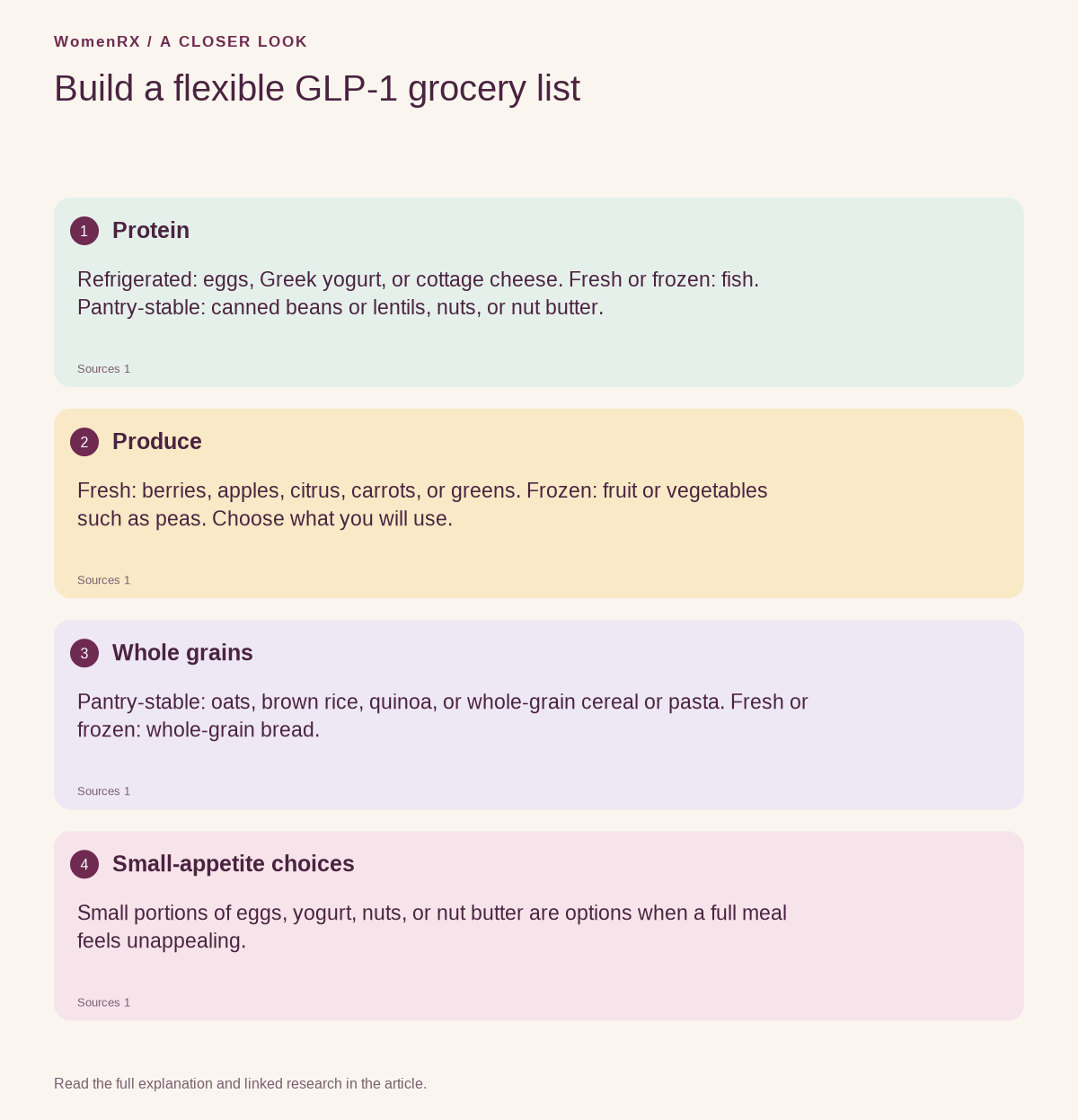
Protein: Refrigerated: eggs, Greek yogurt, or cottage cheese. Fresh or frozen: fish. Pantry-stable: canned beans or lentils, nuts, or nut butter.1
Produce: Fresh: berries, apples, citrus, carrots, or greens. Frozen: fruit or vegetables such as peas. Choose what you will use.1
Whole grains: Pantry-stable: oats, brown rice, quinoa, or whole-grain cereal or pasta. Fresh or frozen: whole-grain bread.1
Small-appetite choices: Small portions of eggs, yogurt, nuts, or nut butter are options when a full meal feels unappealing.1
Read the figure as text
Choose a few foods from each group. The storage labels are shopping suggestions to help you mix refrigerated, frozen, and pantry-stable options; no item is mandatory.- Protein: Refrigerated: eggs, Greek yogurt, or cottage cheese. Fresh or frozen: fish. Pantry-stable: canned beans or lentils, nuts, or nut butter.1
- Produce: Fresh: berries, apples, citrus, carrots, or greens. Frozen: fruit or vegetables such as peas. Choose what you will use.1
- Whole grains: Pantry-stable: oats, brown rice, quinoa, or whole-grain cereal or pasta. Fresh or frozen: whole-grain bread.1
- Small-appetite choices: Small portions of eggs, yogurt, nuts, or nut butter are options when a full meal feels unappealing.1
More questions, answered
Do I need to buy protein shakes or bars?
No. You can build this list around foods such as dairy, eggs, seafood, poultry, beans, nuts, and seeds. If eating enough is difficult, your protein needs and food options can be considered individually rather than assuming a particular product is required. 1
Should I avoid all higher-fat foods?
Not necessarily. Avoiding fatty foods is mentioned as one possible measure for GLP-1-related stomach symptoms in the background to a nutrition-advisor pilot study. It wasn’t tested in that study, and it isn’t a rule for foods you tolerate well. Keep alternatives available if you need them. 4
Sources you can check
- Nutritional priorities to support GLP-1 therapy for obesity: four-society joint advisory2025Return to first citation
- Nutrition: MedlinePlusAccessed 2026-09-25Return to first citation
- Changes in food cravings, dietary quality, body composition, and dietary intake during GLP-1 receptor agonist therapy: The CRAVE study.Babazadeh D, Therrien S, Fitch AK, Steinberg FM. · Obesity pillars · 2026Return to first citation
- Clinical Decision Support for Digital Dietary Counseling Under GLP-1 Receptor Agonist Therapy: Convergent Mixed Methods Usability and Treatment Satisfaction Pilot Study of the Personalized Nutrition Advisor.Orban F, Journeaux A, Kanehl P, Stoll M, Lehmann M, Schirmann F, Herzig D, Bally L. · JMIR formative research · 2026Return to first citation
- Weight gain in pregnancy - NHSAccessed 2026-09-25Return to first citation
- Maternal Diet and Breastfeeding | Breastfeeding special circumstances | CDCAccessed 2026-09-25Return to first citation