How to Eat Out Comfortably on a GLP-1
A flexible order lets you enjoy the meal you want without having to finish more than feels comfortable.
Choose a restaurant meal you can adjust as you eat: a protein food you like, other foods that appeal to you, and a portion you don’t feel obliged to finish. If nausea or early fullness is an issue, a lighter option or a take-home box may help. If you’re eating comfortably, you don’t need to make every restaurant meal smaller.16
Order for flexibility, not the smallest possible meal
A GLP-1 medication can change how hungry you feel, and nausea, diarrhea, constipation or vomiting can make a familiar restaurant order less appealing. That doesn’t mean there’s one restaurant diet to follow. In a systematic review of randomized trials, gastrointestinal symptoms remained common even when participants received dietary or lifestyle guidance; the best dietary approach for managing them is still uncertain.6
Start with a meal you’d actually enjoy, then give yourself options. You might order a main dish with sides you can eat at your own pace, share an entrée, or plan to take part home. Those are ways to avoid feeling committed to a large plate, not rules about how much you should eat. A four-society nutrition advisory encourages flexibility with food choices, adequate fluids and attention to overall nutrition while taking a GLP-1 medication. It also suggests smaller, more frequent meals when hunger and food interest are low.1
What that can look like on different menus
At a bowl or counter-service place, you could build around chicken, fish, tofu or beans, then choose rice, grains and vegetables that sound good. Tofu and beans count as protein foods; meat isn’t required.12 If you tend to feel full quickly, a customizable bowl lets you eat what appeals to you now and stop when you’re comfortable.
At a sit-down restaurant, a grilled fish or chicken dish with vegetables and a grain is one option. If a rich entrée doesn’t appeal tonight, soup or another lighter dish may be easier to consider. The nutrition advisory specifically notes that soups, yogurt and other lighter foods can be more appealing than heavier foods when food interest is low. That’s a suggestion to work from, not a list of foods everyone on medication must tolerate.1
At a sandwich or breakfast spot, think about the whole order rather than a special GLP-1 menu item. An egg sandwich, yogurt with fruit, or a sandwich you can save part of are examples of flexible choices. Eggs and yogurt provide protein, and fruit can add variety when your appetite allows.1 If you’re hungry enough for the full meal and feel well, there’s no need to stop at an arbitrary fraction of it.
For takeout, decide before ordering whether you’d want to bring part of the meal home. A dish that still appeals later may be more practical than adding sides solely because they come with a combo. If taking food home isn’t practical, choose an amount you want now or leave the extras behind.
Let the symptom change the plan
Feeling queasy or full sooner than expected? You could start with less on your plate, eat at a comfortable pace and set the rest aside. MedlinePlus suggests smaller meals more often for nausea, while the GLP-1 advisory notes that soup and other lighter foods may appeal when food interest is low.31
Having diarrhea? Fluids deserve attention. As symptoms improve, soft, bland food may be easier to eat; a simple dish may be more useful than forcing your usual restaurant order.4 Constipated? Don’t assume the answer is to eat less. Fruits, vegetables and grains provide fiber, though what sounds comfortable at one meal is up to you.5
A restaurant strategy should also leave room for enough food across the day. The GLP-1 advisory emphasizes protein and reassessing intake and hydration when eating less makes it hard to meet nutritional needs. It does not establish one restaurant portion or protein target that fits everyone.1 If you notice dry mouth, infrequent urination or dark urine along with vomiting, contact a health care provider immediately. Those can be signs of dehydration, not a problem to solve by finding a better menu item.3
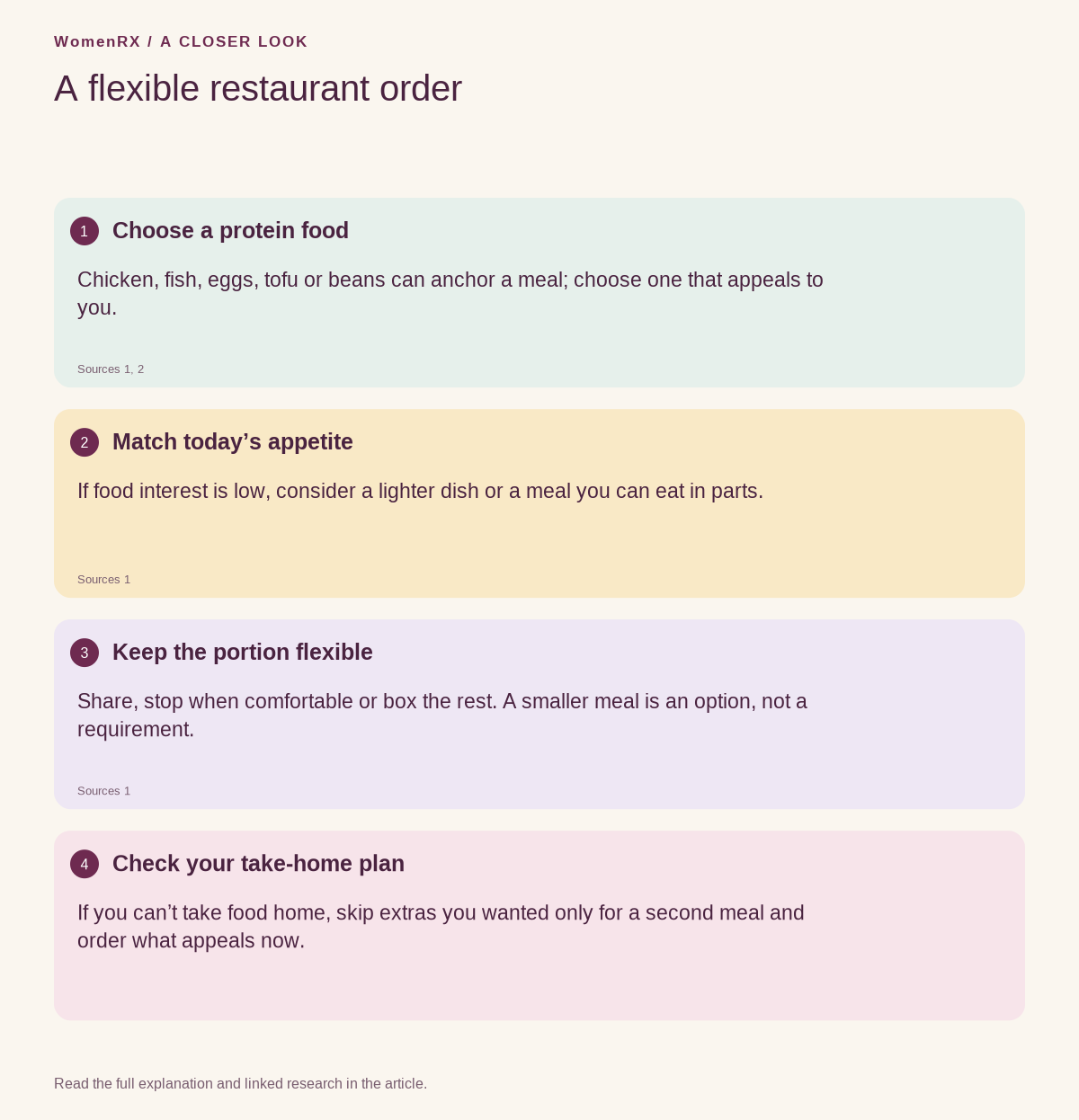
A flexible restaurant order
Choose a protein food: Chicken, fish, eggs, tofu or beans can anchor a meal; choose one that appeals to you.12
Match today’s appetite: If food interest is low, consider a lighter dish or a meal you can eat in parts.1
Keep the portion flexible: Share, stop when comfortable or box the rest. A smaller meal is an option, not a requirement.1
Check your take-home plan: If you can’t take food home, skip extras you wanted only for a second meal and order what appeals now.
Read the figure as text
Four ordering decisions that leave room for your appetite without assuming you’ll take leftovers home.- Choose a protein food: Chicken, fish, eggs, tofu or beans can anchor a meal; choose one that appeals to you.12
- Match today’s appetite: If food interest is low, consider a lighter dish or a meal you can eat in parts.1
- Keep the portion flexible: Share, stop when comfortable or box the rest. A smaller meal is an option, not a requirement.1
- Check your take-home plan: If you can’t take food home, skip extras you wanted only for a second meal and order what appeals now.
Sources you can check
- Nutritional priorities to support GLP-1 therapy for obesity: four-society joint advisory2025Return to first citation
- MedlinePlus: Protein in diet, including tofu and other plant sourcesAccessed 2026-09-25Return to first citation
- Nausea | Vomiting | MedlinePlusAccessed 2026-09-25Return to first citation
- Diarrhea | MedlinePlusAccessed 2026-09-25Return to first citation
- Constipation | MedlinePlusAccessed 2026-09-25Return to first citation
- Dietary Strategies and Nutritional Management in Patients Receiving GLP-1 and Dual GIP/GLP-1 Receptor Agonists as Adjuncts to Lifestyle Interventions: A Systematic Review of Randomised Clinical Trials.de Paulo RS, Bonifácio DB, de Carvalho MHL, Bressan J. · Diabetes, obesity & metabolism · 2026Return to first citation