What to Do If You Feel Nauseated on Zepbound
Nausea often shows up during dose increases, but persistent symptoms or signs of dehydration deserve a conversation with your prescriber.
Nausea is a known Zepbound side effect. The prescribing information says nausea, vomiting, and diarrhea happen most often during dose increases and tend to ease over time. Try small, frequent sips of fluid if drinking feels difficult. Contact your prescriber if symptoms are severe or persist, or if you notice signs of dehydration. If pregnancy is possible or planned, include that in your medication discussion. 21
First, notice when it happens
Nausea can happen with Zepbound, but it isn’t the only possible explanation. Pregnancy and other conditions can also cause nausea. The medication information says nausea, vomiting, and diarrhea occurred most often during dose escalation and decreased over time. That pattern can help you describe what’s happening, but it doesn’t prove that a particular bout of nausea is caused by the medicine. 21
For a few days, jot down when nausea starts and ends, whether it follows an injection or a dose change, whether you vomit or have diarrhea, and whether you can keep fluids down. Note any dry mouth, dark urine, or urinating less than usual. This simple record can help your prescriber judge whether symptoms are easing, persisting, or affecting hydration. 1
Try gentle steps, and keep fluids in view
Smaller meals more often, frequent small sips of clear fluids if drinking feels difficult, and avoiding strong smells that trigger nausea are general self-care options. They may help you feel more comfortable, but they don’t guarantee that medication-related nausea will stop. 1
Hydration matters because vomiting or diarrhea can cause fluid loss. Zepbound’s prescribing information warns that dehydration related to gastrointestinal symptoms can lead to kidney problems, and advises prompt reporting of nausea, vomiting, or diarrhea that persists. 2
When to contact your prescriber
Get in touch promptly if nausea, vomiting, or diarrhea doesn’t go away, is severe, or makes it hard to drink enough. Dry mouth, dark urine, and urinating less often can be signs of dehydration, so contact your provider promptly if you notice them. 12
Also contact your prescriber right away if nausea comes with upper-stomach pain, fever, yellowing of your skin or eyes, or pale, clay-colored stools. These can be symptoms of a gallbladder problem listed in the Zepbound medication information. 2
Ask what to do about your next dose if symptoms persist. Your prescriber can advise you based on your symptoms and treatment plan. If drinking feels difficult, try small sips of clear fluids often. If you develop signs of dehydration or persistent vomiting, contact your provider promptly. 12
Make the conversation specific
A short log is often more useful than trying several remedies at once. Bring the dates of any recent dose changes, when nausea began, how often you’ve vomited or had diarrhea, and whether you’re drinking and urinating normally. Useful questions include:
- Could the timing fit with a dose increase, or should we consider another cause?
- What should I do about my next dose if these symptoms continue?
- Do my symptoms suggest dehydration, and should my kidney function be checked?
- If pregnancy is possible, could a pregnancy test help evaluate the nausea, and how should pregnancy possibility or plans factor into reviewing my Zepbound treatment?
Pregnancy can cause nausea, and a pregnancy test may be part of evaluating nausea when it’s relevant. If pregnancy is possible or you’re planning a pregnancy, tell your prescriber so it can be included in your medication discussion. 1
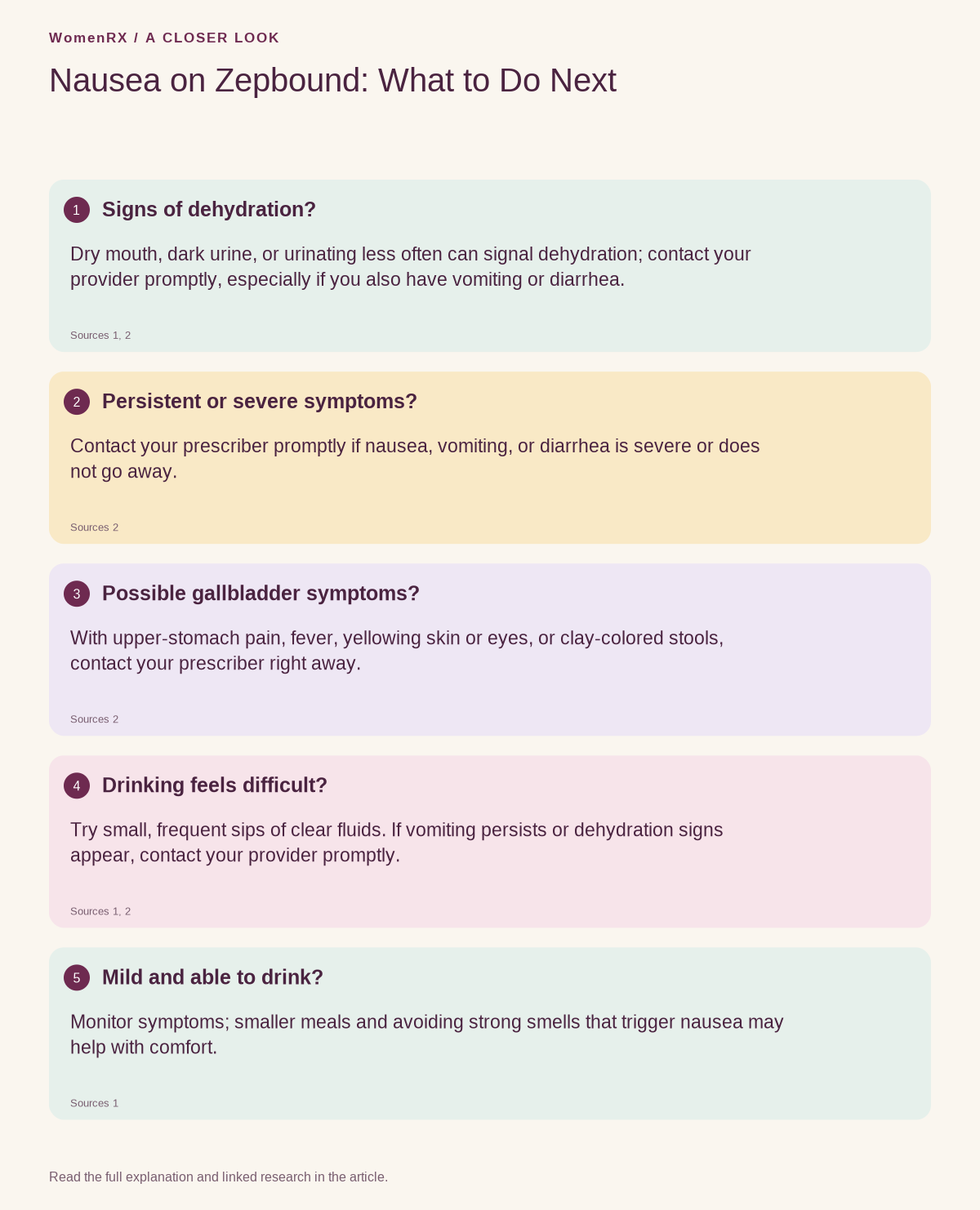
Nausea on Zepbound: What to Do Next
Signs of dehydration?: Dry mouth, dark urine, or urinating less often can signal dehydration; contact your provider promptly, especially if you also have vomiting or diarrhea.12
Persistent or severe symptoms?: Contact your prescriber promptly if nausea, vomiting, or diarrhea is severe or does not go away.2
Possible gallbladder symptoms?: With upper-stomach pain, fever, yellowing skin or eyes, or clay-colored stools, contact your prescriber right away.2
Drinking feels difficult?: Try small, frequent sips of clear fluids. If vomiting persists or dehydration signs appear, contact your provider promptly.12
Mild and able to drink?: Monitor symptoms; smaller meals and avoiding strong smells that trigger nausea may help with comfort.1
Read the figure as text
Check for symptoms that call for contact with your provider. If nausea is mild and you can drink, use general comfort measures and keep track of how symptoms change.- Signs of dehydration?: Dry mouth, dark urine, or urinating less often can signal dehydration; contact your provider promptly, especially if you also have vomiting or diarrhea.12
- Persistent or severe symptoms?: Contact your prescriber promptly if nausea, vomiting, or diarrhea is severe or does not go away.2
- Possible gallbladder symptoms?: With upper-stomach pain, fever, yellowing skin or eyes, or clay-colored stools, contact your prescriber right away.2
- Drinking feels difficult?: Try small, frequent sips of clear fluids. If vomiting persists or dehydration signs appear, contact your provider promptly.12
- Mild and able to drink?: Monitor symptoms; smaller meals and avoiding strong smells that trigger nausea may help with comfort.1
Sources you can check
- Nausea | Vomiting | MedlinePlusAccessed 2026-09-25Return to first citation
- ZEPBOUND (TIRZEPATIDE) INJECTION, SOLUTION ZEPBOUND (TIRZEPATIDE) INJECTION, SOLUTION ZEPBOUND KWIKPEN (TIRZEPATIDE) INJECTION, SOLUTION [ELI LILLY AND COMPANY] | US prescribing information and patient instructionsAccessed 2026-09-25Return to first citation