Can GLP-1 Medicines Make Acid Reflux Worse?
Reflux symptoms can appear alongside the digestive effects of GLP-1 treatment, but timing alone doesn’t prove the medicine caused them.
Gastroesophageal reflux disease was reported more often with liraglutide than with placebo in adult Saxenda clinical trials, alongside nausea, indigestion and belching. Those liraglutide results do not tell you whether the same reflux pattern occurs with semaglutide or tirzepatide. That doesn’t mean every new burning sensation is caused by the medicine. Note when symptoms began, whether they follow meals or lying down, and whether pain or vomiting changes the picture. 31
What the connection does, and doesn’t, tell you
Heartburn is a burning feeling in the middle of the chest when stomach acid moves up toward the throat. It often feels worse after eating, lying down or bending over. Repeated reflux may be called gastroesophageal reflux disease, or GERD, but an episode of burning doesn’t establish that diagnosis. 1
There’s a reason to consider your medicine if symptoms begin after you start treatment or increase it. In adult Saxenda clinical trials, gastroesophageal reflux disease was among the adverse reactions reported more often with liraglutide than with placebo. Nausea, indigestion, vomiting, belching and abdominal discomfort were also reported more often. Those symptoms can overlap in everyday experience: what feels like “reflux” might be burning, food or acid coming back up, or an unsettled, overly full stomach. The liraglutide prescribing-information summary reports overall adverse reactions without a reflux estimate broken down by sex, and it can’t tell you whether an individual episode was caused by the medicine. 31
Look for a pattern, not just a start date
A short note on your symptoms can make the distinction clearer. Record when the burning or regurgitation happens, whether it follows eating or lying down, and whether it comes with nausea, vomiting or abdominal pain. Add when you started or changed treatment and whether you had reflux before. For example, burning mainly when you lie down after dinner fits a common reflux pattern; persistent abdominal pain that reaches your back needs a different response. 13
Pregnancy is another possible contributor to reflux, so don’t automatically assign new symptoms to treatment if you’re pregnant or might be. Pregnancy-related hormonal changes can relax the muscle that usually helps keep stomach contents down, while increasing abdominal pressure can add to reflux. 4
Match the next step to the symptoms
If symptoms are mild and occasional, notice whether eating or lying down brings them on. A pharmacist can advise on short-term reflux relief, including antacids or alginates; these ease symptoms but don’t resolve the underlying problem. If you’re pregnant or might be, mention that before choosing a remedy. 14
If heartburn keeps returning, is getting worse or is disrupting your day, contact your prescribing clinician. Bring the pattern you’ve noticed so you can discuss both reflux care and whether your treatment plan needs changing. 13
Don’t treat severe or unusual pain as routine reflux. Liraglutide prescribing information warns that persistent or severe abdominal pain, sometimes spreading to the back and sometimes accompanied by nausea or vomiting, can be a sign of pancreatitis and needs prompt medical assessment. Seek immediate medical help for sudden, sharp abdominal pain, or abdominal pain accompanied by pain in the chest, neck or shoulder. 32
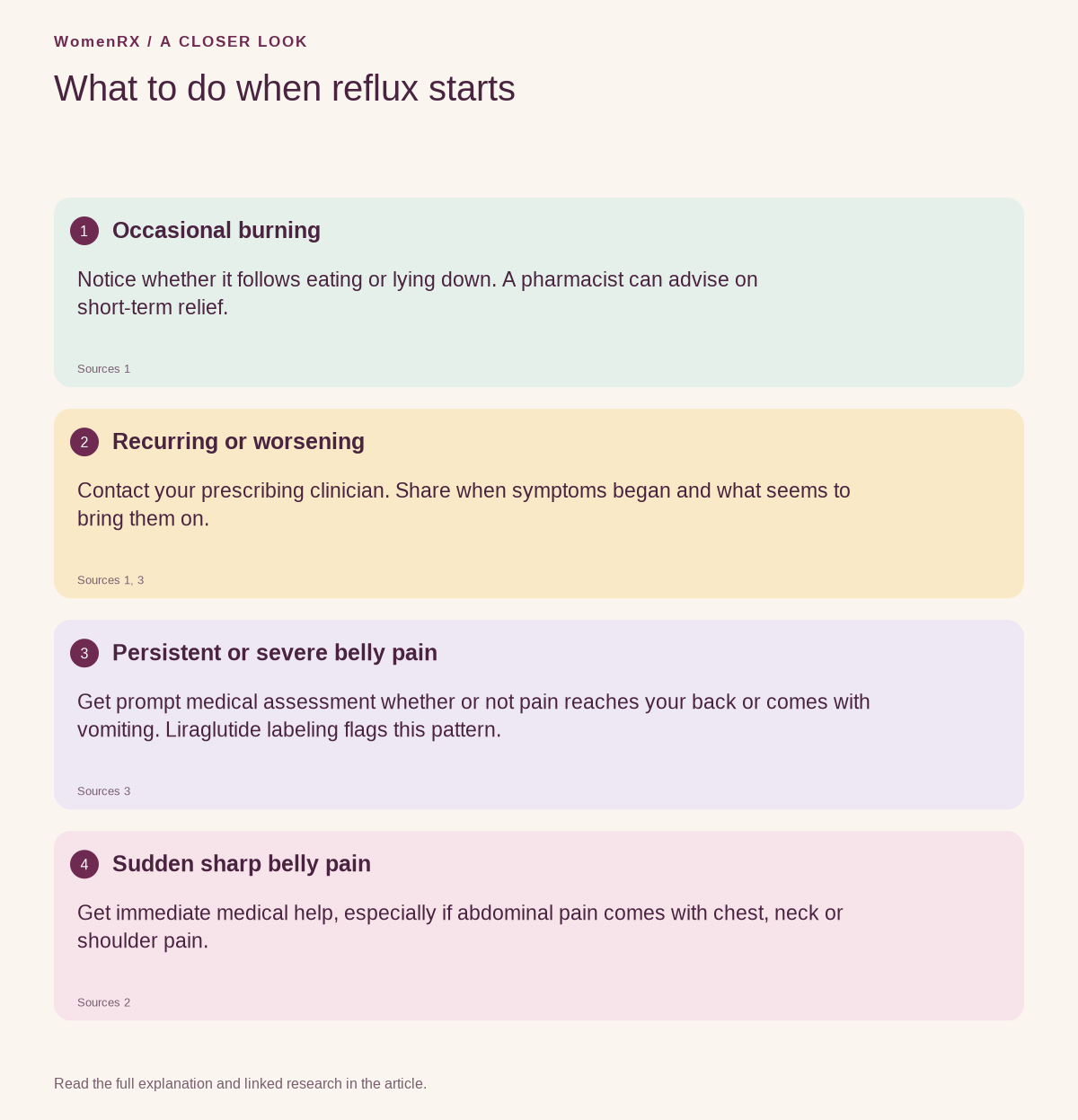
What to do when reflux starts
Occasional burning: Notice whether it follows eating or lying down. A pharmacist can advise on short-term relief.1
Recurring or worsening: Contact your prescribing clinician. Share when symptoms began and what seems to bring them on.13
Persistent or severe belly pain: Get prompt medical assessment whether or not pain reaches your back or comes with vomiting. Liraglutide labeling flags this pattern.3
Sudden sharp belly pain: Get immediate medical help, especially if abdominal pain comes with chest, neck or shoulder pain.2
Read the figure as text
Sort the symptom pattern before deciding whether to watch it, make contact or seek urgent care.- Occasional burning: Notice whether it follows eating or lying down. A pharmacist can advise on short-term relief.1
- Recurring or worsening: Contact your prescribing clinician. Share when symptoms began and what seems to bring them on.13
- Persistent or severe belly pain: Get prompt medical assessment whether or not pain reaches your back or comes with vomiting. Liraglutide labeling flags this pattern.3
- Sudden sharp belly pain: Get immediate medical help, especially if abdominal pain comes with chest, neck or shoulder pain.2
Sources you can check
- Heartburn and acid reflux - NHSAccessed 2026-09-25Return to first citation
- Abdominal Pain | MedlinePlusAccessed 2026-09-25Return to first citation
- SAXENDA (LIRAGLUTIDE) INJECTION, SOLUTION [NOVO NORDISK PHARMACEUTICAL INDUSTRIES, LP] | US prescribing information and patient instructionsAccessed 2026-09-25Return to first citation
- Alginate Therapy for Gastroesophageal Reflux in Pregnancy: A Scoping Review.Senthilkumaran M, Hui K, Li C, Werden-Abrams S, Staibano P, van der Woerd B. · The Laryngoscope · 2026Return to first citation