Constipation on Tirzepatide: What Helps and When to Get Care
Constipation is a recognized tirzepatide side effect, but pain, vomiting, and a change that won’t improve call for different responses.
Yes. Constipation was reported more often with tirzepatide than with placebo in weight-loss trials. If you’re otherwise feeling well, start by looking at fluids, food, activity, and other medicines that may be contributing. Contact your prescriber if symptoms are severe or persistent. Get medical help immediately if you can’t pass stool and are also vomiting, or have sudden, sharp abdominal pain. 451
Is tirzepatide the likely cause?
A new change in your bowel habits after starting tirzepatide is worth taking seriously, even if you don’t normally have a bowel movement every day. Constipation can mean going less often than usual, passing hard or lumpy stool, or finding it difficult or painful to go. Bloating or a stomachache can come with it. 23
In two weight-reduction trials reported in the US prescribing information for Zepbound, constipation or hard stool was reported by 11% to 17% of adults taking tirzepatide, depending on the trial dose, compared with 5% taking placebo. That makes the medication a plausible contributor, not proof that it explains every new bowel symptom. These trial figures were not reported separately for women. 4
Tirzepatide can affect appetite and movement through the digestive tract. Eating less may also change what and how much you eat. Those effects help explain why it’s useful to look beyond the number of days since your last bowel movement: Are stools harder? Have meals or fluids changed? Are you nauseated, vomiting, or having abdominal pain? A medicine such as an opioid painkiller can contribute, too. 53
Match the next step to what you’re feeling
If you’re uncomfortable but otherwise well: Look first at changes you can make comfortably. Drinking enough fluid and getting fiber from foods such as fruits, vegetables, and grains are general constipation measures. A walk may help you go more regularly. If tirzepatide has left you eating much less, consider whether those changes have also reduced the fiber and fluid in your usual routine. 235
More fiber isn’t automatically better. Expert consensus on supportive care with GLP-1-based therapies recommends adjusting fiber to your response and what you can tolerate. If adding it makes you feel worse, or nausea and vomiting make it hard to drink, don’t keep pushing the same approach. Ask your prescriber or pharmacist what fits your symptoms. Don’t assume a laxative is the right first step for every kind of abdominal discomfort. 52
If constipation isn’t improving, keeps returning, or is becoming hard to manage: Contact your prescriber. Tell them what changed, whether you have pain or vomiting, and what you’ve tried. Review your other medicines as well, particularly if you take an opioid painkiller. The Zepbound prescribing information specifically advises contacting a healthcare provider about severe or persistent gastrointestinal symptoms. Your prescriber can help decide whether your bowel symptoms call for a different management plan or a change in treatment. 324
If you can’t pass stool and you’re also vomiting, or abdominal pain is sudden and sharp: Get medical help immediately rather than treating it as routine constipation. Those combinations need assessment, whether or not tirzepatide is involved. 1
If you’re pregnant or recently gave birth
Constipation is common during pregnancy and after birth, so tirzepatide isn’t the only possible explanation for a change at those times. Simple diet and lifestyle measures are an option during pregnancy, but medicine choices and the cause of symptoms deserve their own discussion with your pregnancy or postpartum care team. This isn’t evidence that tirzepatide causes constipation differently in women. 34
The useful distinction is between a manageable change in stool and a symptom pattern that’s worsening or comes with significant pain or vomiting. You don’t need to identify the cause on your own before asking for help. 41
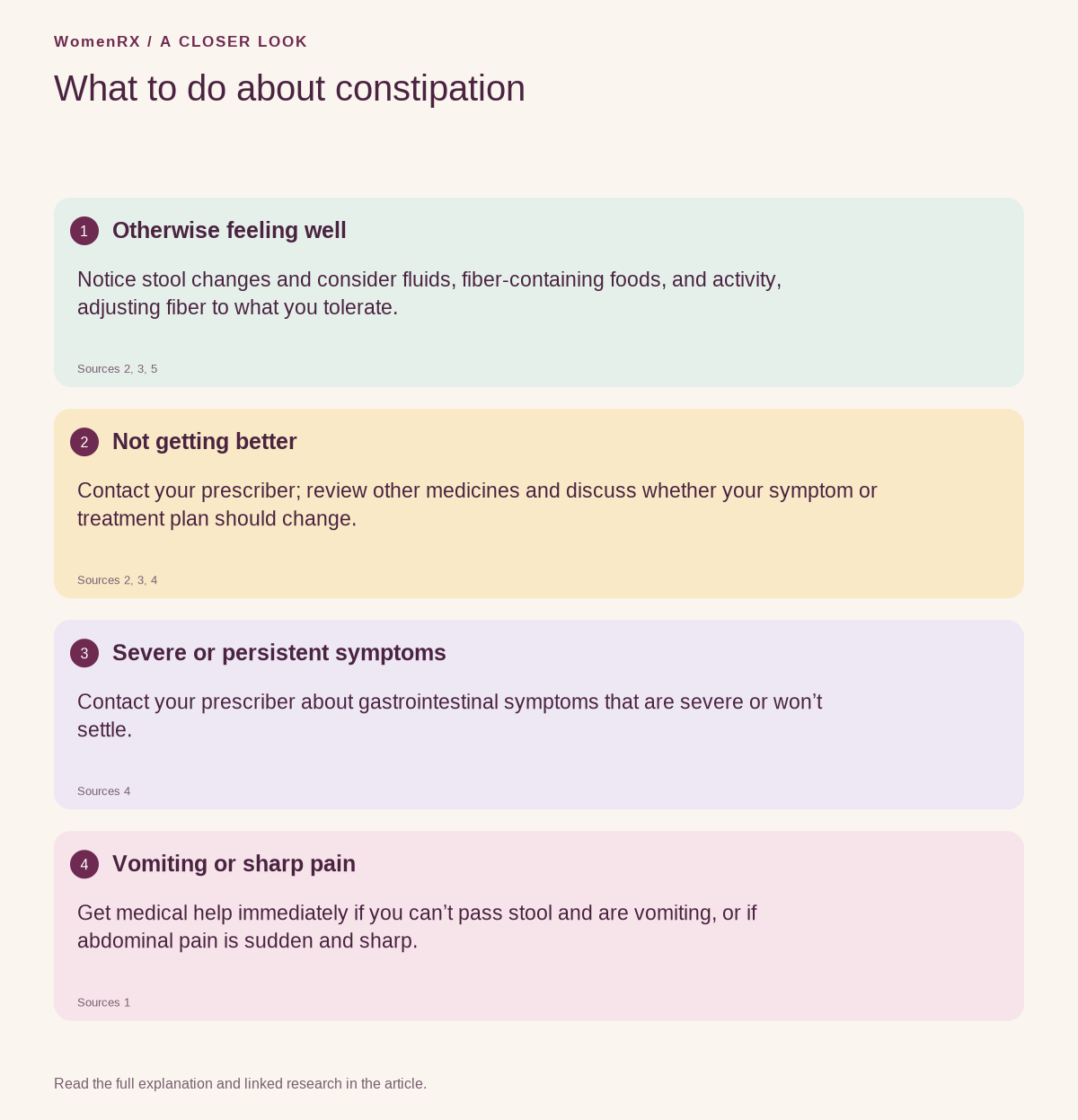
What to do about constipation
Otherwise feeling well: Notice stool changes and consider fluids, fiber-containing foods, and activity, adjusting fiber to what you tolerate.235
Not getting better: Contact your prescriber; review other medicines and discuss whether your symptom or treatment plan should change.234
Severe or persistent symptoms: Contact your prescriber about gastrointestinal symptoms that are severe or won’t settle.4
Vomiting or sharp pain: Get medical help immediately if you can’t pass stool and are vomiting, or if abdominal pain is sudden and sharp.1
Read the figure as text
Start with the symptoms around the constipation, then choose the next step.- Otherwise feeling well: Notice stool changes and consider fluids, fiber-containing foods, and activity, adjusting fiber to what you tolerate.235
- Not getting better: Contact your prescriber; review other medicines and discuss whether your symptom or treatment plan should change.234
- Severe or persistent symptoms: Contact your prescriber about gastrointestinal symptoms that are severe or won’t settle.4
- Vomiting or sharp pain: Get medical help immediately if you can’t pass stool and are vomiting, or if abdominal pain is sudden and sharp.1
More questions, answered
Does constipation mean my tirzepatide treatment needs to change?
Not necessarily, but don’t make that decision from a symptom list alone. Contact your prescriber to discuss whether treatment should change, especially if constipation is severe, persistent, or not improving with the measures you’ve tried. 43
Sources you can check
- Abdominal Pain | MedlinePlusAccessed 2026-09-25Return to first citation
- Constipation | MedlinePlusAccessed 2026-09-25Return to first citation
- Constipation - NHSAccessed 2026-09-25Return to first citation
- ZEPBOUND (TIRZEPATIDE) INJECTION, SOLUTION ZEPBOUND (TIRZEPATIDE) INJECTION, SOLUTION ZEPBOUND KWIKPEN (TIRZEPATIDE) INJECTION, SOLUTION [ELI LILLY AND COMPANY] | US prescribing information and patient instructionsAccessed 2026-09-25Return to first citation
- Nutritional and lifestyle supportive care recommendations for management of obesity with GLP-1 - based therapies: An expert consensus statement using a modified Delphi approach.Sievenpiper JL, Ard J, Blüher M, Chen W, Dixon JB, Fitch A, Gigliotti L, Khunti K, Lecube A, Lean MEJ, Mittendorfer B, Pfeiffer AFH, Ryan DH, Vilsbøll T, Van Gaal LF. · Obesity pillars · 2026Return to first citation