Ozempic Nausea: What Helps and When to Get Care
Nausea is more common while an Ozempic dose is being increased, but the right next step depends on whether you can stay hydrated and whether other symptoms are present.
If Ozempic makes you nauseated, try small, frequent sips of fluid and watch for signs of dehydration. If nausea persists, vomiting begins, or eating and drinking become difficult, contact your prescriber before making any dose changes. Tell your healthcare provider about severe or persistent stomach problems rather than trying another home remedy. Nausea can also have causes unrelated to Ozempic, including pregnancy. 125
Why it can happen during a dose increase
Ozempic can cause nausea and other digestive symptoms. In its placebo-controlled trials, digestive side effects were reported more often with Ozempic than with placebo, and most reports of nausea, vomiting, or diarrhea occurred while the dose was being increased. That pattern can help you recognize a possible medication effect, but it doesn't mean you have to push through symptoms that keep you from drinking or going about your day. 1
Semaglutide affects appetite signaling and how the stomach moves food along, which helps explain why eating may feel different on it. Digestive symptoms often ease, but there isn't a reliable timetable for any one person. In a 12-month observational weight-management program, reports of nausea and other common side effects declined over time among participants taking semaglutide. Because the study followed people who completed the program, it can't promise the same course for someone who's struggling with nausea now. 43
What you can try yourself
Make fluids the first priority. If you feel too sick to drink normally, try small sips of water or another clear liquid often, or suck on ice chips. This is general advice for nausea and dehydration, not a treatment proven to stop Ozempic nausea. It's especially useful if you've vomited or had diarrhea, because fluid loss can lead to dehydration and kidney problems while taking Ozempic. 251
Notice smell triggers. If a cooking smell sets off your nausea, stepping away from it may help; avoiding strong smells is general nausea advice, not an Ozempic-specific finding. 5
You may see long lists of foods, drinks, or supplements said to “fix” GLP-1 nausea. A plausible idea isn't the same as a demonstrated benefit. Pay more attention to whether you're able to take in fluids and whether symptoms are improving than to finding the perfect menu. 124
What belongs in a prescriber conversation
If nausea repeatedly interferes with meals, persists, or comes with vomiting or diarrhea that won't go away, tell your prescriber. Ozempic's patient information specifically asks people to report ongoing nausea, vomiting, or diarrhea, and its prescribing information flags dehydration-related kidney injury as a concern. 1
Dose increases are a sensible part of that conversation: symptoms commonly appear during escalation, and slower titration is a commonly recommended way clinicians try to improve tolerability. That does not establish that changing your own schedule will help or be safe. A prescriber can assess the symptoms and decide whether a change or another treatment for nausea makes sense for you. Reviews discuss supportive medicines as an option, but this evidence doesn't establish a particular anti-nausea drug or regimen for Ozempic nausea. 14
When nausea may mean something else
Watch for a dry mouth, dark urine, or urinating less often, which can signal dehydration. Contact a healthcare provider promptly if those signs appear or you can't keep liquids down. Confusion alongside suspected dehydration calls for immediate medical help. Tell your healthcare provider if stomach problems are severe or won't go away; don't assume they're an ordinary part of adjusting to Ozempic. 521
Timing can offer a clue, not a diagnosis. For example, nausea that begins around a dose increase could be medication-related, while new nausea can also have another cause. Pregnancy is one possible context for nausea and vomiting. If pregnancy is possible, bring that up when discussing new or persistent nausea rather than assuming Ozempic explains it. 15
These distinctions aren't different rules for women and men. The cited Ozempic labeling excerpt reports the digestive-side-effect pattern but does not break nausea down by sex, and the observational program, although mostly women, does not report whether nausea-management approaches worked differently by sex. 13
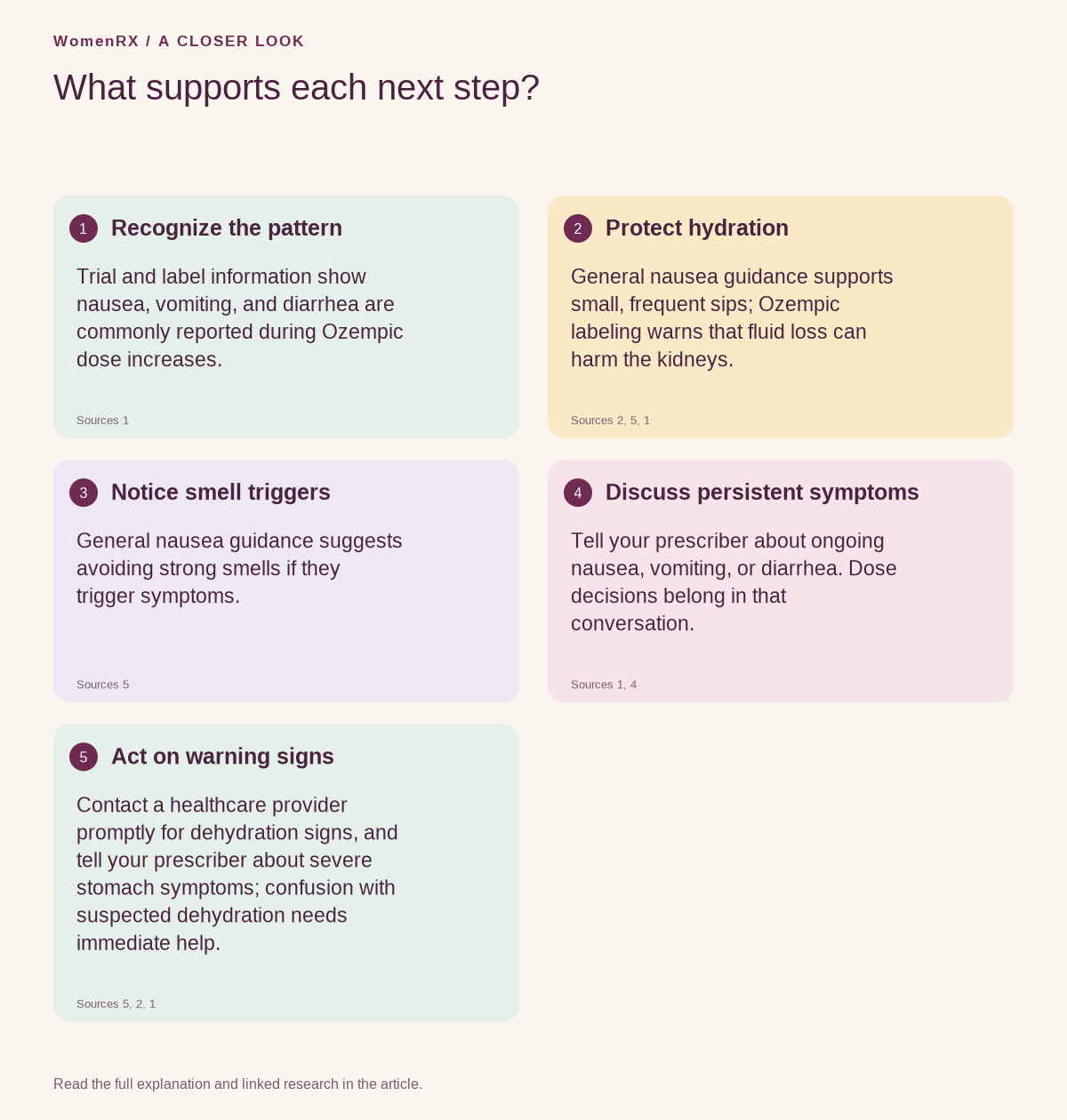
What supports each next step?
Recognize the pattern: Trial and label information show nausea, vomiting, and diarrhea are commonly reported during Ozempic dose increases.1
Protect hydration: General nausea guidance supports small, frequent sips; Ozempic labeling warns that fluid loss can harm the kidneys.251
Notice smell triggers: General nausea guidance suggests avoiding strong smells if they trigger symptoms.5
Discuss persistent symptoms: Tell your prescriber about ongoing nausea, vomiting, or diarrhea. Dose decisions belong in that conversation.14
Act on warning signs: Contact a healthcare provider promptly for dehydration signs, and tell your prescriber about severe stomach symptoms; confusion with suspected dehydration needs immediate help.521
Read the figure as text
The strength and purpose of the evidence differ across these choices.- Recognize the pattern: Trial and label information show nausea, vomiting, and diarrhea are commonly reported during Ozempic dose increases.1
- Protect hydration: General nausea guidance supports small, frequent sips; Ozempic labeling warns that fluid loss can harm the kidneys.251
- Notice smell triggers: General nausea guidance suggests avoiding strong smells if they trigger symptoms.5
- Discuss persistent symptoms: Tell your prescriber about ongoing nausea, vomiting, or diarrhea. Dose decisions belong in that conversation.14
- Act on warning signs: Contact a healthcare provider promptly for dehydration signs, and tell your prescriber about severe stomach symptoms; confusion with suspected dehydration needs immediate help.521
More questions, answered
Will Ozempic nausea go away on its own?
It may improve after you reach a maintenance dose, but you can't predict when it will ease for you. Don't wait for it to pass if vomiting or diarrhea continues, you can't drink enough, or stomach symptoms are severe. 134
Sources you can check
- OZEMPIC (SEMAGLUTIDE) INJECTION, SOLUTION [A-S MEDICATION SOLUTIONS] | US prescribing information and patient instructionsAccessed 2026-09-25Return to first citation
- Dehydration: MedlinePlusAccessed 2026-09-25Return to first citation
- Semaglutide and Tirzepatide in a Remote Weight Management Program: 12-Month Retrospective Observational Study.Richards R, Lunt W, Whitman M, Spaltro G, Hall R. · JMIR formative research · 2025Return to first citation
- Gastrointestinal Symptoms in Obesity Therapy: Mechanisms, Epidemiology, and Management Strategies.Witaszek T, Biesiada A, Iskra-Trifunović J, Babicki M, Mastalerz-Migas A, Kłoda K. · Biomedicines · 2025Return to first citation
- Nausea | Vomiting | MedlinePlusAccessed 2026-09-25Return to first citation