Wegovy and Dehydration: What to Watch For
Wegovy can contribute to dehydration when nausea, vomiting, or diarrhea makes it hard to replace lost fluids.
Wegovy can contribute to dehydration indirectly: nausea, vomiting, or diarrhea can reduce what you’re able to drink or increase fluid loss. Watch for a dry mouth, urinating less often, or dark urine. If these signs appear, or stomach symptoms persist or you can’t keep fluids down, contact your prescriber promptly rather than relying on home care alone. 1 2
How Wegovy can lead to dehydration
Dehydration happens when your body loses more fluid than you take in. Wegovy’s prescribing information connects the risk to gastrointestinal symptoms, especially nausea, vomiting, and diarrhea. These symptoms can make drinking difficult or cause fluid loss; dehydration isn’t simply a measure of how much water you’ve had. 1 3
In adult weight-reduction trials of Wegovy injection, gastrointestinal side effects were reported by 73% of people taking Wegovy and 47% taking placebo. Nausea occurred in 44% versus 16%, vomiting in 25% versus 6%, and diarrhea in 30% versus 16%. These are reports of gastrointestinal symptoms, not rates of dehydration. Side effects were reported most often during dose escalation. 1
Notice the pattern, not just thirst
Pay attention if stomach symptoms are making it hard to drink, or if diarrhea or vomiting is continuing. A dry mouth, urinating less often, and dark urine can be signs of dehydration. The Wegovy label specifically advises promptly reporting persistent or extended nausea, vomiting, or diarrhea because these symptoms can lead to fluid depletion and kidney problems. The label calls out monitoring particularly during treatment initiation and dose increases. 1 2
Dehydration and acute kidney injury are related concerns, but they aren’t the same thing. In Wegovy adult weight-reduction trials, acute kidney injury occurred in 7 people taking Wegovy (0.4 cases per 100 patient-years) and 4 people taking placebo (0.2 cases per 100 patient-years). Some cases occurred alongside gastrointestinal symptoms or dehydration. These trial findings don’t tell you whether your kidneys have been affected; a clinician can assess kidney function when appropriate. 1
What to do when symptoms start
If you feel nauseated but can keep liquids down, try small, frequent sips of clear liquids rather than drinking a large amount at once. MedlinePlus also suggests ice chips when drinking is difficult. There isn’t one fluid target that fits everyone; needs vary, and hot weather or exercise can increase fluid loss. 2 3
Contact your prescriber promptly if you’re urinating less often, have dark urine or a dry mouth, can’t keep fluids down, or have persistent nausea, vomiting, or diarrhea. Don’t keep trying to manage significant or worsening symptoms at home: severe vomiting may require fluids given through an IV. 1 2
If you’re pregnant, nausea and vomiting can have causes beyond Wegovy, including pregnancy itself. Don’t assume the cause or change treatment based on that assumption; report ongoing symptoms to the clinician managing your care. 2
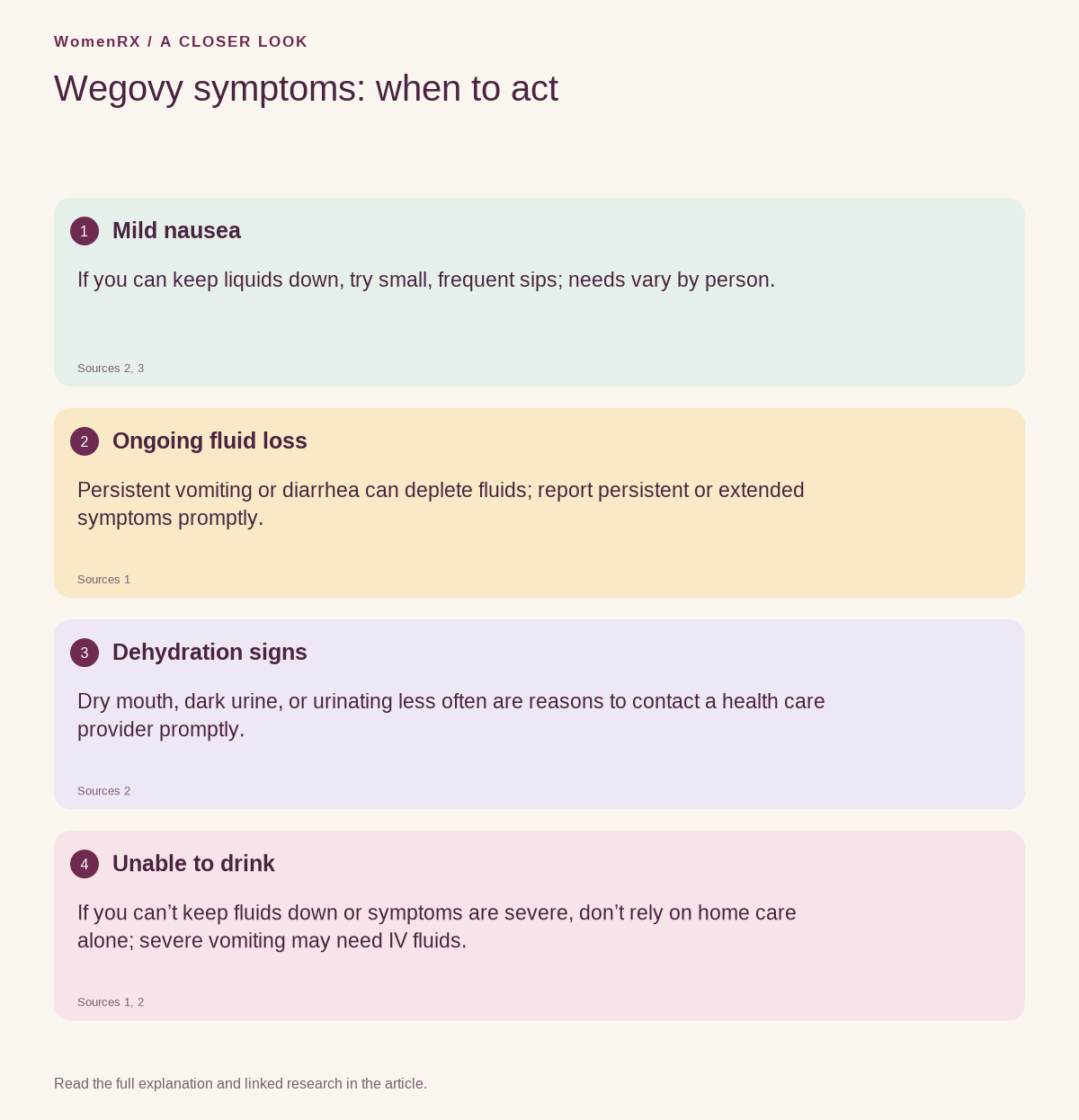
Wegovy symptoms: when to act
Mild nausea: If you can keep liquids down, try small, frequent sips; needs vary by person.23
Ongoing fluid loss: Persistent vomiting or diarrhea can deplete fluids; report persistent or extended symptoms promptly.1
Dehydration signs: Dry mouth, dark urine, or urinating less often are reasons to contact a health care provider promptly.2
Unable to drink: If you can’t keep fluids down or symptoms are severe, don’t rely on home care alone; severe vomiting may need IV fluids.12
Read the figure as text
Use the pattern of fluid loss and your ability to drink to choose a next step. Dehydration signs or persistent symptoms call for prompt contact, not continued home care alone.- Mild nausea: If you can keep liquids down, try small, frequent sips; needs vary by person.23
- Ongoing fluid loss: Persistent vomiting or diarrhea can deplete fluids; report persistent or extended symptoms promptly.1
- Dehydration signs: Dry mouth, dark urine, or urinating less often are reasons to contact a health care provider promptly.2
- Unable to drink: If you can’t keep fluids down or symptoms are severe, don’t rely on home care alone; severe vomiting may need IV fluids.12
Sources you can check
- WEGOVY (SEMAGLUTIDE) INJECTION, SOLUTION WEGOVY (SEMAGLUTIDE) TABLET [NOVO NORDISK PHARMACEUTICAL INDUSTRIES, LP] | US prescribing information and patient instructionsAccessed 2026-09-25Return to first citation
- Nausea | Vomiting | MedlinePlusAccessed 2026-09-25Return to first citation
- Dehydration: MedlinePlusAccessed 2026-09-25Return to first citation