Can Ozempic Lead to Dehydration? Signs to Watch For
Nausea, vomiting, or diarrhea while taking Ozempic can leave you short on fluids, especially when drinking feels difficult.
Yes. Ozempic can contribute to dehydration when nausea, vomiting, or diarrhea causes fluid loss or makes it hard to drink. It doesn’t happen to everyone. Dry mouth can be an early clue, while dark yellow urine, peeing less than usual, or dizziness when you stand that doesn’t go away calls for urgent medical help. Report stomach symptoms that don’t go away to your prescriber. 123
How stomach symptoms become a fluid problem
Dehydration means you’re losing more fluid than you take in. With Ozempic, vomiting or diarrhea can increase those losses, while nausea can make drinking harder. The Ozempic prescribing information warns that dehydration from these stomach symptoms can lead to kidney problems. It also describes reports of acute kidney injury, most often in people who had gastrointestinal reactions that led to dehydration. Those reports don’t tell us how likely this is for any one person. 12
This is worth particular attention when you’re starting Ozempic or your dose is being increased. The prescribing information calls for kidney-function monitoring when side effects could cause fluid depletion, especially during those periods. 1
What to notice, and what not to wait on
Dry mouth is one possible sign of dehydration. Dark yellow urine or peeing less often than usual is more concerning: seek urgent medical help rather than waiting to see whether drinking fixes it. The same goes for dizziness when you stand that doesn’t go away, rapid breathing, or a fast heartbeat. If someone is unusually sleepy or difficult to wake, get emergency help. 23
You don’t need to decide on your own whether Ozempic caused a symptom before responding to it. For example, if you’ve had diarrhea and notice you’re peeing less, the change in urination matters regardless of which came first. 13
Choose the next step based on what you can do now
You feel mildly sick but can drink, without the warning signs above: Try small sips of water. Ice chips may be easier if drinking feels difficult. Fluid needs differ from person to person, so there’s no single amount to aim for here. 2
Nausea, vomiting, or diarrhea isn’t going away, or you can’t keep fluids down: Contact your prescriber promptly. Ozempic’s patient instructions say to report stomach symptoms that don’t go away because fluid loss can lead to dehydration and kidney problems. Don’t wait until you have every sign of dehydration to make that call. 1
You have dark yellow urine, are peeing less than usual, have persistent dizziness on standing, or notice rapid breathing or a fast heartbeat: Seek urgent medical help. If you’re unusually sleepy or difficult to wake, get emergency help. 3
There’s one separate warning that isn’t simply a dehydration sign: severe stomach pain that won’t go away, sometimes spreading to your back, can be a sign of pancreatitis. Ozempic’s patient instructions say to stop using Ozempic and call your healthcare provider right away if that happens, with or without vomiting. 1
When another health condition changes the conversation
If you have diabetes or kidney problems, take fluid loss seriously and contact your care team sooner when vomiting, diarrhea, or poor drinking develops. Diabetes and kidney problems can increase vulnerability to dehydration, and Ozempic’s prescribing information calls for kidney-function monitoring when side effects could cause fluid depletion. 123
If you’re pregnant or breastfeeding, tell the clinician managing your medication when you’re struggling to drink or keep fluids down. Your medication and hydration advice needs to fit your situation; there’s no reason to assume Ozempic has a different dehydration effect simply because you’re a woman.
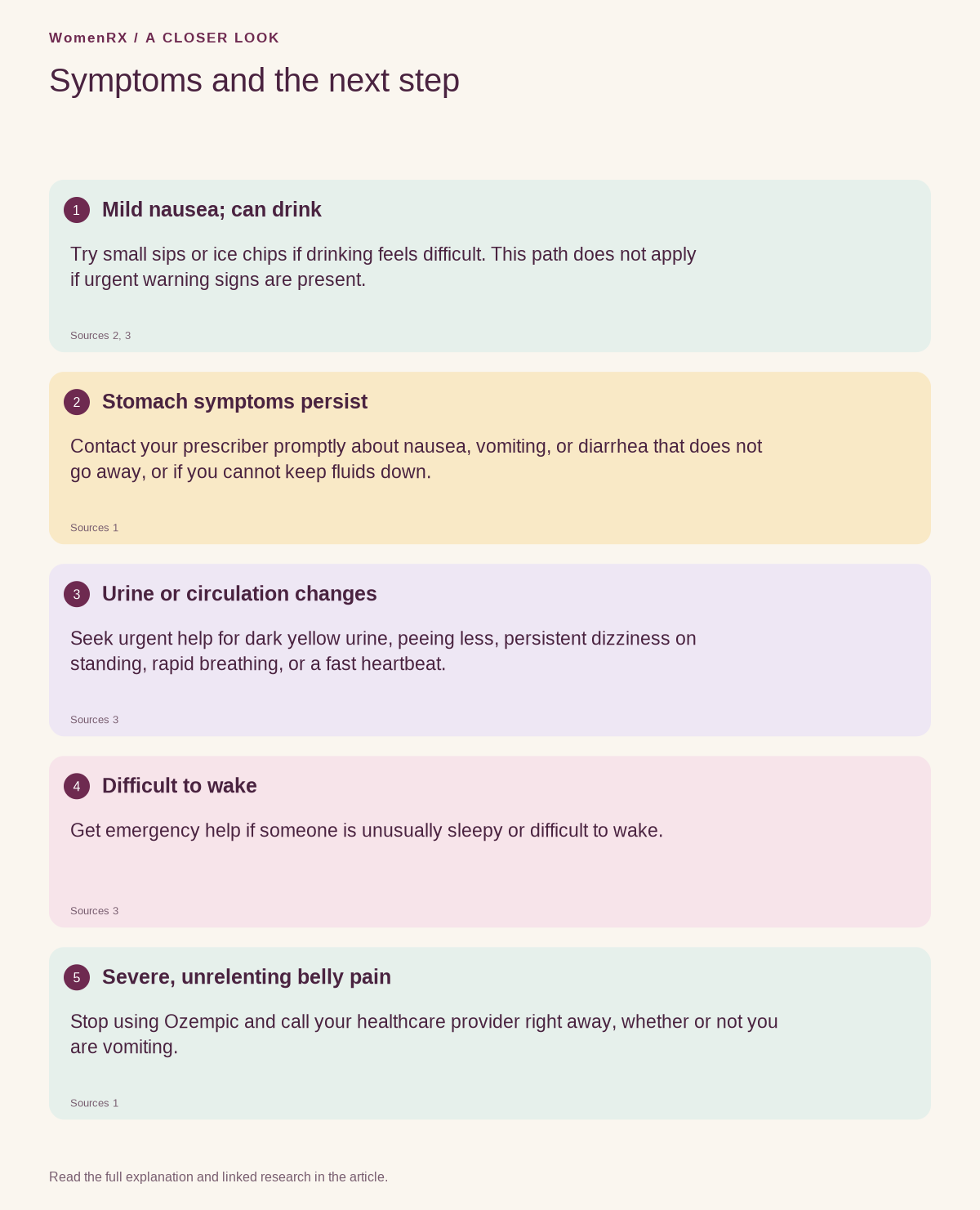
Symptoms and the next step
Mild nausea; can drink: Try small sips or ice chips if drinking feels difficult. This path does not apply if urgent warning signs are present.23
Stomach symptoms persist: Contact your prescriber promptly about nausea, vomiting, or diarrhea that does not go away, or if you cannot keep fluids down.1
Urine or circulation changes: Seek urgent help for dark yellow urine, peeing less, persistent dizziness on standing, rapid breathing, or a fast heartbeat.3
Difficult to wake: Get emergency help if someone is unusually sleepy or difficult to wake.3
Severe, unrelenting belly pain: Stop using Ozempic and call your healthcare provider right away, whether or not you are vomiting.1
Read the figure as text
Start with whether you can drink, then check for signs that call for faster help.- Mild nausea; can drink: Try small sips or ice chips if drinking feels difficult. This path does not apply if urgent warning signs are present.23
- Stomach symptoms persist: Contact your prescriber promptly about nausea, vomiting, or diarrhea that does not go away, or if you cannot keep fluids down.1
- Urine or circulation changes: Seek urgent help for dark yellow urine, peeing less, persistent dizziness on standing, rapid breathing, or a fast heartbeat.3
- Difficult to wake: Get emergency help if someone is unusually sleepy or difficult to wake.3
- Severe, unrelenting belly pain: Stop using Ozempic and call your healthcare provider right away, whether or not you are vomiting.1
More questions, answered
Does Ozempic make everyone dehydrated?
No. The concern described in Ozempic’s prescribing information is that nausea, vomiting, or diarrhea can lead to fluid loss and dehydration. Drinking less while you feel sick can add to the problem, but dehydration isn’t inevitable. 12
Sources you can check
- OZEMPIC (SEMAGLUTIDE) INJECTION, SOLUTION [A-S MEDICATION SOLUTIONS] | US prescribing information and patient instructionsAccessed 2026-09-25Return to first citation
- Dehydration: MedlinePlusAccessed 2026-09-25Return to first citation
- Dehydration - NHSAccessed 2026-09-25Return to first citation