Zepbound, Vomiting, and Dehydration: When to Get Help
Ongoing vomiting or diarrhea can cause fluid loss, and Zepbound’s prescribing information says to report symptoms that persist rather than waiting for them to pass.
Nausea, vomiting, and diarrhea can reduce your fluid intake or cause fluid loss while taking Zepbound. The prescribing information warns that dehydration linked to these effects has been followed by acute kidney injury in postmarketing reports. Contact your prescriber promptly if vomiting, diarrhea, or nausea persists; seek urgent medical help for confusion, fainting, lack of urination, or a rapid heartbeat. 12
Why stomach symptoms can become a fluid concern
Zepbound can cause nausea, vomiting, and diarrhea. If these symptoms make it hard to drink or cause you to lose fluids, your body may become dehydrated. The medication’s prescribing information reports cases of acute kidney injury after gastrointestinal symptoms led to dehydration. Some reported cases required hemodialysis. These reports describe a safety concern, not the chance that any one person will develop kidney injury. 1
The label advises patients to promptly report signs or symptoms of kidney injury and persistent or extended nausea, vomiting, or diarrhea. It calls for particular attention to kidney function when these symptoms could cause fluid depletion, especially when treatment is being started or the dose is being increased. 1
Know which symptoms change the next step
Contact your prescriber promptly if nausea, vomiting, or diarrhea keeps going. Don’t wait for a routine follow-up if symptoms are persistent: the label specifically connects ongoing gastrointestinal effects with dehydration and kidney risk. 1
Get urgent medical help if you have confusion, fainting, lack of urination, or a rapid heartbeat. MedlinePlus lists these among symptoms that call for medical help right away. 2
If you feel sick but can keep fluids down, MedlinePlus suggests trying small sips of water. That general suggestion isn’t a substitute for getting help when symptoms persist or urgent warning signs appear. No single fluid target is appropriate to prescribe here for everyone. 2
Make the call easier with a short record
You don’t need a perfect log. A few concrete details can help your prescriber understand whether fluid loss is continuing and how quickly it is changing:
- When the nausea, vomiting, or diarrhea started, and whether it is easing, staying the same, or worsening.
- How often you have vomited or had diarrhea, and whether you can keep drinks down.
- What you have been able to drink. This is a record of your intake, not a target you need to reach.
- Any change in urination from your usual pattern. Treat this as a detail to report, not a stand-alone diagnosis; lack of urination is a reason to seek urgent help. 2
- When you last started Zepbound or had a dose increase, if either applies. Kidney-function monitoring is emphasized particularly during initiation and escalation. 1
- The names of your other medicines, including any diuretic or heart-failure medicines. A small case series described symptomatic low blood pressure in three older adults with heart failure after tirzepatide initiation; two had acute kidney injury. Three cases cannot establish that a medicine interaction caused those events or estimate risk for other people, but the medication details are useful context for your prescriber. 4
Also mention whether you are pregnant or might be pregnant. A clinical guideline about weight-management medicines specifically frames its recommendations for nonpregnant adults and includes pregnancy among considerations for medication decisions. This does not establish a separate dehydration threshold during pregnancy, but it is relevant context to share when asking for individualized advice. 3
Don’t assume every symptom is dehydration
Vomiting and diarrhea can lead to fluid loss, but symptoms alone don’t confirm kidney injury. The Zepbound label recommends that clinicians monitor kidney function when reported side effects could cause volume depletion. Your prescriber can decide whether your symptoms and health history call for evaluation or testing. 1
The useful distinction is not “mild symptom versus serious diagnosis.” It’s whether symptoms are continuing, whether you can keep fluids down, and whether urgent warning signs such as confusion, fainting, lack of urination, or a rapid heartbeat have appeared. Report what is happening and when, rather than trying to calculate a universal fluid number on your own. 12
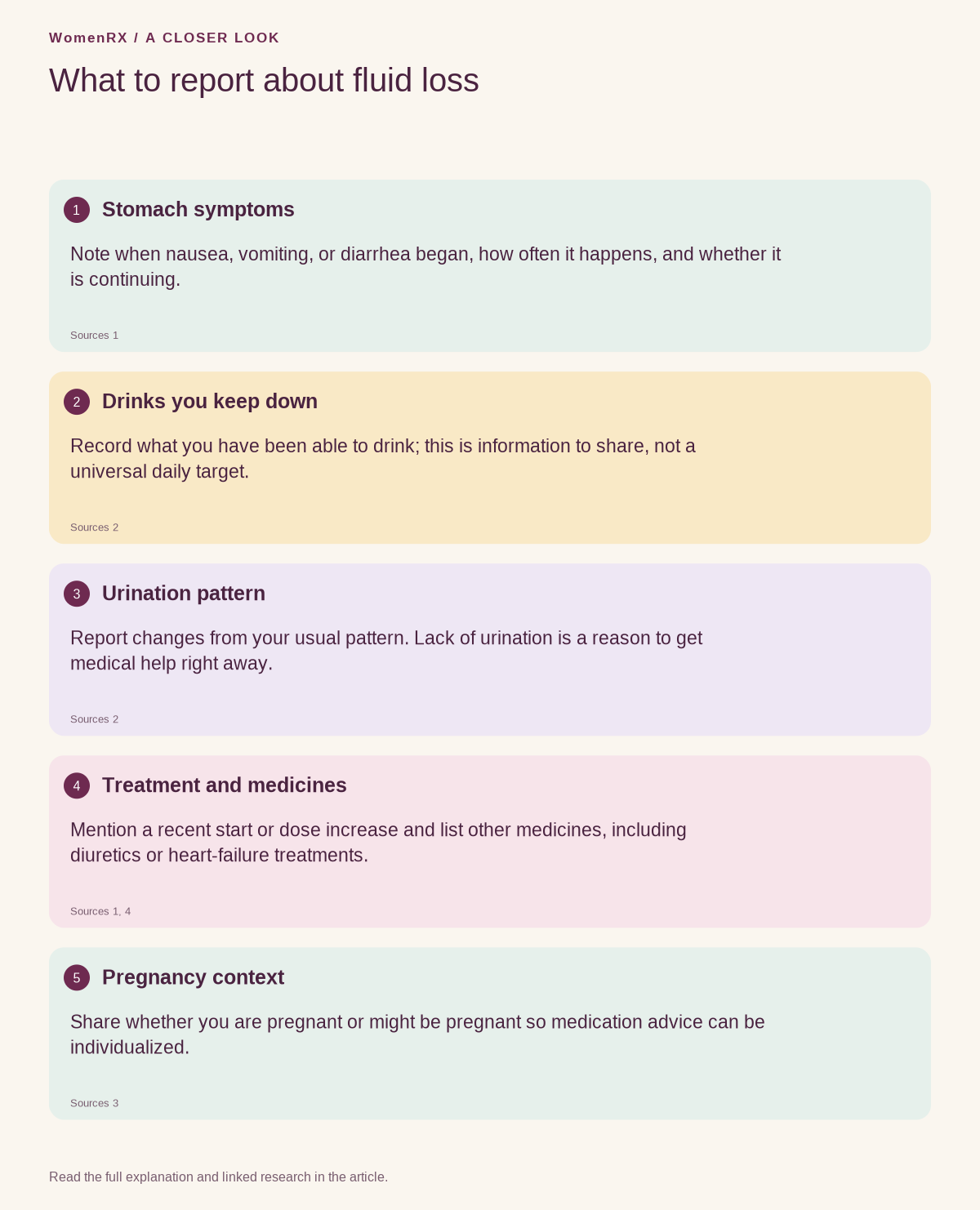
What to report about fluid loss
Stomach symptoms: Note when nausea, vomiting, or diarrhea began, how often it happens, and whether it is continuing.1
Drinks you keep down: Record what you have been able to drink; this is information to share, not a universal daily target.2
Urination pattern: Report changes from your usual pattern. Lack of urination is a reason to get medical help right away.2
Treatment and medicines: Mention a recent start or dose increase and list other medicines, including diuretics or heart-failure treatments.14
Pregnancy context: Share whether you are pregnant or might be pregnant so medication advice can be individualized.3
Read the figure as text
Use these prompts to give your prescriber a concise picture of ongoing symptoms, fluid intake, and relevant context. They are reporting prompts, not a diagnostic score.- Stomach symptoms: Note when nausea, vomiting, or diarrhea began, how often it happens, and whether it is continuing.1
- Drinks you keep down: Record what you have been able to drink; this is information to share, not a universal daily target.2
- Urination pattern: Report changes from your usual pattern. Lack of urination is a reason to get medical help right away.2
- Treatment and medicines: Mention a recent start or dose increase and list other medicines, including diuretics or heart-failure treatments.14
- Pregnancy context: Share whether you are pregnant or might be pregnant so medication advice can be individualized.3
More questions, answered
Does dehydration automatically mean Zepbound has injured my kidneys?
No. Dehydration is fluid loss; acute kidney injury is a possible serious outcome described in postmarketing reports, not something that can be diagnosed from dehydration symptoms alone. The prescribing information says kidney function may need monitoring when gastrointestinal effects could cause fluid depletion. 1
Should I wait until my next dose to mention vomiting or diarrhea?
The prescribing information says to promptly report persistent or extended nausea, vomiting, or diarrhea. Contact your prescriber rather than waiting for a scheduled follow-up if symptoms are continuing; seek urgent help for confusion, fainting, lack of urination, or a rapid heartbeat. 12
Sources you can check
- ZEPBOUND (TIRZEPATIDE) INJECTION, SOLUTION ZEPBOUND (TIRZEPATIDE) INJECTION, SOLUTION ZEPBOUND KWIKPEN (TIRZEPATIDE) INJECTION, SOLUTION [ELI LILLY AND COMPANY] | US prescribing information and patient instructionsAccessed 2026-09-25Return to first citation
- Dehydration: MedlinePlusAccessed 2026-09-25Return to first citation
- Pharmacologic Treatments With Lifestyle Modifications in Nonpregnant Adults With Overweight or Obesity in Outpatient Settings: A Living Clinical Guideline From the American College of Physicians (April 2026).Qaseem A, Cross JT, Harrod CS, Owens DK, Balk EM, Crandall CJ, Clinical Guidelines Committee of the American College of Physicians, Fitterman N, Gibson M, Lewis J, Mackey K, Miller... · Annals of internal medicine · 2026Return to first citation
- Call to action for drug interactions between tirzepatide and heart failure guideline-directed medical therapy.Kido K, Carey B, Caccamo M, Bianco C, Sokos G. · Journal of the American Pharmacists Association : JAPhA · 2024Return to first citation