Can Tirzepatide Symptoms Lead to Dehydration?
Vomiting, diarrhea, or trouble drinking can leave you short on fluid, even though dehydration isn’t inevitable with tirzepatide.
Yes. Tirzepatide-related nausea, vomiting, or diarrhea can contribute to dehydration if you lose more fluid than you take in. Dry mouth, dark urine, or urinating less often are reasons to contact a clinician promptly. If you can’t keep liquids down, or have kidney problems or take medicines that affect fluid balance or blood pressure, seek advice sooner. 123
How symptoms can add up
Dehydration happens when your body loses more fluid than you take in. Vomiting and diarrhea cause fluid loss; nausea or poor appetite can make it harder to replace what you’ve lost. Tirzepatide’s gastrointestinal effects are recognized, but they don’t mean dehydration will happen to everyone. 26
The concern is the combination: for example, if you’re having diarrhea and sipping very little because you feel nauseated, your fluid intake may not keep pace with losses. Reports of dehydration among people taking tirzepatide have been described in postmarketing safety analyses, but those reports can’t show how often it happens or prove the medicine caused an individual case. 45
Signs that deserve prompt attention
Pay attention to dry mouth, dark urine, or urinating less often than usual. These can be signs of dehydration. If they appear while you’re vomiting, having diarrhea, or struggling to drink, contact your clinician promptly rather than waiting for symptoms to pass. 1
If you’re having trouble keeping liquids down, try small, frequent sips instead of drinking a large amount at once. If vomiting continues or you can’t replace fluids, get medical advice promptly; severe dehydration may require treatment with fluids through an IV. There isn’t one fluid target that fits everyone, so don’t force a set amount if you’ve been given individualized fluid guidance. 12
Why kidney problems or certain medicines matter
Dehydration can affect kidney function, and clinicians may use blood tests to check both kidney function and electrolyte levels when assessing it. If you already have kidney problems, it’s sensible to contact your prescriber early when fluid losses or poor intake start, rather than waiting for dehydration signs to worsen. 2
Medicines that affect blood pressure or fluid balance can make the situation more individual. In a small case series, three people with heart failure developed symptomatic low blood pressure after starting tirzepatide; two also had acute kidney injury, and clinicians adjusted heart-failure medicines or diuretic treatment. This is a limited report, not proof that tirzepatide commonly causes these problems or that everyone taking a diuretic is at higher risk. Still, tell your prescriber what medicines you take if you’re losing fluids or drinking poorly. Don’t change prescribed medicines on your own. 3
Pregnancy and breastfeeding call for individual advice
Pregnancy itself can cause nausea and vomiting, so don’t assume new symptoms are necessarily from tirzepatide. If you’re pregnant or might be pregnant, contact your prescriber about the symptoms and your medication. If you’re breastfeeding, ask for advice tailored to your medication and hydration needs; general tips for a stomach upset don’t answer medication questions. 1
The practical distinction is whether you can replace what you’re losing. Mild nausea with normal drinking and urination is different from repeated vomiting, ongoing diarrhea, or much less urine. When fluid intake is falling or dehydration signs appear, get advice promptly, especially if kidney function or fluid- and blood-pressure medicines are already part of your care. 123
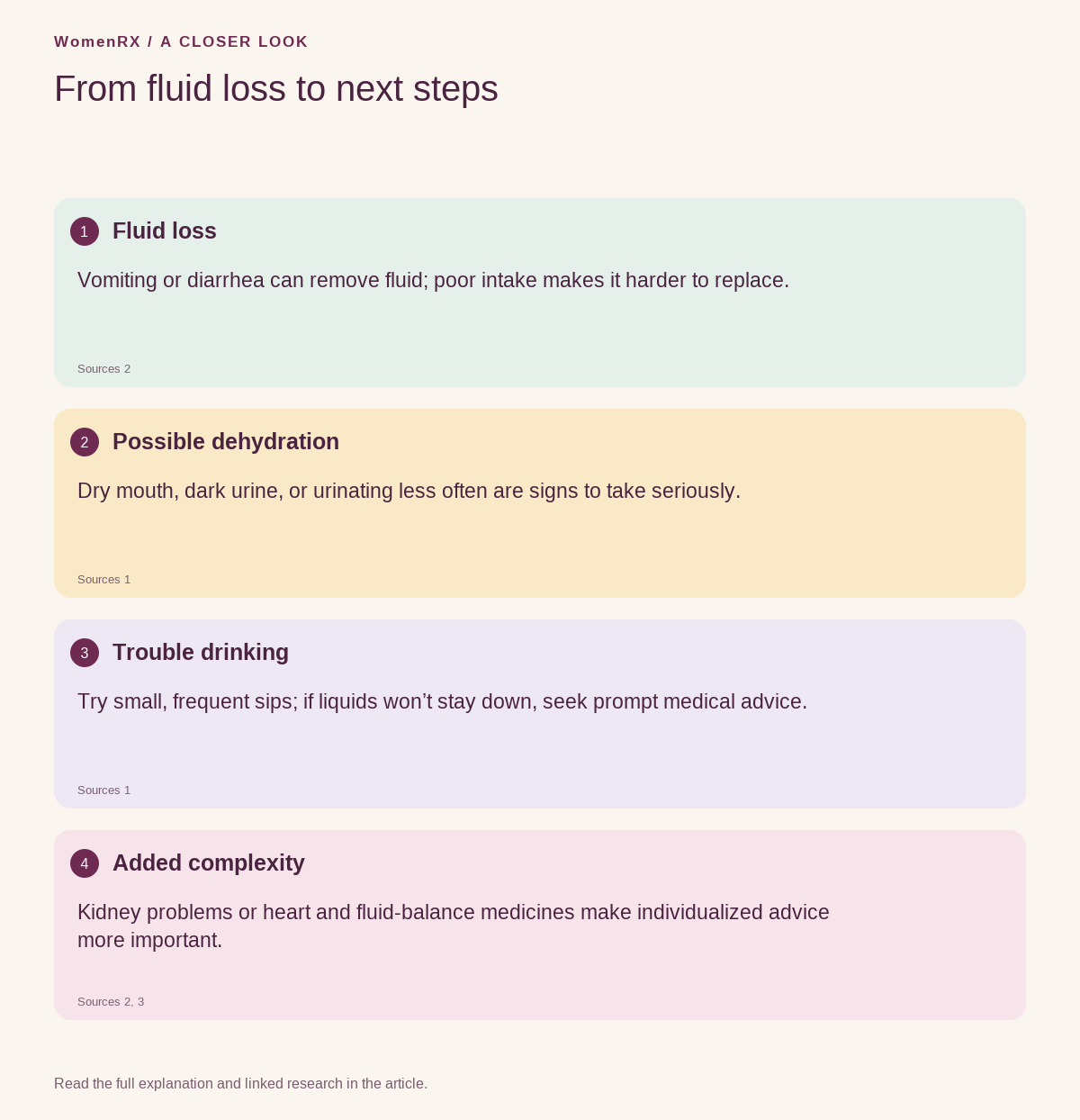
From fluid loss to next steps
Fluid loss: Vomiting or diarrhea can remove fluid; poor intake makes it harder to replace.2
Possible dehydration: Dry mouth, dark urine, or urinating less often are signs to take seriously.1
Trouble drinking: Try small, frequent sips; if liquids won’t stay down, seek prompt medical advice.1
Added complexity: Kidney problems or heart and fluid-balance medicines make individualized advice more important.23
Read the figure as text
Follow the pattern from symptoms that reduce fluid balance to signs that call for prompt advice.- Fluid loss: Vomiting or diarrhea can remove fluid; poor intake makes it harder to replace.2
- Possible dehydration: Dry mouth, dark urine, or urinating less often are signs to take seriously.1
- Trouble drinking: Try small, frequent sips; if liquids won’t stay down, seek prompt medical advice.1
- Added complexity: Kidney problems or heart and fluid-balance medicines make individualized advice more important.23
More questions, answered
Should I drink a fixed amount of water to prevent dehydration?
No single daily amount fits everyone. Needs can vary, and some people have individualized fluid guidance. If nausea makes drinking difficult, small, frequent sips may be easier; ask your clinician what makes sense for your situation. 12
Does a report of kidney injury prove tirzepatide caused it?
No. Case reports and postmarketing reports can flag a possible safety concern, but they can’t establish how common it is or prove the medicine caused a particular person’s kidney injury. 34
Sources you can check
- Nausea | Vomiting | MedlinePlusAccessed 2026-09-25Return to first citation
- Dehydration: MedlinePlusAccessed 2026-09-25Return to first citation
- Call to action for drug interactions between tirzepatide and heart failure guideline-directed medical therapy.Kido K, Carey B, Caccamo M, Bianco C, Sokos G. · Journal of the American Pharmacists Association : JAPhA · 2024Return to first citation
- Adverse Events Associated with Tirzepatide: Updated Pharmacovigilance Analysis Using FAERS (2022 Q1-2025 Q1) with an Adapted Time-to-Onset Method.Gu S. · Drug, healthcare and patient safety · 2026Return to first citation
- Postmarketing Safety Signals and Medication-Use Risks of GLP-1-Based Therapies in Diabetes and Obesity: A Multi-Source Pharmacovigilance and Regulatory Evidence-Mapping Study.Ren L, Zhang Y, Fang F, Ma Y. · Diabetes, obesity & metabolism · 2026Return to first citation
- Navigating the benefits and harms of GLP-1 and GLP-1/GIP agonists in obesity.O'Connor R. · Drug and therapeutics bulletin · 2026Return to first citation