Menopause, Low Estrogen, and Insomnia: What May Be Connected
Menopause symptoms can interrupt sleep, but insomnia alone doesn’t show that low estrogen is the cause.
Sleep problems can occur around menopause, and hot flashes or night sweats may be part of the pattern. But insomnia can also be linked to stress, mood, medicines, health conditions, or another sleep disorder. Notice what wakes you and whether you have daytime effects: those clues can help guide a discussion about menopause symptoms, insomnia, or another cause. 1 2
Start with what happens during the night
Insomnia can mean trouble falling asleep, waking often, or waking too early and not feeling refreshed. Menopause is one possible contributor, but poor sleep by itself doesn’t tell you whether estrogen is low or what is causing the problem. 1 2
For example, if you wake feeling hot or sweaty, a menopause-related symptom may be interrupting your sleep. That’s different from having trouble sleeping on nights when those symptoms aren’t present. Research trials involving women with moderate-to-severe menopause-related hot flashes have measured sleep disturbance and nighttime awakenings. This shows these concerns can overlap, but it doesn’t establish that low estrogen directly causes every kind of insomnia. 4
The distinction matters: addressing a symptom that wakes you may help with that source of disruption, while persistent insomnia may need attention in its own right.
Keep other explanations in the picture
Stress, anxiety or depression, some medicines, caffeine, tobacco, alcohol, health conditions, and other sleep disorders can contribute to insomnia. More than one factor can be involved at the same time. A sleep problem can also have consequences during the day, including sleepiness, low energy, irritability, or difficulty concentrating. 1 2
Consider whether you’re mainly struggling to fall asleep, waking after you’ve fallen asleep, or feeling sleepy and unrefreshed during the day. These details aren’t a diagnosis, but they help describe the problem beyond “I’m not sleeping.”
Sleep apnea is another possibility to mention if you snore regularly, someone has noticed pauses in your breathing, or you wake gasping or choking. Daytime sleepiness and unrefreshing sleep can also be clues. An adult sleep-apnea guideline lists postmenopausal women among groups with higher risk, but menopause alone doesn’t diagnose sleep apnea. 5
Match the next step to the likely source
If hot flashes or night sweats seem to be waking you, it may be useful to discuss those symptoms as well as your sleep. The US prescribing information for one estradiol-and-progestin patch lists moderate-to-severe hot flashes as a use; it does not list insomnia alone. That’s a reason not to assume hormone therapy is a universal sleep treatment. 3
If sleep difficulty continues apart from night symptoms, ask about insomnia care directly. Cognitive behavioral therapy (CBT) can help with anxiety linked to ongoing insomnia, and sleep habits may help some short-term sleep problems. When insomnia is related to another condition, medicine, or sleep disorder, treating that contributor may also matter. 1
If sleep problems have lasted for months, are affecting your daytime functioning, or haven’t improved with changes to your sleep habits, it’s reasonable to seek an evaluation. A clinician can review your sleep and medical history, medicines, and possible other causes; a sleep study may be considered when appropriate. 1 2
A practical way to frame the conversation is: “What seems to wake me, and what happens on nights when that isn’t happening?” If the answer points to hot flashes, a menopause-symptom discussion may fit. If you also have persistent trouble sleeping, mood concerns, medication changes, or signs of another sleep disorder, those deserve attention too.
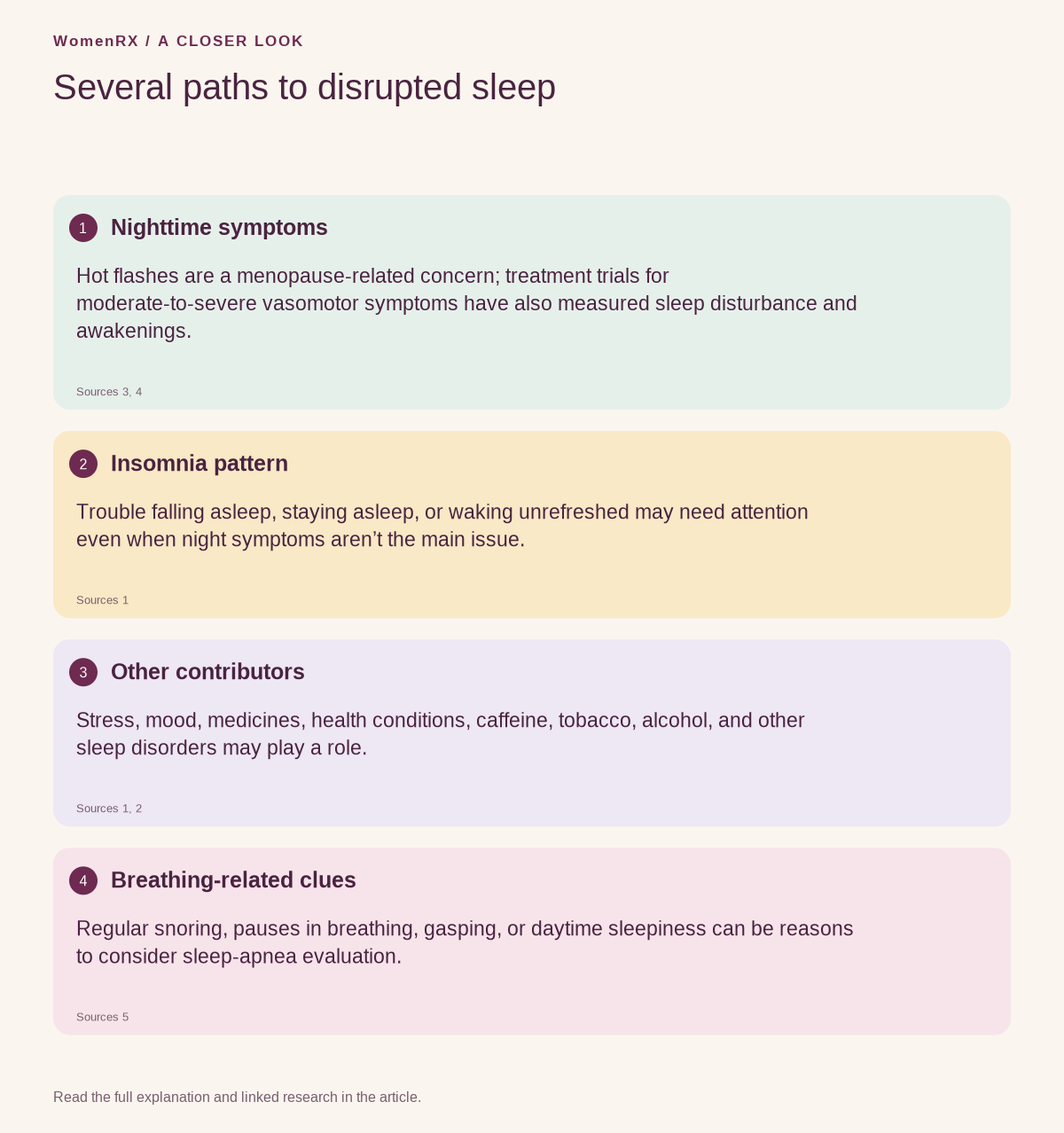
Several paths to disrupted sleep
Nighttime symptoms: Hot flashes are a menopause-related concern; treatment trials for moderate-to-severe vasomotor symptoms have also measured sleep disturbance and awakenings.34
Insomnia pattern: Trouble falling asleep, staying asleep, or waking unrefreshed may need attention even when night symptoms aren’t the main issue.1
Other contributors: Stress, mood, medicines, health conditions, caffeine, tobacco, alcohol, and other sleep disorders may play a role.12
Breathing-related clues: Regular snoring, pauses in breathing, gasping, or daytime sleepiness can be reasons to consider sleep-apnea evaluation.5
Read the figure as text
Menopause symptoms may be one route to poor sleep, alongside insomnia and other possible contributors.- Nighttime symptoms: Hot flashes are a menopause-related concern; treatment trials for moderate-to-severe vasomotor symptoms have also measured sleep disturbance and awakenings.34
- Insomnia pattern: Trouble falling asleep, staying asleep, or waking unrefreshed may need attention even when night symptoms aren’t the main issue.1
- Other contributors: Stress, mood, medicines, health conditions, caffeine, tobacco, alcohol, and other sleep disorders may play a role.12
- Breathing-related clues: Regular snoring, pauses in breathing, gasping, or daytime sleepiness can be reasons to consider sleep-apnea evaluation.5
More questions, answered
Does insomnia mean my estrogen is low?
No. Menopause can be one contributor to sleep problems, but insomnia also has other possible causes, including stress, mood, medicines, health conditions, and other sleep disorders. Sleep difficulty alone can’t identify its cause. 1 2
Sources you can check
- Insomnia | MedlinePlusAccessed 2026-09-25Return to first citation
- Insomnia - NHSAccessed 2026-09-25Return to first citation
- CLIMARA PRO (ESTRADIOL AND LEVONORGESTREL) PATCH [BAYER HEALTHCARE PHARMACEUTICALS INC.] | US prescribing information and patient instructionsAccessed 2026-09-25Return to first citation
- Comparative Efficacy of Elinzanetant Versus Other Non-Hormonal Pharmaceutical Therapies for the Treatment of Moderate-to-Severe Vasomotor Symptoms Associated With Menopause: A Network Meta-Analysis.Wojciechowski P, Kolonko K, Giannopoulou A, Smela B, Olewinska E, Bolling KR, Sassarini J, Shulman LP, Talaulikar V. · BJOG : an international journal of obstetrics and gynaecology · 2026Return to first citation
- [Guidelines for the diagnosis and treatment of obstructive sleep apnea in adults (2025)].Chinese Thoracic Society. · Zhonghua jie he he hu xi za zhi = Zhonghua jiehe he huxi zazhi = Chinese journal of tuberculosis and respiratory diseases · 2026Return to first citation