Low Energy Around Menopause: Is Estrogen One Possible Factor?
Estrogen may be part of the menopause picture, but fatigue has many possible causes, and hormone therapy hasn’t been shown here to reliably treat it.
Estrogen could be relevant to how you feel during menopause, but low energy alone doesn’t show that estrogen is the cause. Hormone therapy is an established treatment for bothersome hot flashes and other menopause symptoms, but a small trial in women with surgically induced menopause found no significant improvement in cognitive fatigue with combined estrogen and testosterone. Sleep problems and health conditions deserve consideration too. 1 2 3
Estrogen may be part of the picture, not the whole explanation
Fatigue is a feeling of weariness or low energy, not a diagnosis. During perimenopause or menopause, it can be tempting to connect a change in energy directly to changing estrogen. But tiredness can also follow too little or disrupted sleep, emotional stress, pain, or a health condition. It can be a normal response to a demanding stretch of life, too. 1
There may be an indirect menopause connection: if hot flashes or night sweats are repeatedly interrupting your sleep, that disruption could contribute to feeling worn down. Hormone therapy is an effective treatment for bothersome vasomotor symptoms such as hot flashes. But that doesn’t establish that estrogen itself treats fatigue, or that treating hot flashes will resolve every person’s low energy. 1 2
What the hormone-therapy research actually tells us
One small randomized crossover trial studied 50 women with surgically induced menopause. Participants received combined estradiol and testosterone or placebo over 24 weeks. The researchers found no significant treatment effect on cognitive fatigue. Fatigue scores were associated with participants’ self-rated health and body mass index, rather than with measured sex-hormone levels. 3
That study is a useful caution against assuming that low estrogen equals fatigue that estrogen will fix. It can’t settle the question for everyone: the participants had menopause caused by surgery, the treatment combined two hormones, and the measure was cognitive fatigue. The result doesn’t tell us whether estrogen alone affects everyday tiredness during natural perimenopause or menopause.
The North American Menopause Society’s 2022 position statement identifies hormone therapy as an effective treatment for bothersome hot flashes and genitourinary symptoms, among other benefits. Its summary does not identify fatigue as a treatment indication. That isn’t proof that hormone therapy can never affect an individual’s energy; it does mean fatigue by itself shouldn’t be treated as evidence that you need estrogen. 2
If you’re considering hormone therapy, the more useful question is whether you have symptoms it is known to treat, and whether its benefits and risks fit your health history and preferences. Those decisions are individualized. 2
Other causes are worth checking
MedlinePlus lists too little sleep, sleep apnea and other sleep disorders, anemia, thyroid disease, infections, chronic illness, untreated pain, depression, anxiety, and too little or too much exercise among possible causes of fatigue. More than one factor can be involved. 1
That gives you a practical way to prepare for a conversation about persistent low energy. Consider what changed around the time it began: Are hot flashes or night sweats waking you? Has your sleep schedule changed? Are pain, mood, stress, or a new medicine affecting your days? Mention symptoms that could point toward a sleep or health condition, rather than assuming they’re all part of menopause. A clinician may ask about sleep, daily activities, appetite, and exercise, examine you, and consider lab tests to look for a cause. 1
A focused discussion can include:
- The pattern: When did the fatigue start, and is it steady or does it come and go?
- Sleep: Are you waking often, including from night sweats, or is sleep unrefreshing?
- Other changes: Have mood, pain, activity, appetite, or medicines changed?
- Possible causes to assess: Could a sleep disorder, anemia, thyroid problem, or another condition be contributing?
- Treatment goal: If menopause symptoms are part of the problem, which symptom are you hoping to treat, and what would count as improvement?
If fatigue hasn’t improved after several weeks, MedlinePlus recommends contacting a health care provider to help identify the cause. 1
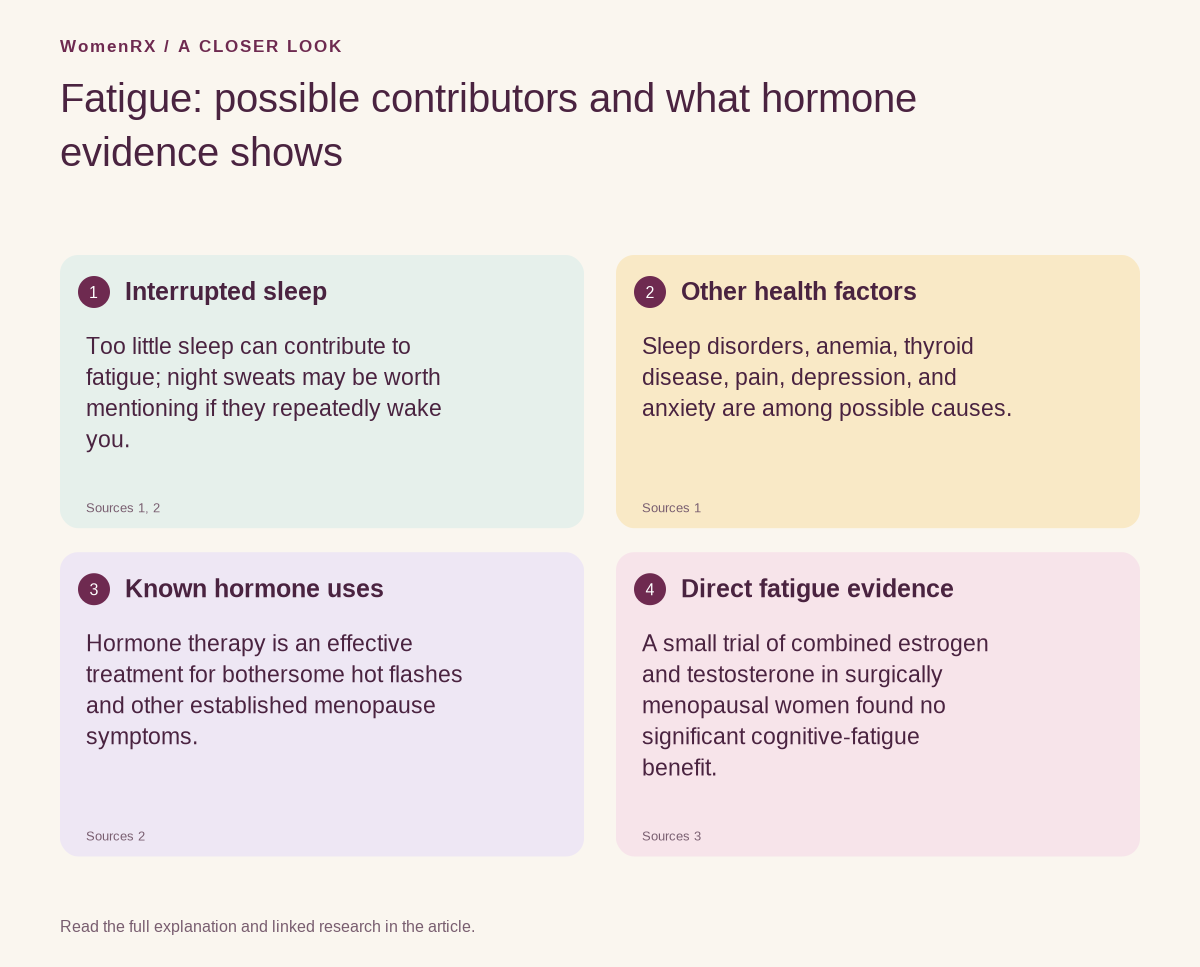
Fatigue: possible contributors and what hormone evidence shows
Interrupted sleep: Too little sleep can contribute to fatigue; night sweats may be worth mentioning if they repeatedly wake you.12
Other health factors: Sleep disorders, anemia, thyroid disease, pain, depression, and anxiety are among possible causes.1
Known hormone uses: Hormone therapy is an effective treatment for bothersome hot flashes and other established menopause symptoms.2
Direct fatigue evidence: A small trial of combined estrogen and testosterone in surgically menopausal women found no significant cognitive-fatigue benefit.3
Read the figure as text
Separate menopause symptoms that hormone therapy is known to treat from the broader causes of fatigue and the limits of direct fatigue research.- Interrupted sleep: Too little sleep can contribute to fatigue; night sweats may be worth mentioning if they repeatedly wake you.12
- Other health factors: Sleep disorders, anemia, thyroid disease, pain, depression, and anxiety are among possible causes.1
- Known hormone uses: Hormone therapy is an effective treatment for bothersome hot flashes and other established menopause symptoms.2
- Direct fatigue evidence: A small trial of combined estrogen and testosterone in surgically menopausal women found no significant cognitive-fatigue benefit.3
More questions, answered
Does fatigue mean my estrogen is low?
No. Fatigue has many possible causes, and the small hormone-treatment trial in women with surgically induced menopause found no significant link between measured sex-hormone levels and cognitive fatigue. Fatigue alone can’t identify an estrogen problem. 1 3
When should I bring persistent fatigue up with a clinician?
If it hasn’t improved after several weeks, contact a health care provider. They can ask about sleep and daily habits, examine you, and consider whether testing could help identify a cause. 1
Sources you can check
- Fatigue: MedlinePlusAccessed 2026-09-25Return to first citation
- The 2022 hormone therapy position statement of The North American Menopause Society.“The 2022 Hormone Therapy Position Statement of The North American Menopause Society” Advisory Panel. · Menopause (New York, N.Y.) · 2022Return to first citation
- Effect of estrogen and testosterone replacement therapy on cognitive fatigue.Möller MC, Rådestad AF, von Schoultz B, Bartfai A. · Gynecological endocrinology : the official journal of the International Society of Gynecological Endocrinology · 2013Return to first citation