Low Mood in Your 40s: Could Perimenopause Be One Factor?
Perimenopause may be part of the picture, but age and cycle changes alone can’t explain depression.
Yes, perimenopause can be one factor: research reviews find an association between the menopause transition and increased depressive symptoms. But that doesn’t show hormones are the cause for any one person. A clinician can consider mood duration and impact, cycle and hot-flash patterns, personal history, medicines, and other medical causes, including thyroid problems. 1 3
A possible connection, not a diagnosis
Low mood that begins in your 40s can overlap with the menopause transition, but being in your 40s doesn’t establish that hormones are responsible. A review of longitudinal studies found an association between the transition and increased depressive symptoms. The review also described several possible contributors, including hot flashes, a personal history of depression, and difficult life events. An association doesn’t tell you what is causing one person’s symptoms. 3
That distinction matters because depression is more than feeling sad or irritable for a few days. Symptoms that occur most of the day, nearly every day, for at least two weeks may warrant an assessment, especially if they’re making everyday activities harder. Depression can affect sleep, work, and other parts of daily life, and it doesn’t look the same for everyone. 1
Notice what changes together
A useful starting point is a simple timeline, not a verdict about your hormones. Note when low mood began and whether it comes and goes, how it affects your usual activities, and what else is happening around the same time. If you’re having cycle changes or hot flashes, record those too. Include sleep interruptions, but treat them as information to discuss rather than proof of a hormonal cause.
Patterns can give a clinician context. For example, you might notice that low mood is present most days, while hot flashes come and go; or that both mood and other symptoms changed around the same period. Neither pattern settles the cause on its own. The review found that menopause-transition mood symptoms can reflect biological, psychological, and social factors together. 3
Keep thyroid and medicines in the picture
Thyroid disorders and some medicines can cause symptoms like depression, so a depression assessment may include a medical history and, when appropriate, tests to check for other conditions. That makes thyroid questions relevant, but it doesn’t mean a thyroid problem is the answer. 1
If you take levothyroxine, bring the name and timing of your medicines and supplements to the conversation. The prescribing information says calcium and iron can reduce levothyroxine absorption, and biotin can interfere with some thyroid blood tests, producing inaccurate results. Mentioning these products can help your clinician interpret your medication history and any test results. Don’t change how you take a prescribed medicine based on this article. 2
Also mention other recent medication changes and any previous depression, including depression related to pregnancy or menstrual-cycle changes. A review identified a personal history of depression, particularly in those contexts, as one factor associated with depressive symptoms during the menopause transition. 3
Don’t make mood care wait on a cause
It’s reasonable to ask whether perimenopause could be contributing, while also asking how the low mood itself will be assessed and treated. MedlinePlus describes psychotherapy and medicines as common depression treatments. The goal is to address what you’re experiencing while considering relevant medical and life-context factors, rather than assuming one explanation before the assessment. 1
You might ask: “Could any of my symptoms or medicines point to another medical cause?” “Would thyroid testing help answer that question?” and “How should we address the low mood while we work out what may be contributing?” These questions leave room for more than one factor and keep attention on how you’re feeling now.
If you’re having thoughts of death or suicide, tell someone who can help right away. Such thoughts can be part of depression and deserve prompt attention. 1
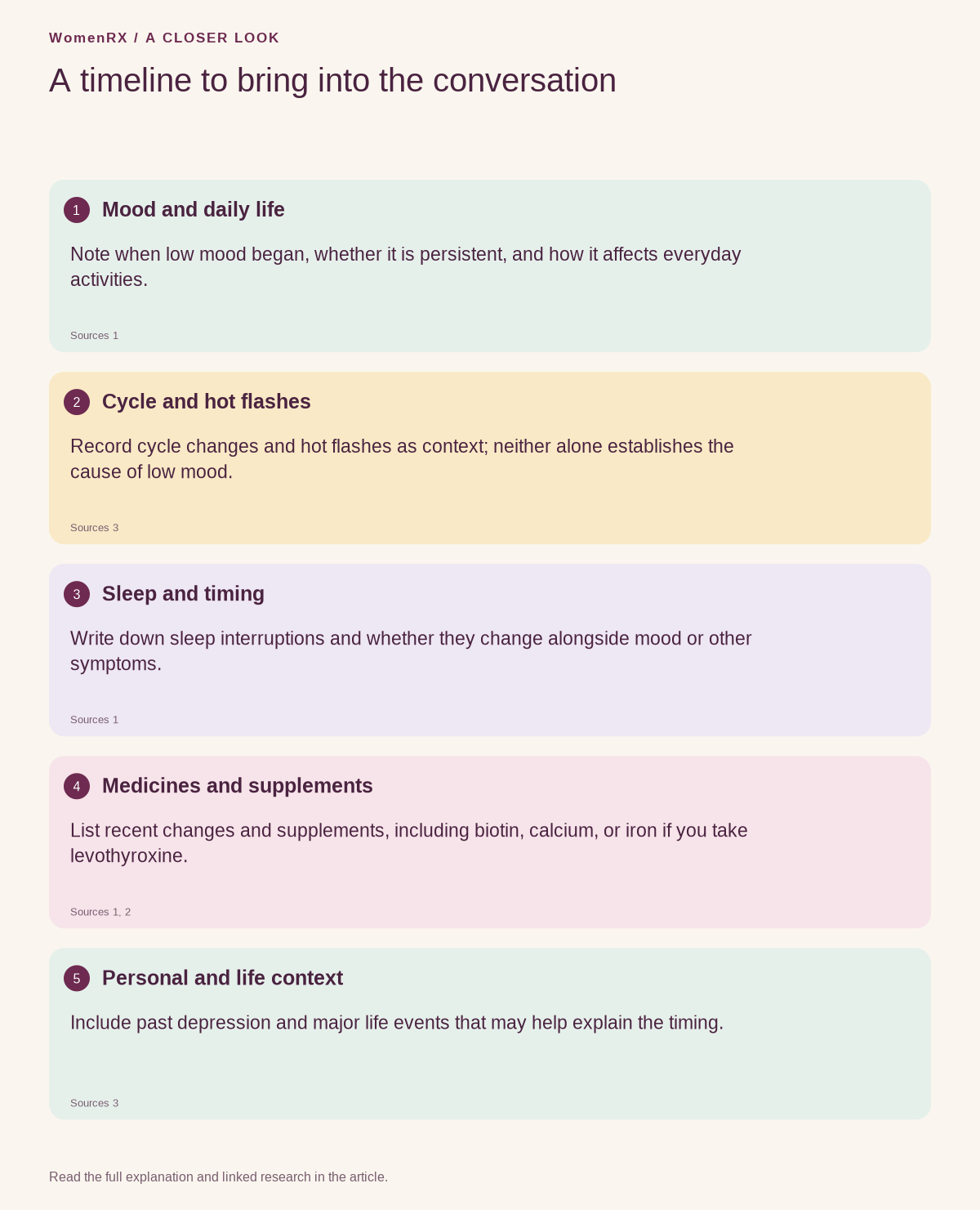
A timeline to bring into the conversation
Mood and daily life: Note when low mood began, whether it is persistent, and how it affects everyday activities.1
Cycle and hot flashes: Record cycle changes and hot flashes as context; neither alone establishes the cause of low mood.3
Sleep and timing: Write down sleep interruptions and whether they change alongside mood or other symptoms.1
Medicines and supplements: List recent changes and supplements, including biotin, calcium, or iron if you take levothyroxine.12
Personal and life context: Include past depression and major life events that may help explain the timing.3
Read the figure as text
Put these details side by side so the discussion can consider mood, other symptoms, medicines, and life context without assuming one explains everything.- Mood and daily life: Note when low mood began, whether it is persistent, and how it affects everyday activities.1
- Cycle and hot flashes: Record cycle changes and hot flashes as context; neither alone establishes the cause of low mood.3
- Sleep and timing: Write down sleep interruptions and whether they change alongside mood or other symptoms.1
- Medicines and supplements: List recent changes and supplements, including biotin, calcium, or iron if you take levothyroxine.12
- Personal and life context: Include past depression and major life events that may help explain the timing.3
More questions, answered
Does being in your 40s mean low mood is hormonal?
No. The menopause transition is associated with increased depressive symptoms in longitudinal research, but that association does not establish the cause of an individual’s low mood. Age alone is not enough to identify the cause. 3
Sources you can check
- Depression: MedlinePlusAccessed 2026-09-25Return to first citation
- LEVOTHYROXINE SODIUM TABLET [CARDINAL HEALTH 107, LLC] | US prescribing information and patient instructionsAccessed 2026-09-25Return to first citation
- Menopause and depression: is there a link?Vivian-Taylor J, Hickey M. · Maturitas · 2014Return to first citation