Mood Swings in Your 40s: Could Perimenopause Be One Factor?
The timing of mood changes can help you decide which possibilities deserve attention, especially if your periods or sleep have changed too.
Yes. Mood changes are among the symptoms associated with perimenopause and menopause. If they recur around your period, consider a cycle-related pattern; if periods have become irregular and sleep has changed too, the menopause transition may be worth discussing. Low mood that persists or disrupts daily life deserves attention in its own right, because depression, thyroid problems, and some medicines can also affect mood. 1 2 3
Perimenopause is possible, not proven by age
Mood changes can occur during the menopause transition. A review of clinical menopause guidelines found that mood disturbance, including low mood and mood changes, was listed among symptoms associated with perimenopause and menopause. The same review found that perimenopause-specific recommendations were limited. So it’s reasonable to consider the transition, but a birthday or mood swing by itself can’t confirm the reason. 3
What does the pattern suggest?
Mood changes that recur around your period: PMS can include mood swings, irritability, or feeling depressed and is thought to be linked to changing hormone levels during the menstrual cycle. If your mood changes repeatedly follow that pattern, ask whether a cycle-related symptom is part of the picture, even if your periods are still regular. The pattern alone doesn’t establish that you’re entering perimenopause. 1
Mood changes alongside newly irregular periods: Irregular cycles can occur just before menopause. If you’ve also noticed disturbed sleep, perimenopause becomes a reasonable possibility to discuss: both sleep disturbance and mood changes appear in menopause guidance. These symptoms can occur together without showing that the transition is the sole cause of either one. 1 3
Low mood that sticks around: If you feel low or lose interest in things for much of most days, the question is no longer just whether symptoms follow your cycle. Depression can affect sleep, eating, work, and other everyday activities. MedlinePlus describes depressed mood or loss of interest most of the day, nearly every day, for at least two weeks as part of its diagnostic criteria. You don’t need to settle the hormone question before seeking help for symptoms like these. 2
Consider the other parts of the picture
Mood symptoms can have more than one contributor. Depression can involve biological, environmental, and psychological factors, and some medicines or medical conditions, including thyroid disorders, can cause symptoms that resemble depression. None of these possibilities rules out perimenopause; more than one may be relevant at once. 2
Sleep is worth mentioning if it has changed. Disturbed sleep is also listed among symptoms associated with perimenopause and menopause. If poor sleep and mood changes began around the same time, describe both rather than focusing on mood alone. 3
Keep a brief record if the timing is unclear
Jot down when mood changes happen, when your periods start, and whether your cycle has become less predictable. You could also note changes in sleep, stress, medicines, and day-to-day functioning. A symptom diary across the cycle can give a clinician a clearer account of what happens and when. Use it to spot a recurring pattern or describe a change, not as a test for perimenopause. 1 2
When to seek support
If low mood or loss of interest is present most of the day, nearly every day, for at least two weeks, or mood symptoms are making everyday activities difficult, reach out for support rather than assuming it’s hormonal. Depression is more than feeling irritable or sad for a few days, and help is available. 2
If you’re discussing the changes with a healthcare provider, mention your cycle pattern, sleep, stressors, medication changes, and how symptoms affect daily life. They can consider both mental health and possible medical contributors; thyroid disorders and some medicines can resemble depression, and medical tests may be used to rule out other conditions. 2
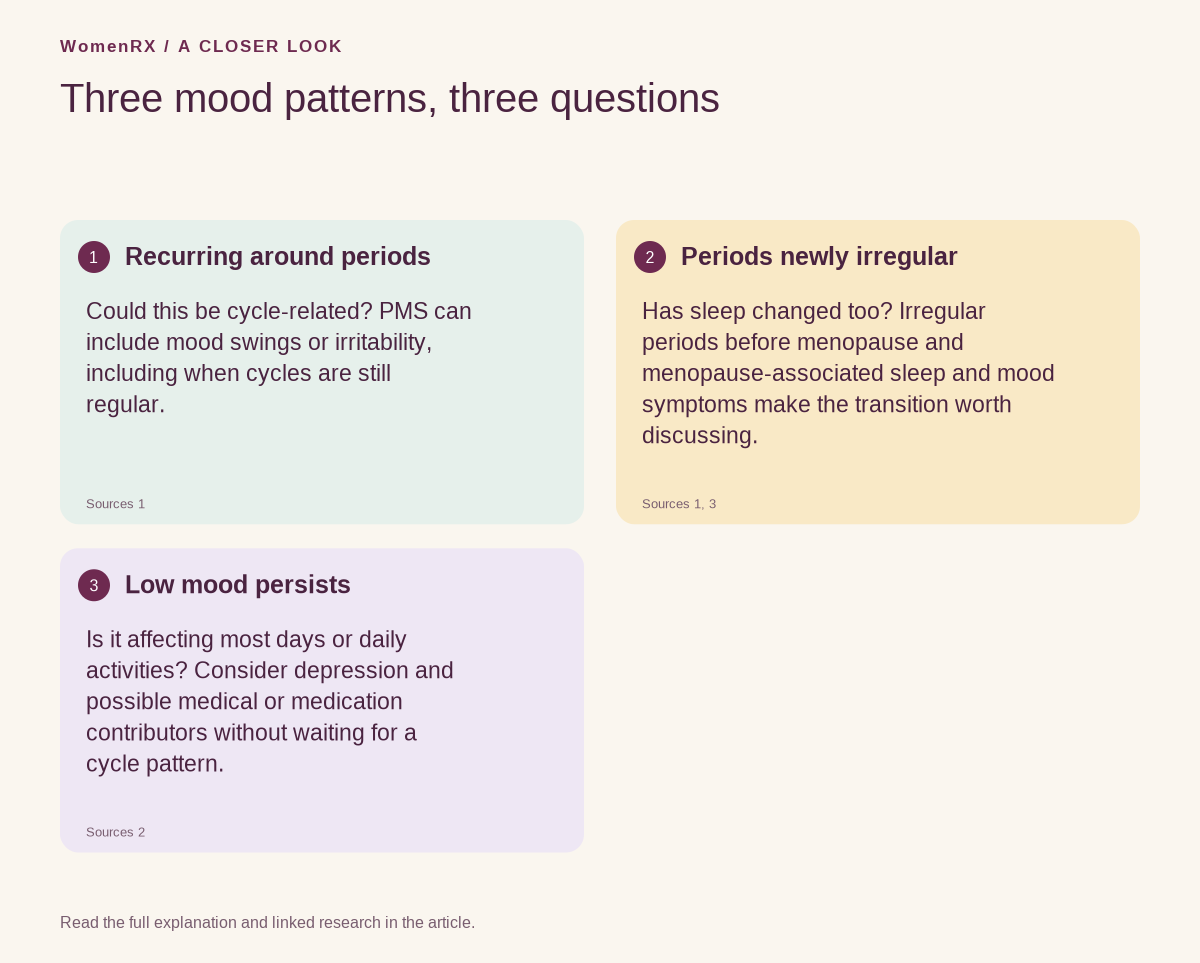
Three mood patterns, three questions
Recurring around periods: Could this be cycle-related? PMS can include mood swings or irritability, including when cycles are still regular.1
Periods newly irregular: Has sleep changed too? Irregular periods before menopause and menopause-associated sleep and mood symptoms make the transition worth discussing.13
Low mood persists: Is it affecting most days or daily activities? Consider depression and possible medical or medication contributors without waiting for a cycle pattern.2
Read the figure as text
Compare the timing and impact of your symptoms to see which question might be most useful to raise.- Recurring around periods: Could this be cycle-related? PMS can include mood swings or irritability, including when cycles are still regular.1
- Periods newly irregular: Has sleep changed too? Irregular periods before menopause and menopause-associated sleep and mood symptoms make the transition worth discussing.13
- Low mood persists: Is it affecting most days or daily activities? Consider depression and possible medical or medication contributors without waiting for a cycle pattern.2
Sources you can check
- Period problems - NHSAccessed 2026-09-25Return to first citation
- Depression: MedlinePlusAccessed 2026-09-25Return to first citation
- A systematic review and critical appraisal of menopause guidelines.Hemachandra C, Taylor S, Islam RM, Fooladi E, Davis SR. · BMJ sexual & reproductive health · 2024Return to first citation