Can Menopause Hormone Therapy Help With Low Energy?
Hormone therapy may help when hot flashes or night sweats are disrupting sleep, but fatigue alone doesn’t show that hormones are the cause.
Menopausal hormone therapy is an established treatment for bothersome hot flashes and night sweats, which can interrupt sleep and contribute to feeling tired. That possible sleep link is different from treating fatigue itself: menopause guidance supports hormone therapy for menopausal symptoms, not as a stand-alone energy treatment. If fatigue lasts for weeks, consider other causes too, including anemia, thyroid disease, sleep disorders, depression, or anxiety. 1 3 4
Two different questions: sleep, and fatigue itself
Low energy can happen during perimenopause or after menopause, but it isn’t a specific sign that estrogen is low. One possible connection is indirect: hot flashes or night sweats wake you or make sleep less restful, and you feel the effects the next day. Menopause-related sleep disruption is recognized, and hormone therapy is the most effective treatment for bothersome hot flashes and night sweats. If those symptoms are disturbing your sleep, treating them may address one part of the problem. It doesn’t guarantee that your energy will improve. 3 4
The distinction matters. Guidance supports menopausal hormone therapy for symptoms such as hot flashes and night sweats; it doesn’t identify fatigue alone as a reason to use it. Whether it reliably improves fatigue itself isn’t established by that guidance. 3
For example, you might notice that your tiredness is worse after nights when you wake sweaty and less disruptive after a better night’s sleep. That pattern makes sleep a reasonable part of the explanation to consider. If you remain drained even when you’re sleeping reasonably well, or fatigue continues after the night sweats are controlled, keep looking beyond menopause symptoms.
Fatigue has more than one possible cause
Fatigue is a symptom, not a diagnosis. It can follow too little sleep or stress, but it can also accompany conditions such as anemia, thyroid disease, sleep apnea and other sleep disorders, depression, or anxiety. More than one factor can contribute at once. 1
It can help to notice the shape of the problem: whether sleep is being interrupted, whether you feel tired even after a decent night, and whether the fatigue began or changed after starting a medication. These observations don’t identify a cause on their own, but they can help keep the discussion from becoming “it must be menopause.”
If you take oral micronized progesterone, mention new or pronounced drowsiness. US patient information for Prometrium says some women experience drowsiness or dizziness, particularly when starting it. This is product-specific information, not a reason to assume progesterone explains every case of fatigue. 2
When to consider an evaluation
If fatigue hasn’t improved after several weeks, MedlinePlus advises contacting a health care provider to help identify the cause. An evaluation may include questions about sleep and daily activities, a physical exam, and lab tests, depending on your situation. 1
If you’re considering hormone therapy, the more useful starting question is whether bothersome menopausal symptoms, especially hot flashes or night sweats, are affecting your sleep and whether treatment fits your health and preferences. The benefit-risk balance depends on factors including treatment type, route, duration, timing, and whether a progestogen is used. The North American Menopause Society says it is generally favorable for healthy women younger than 60 or within 10 years of menopause onset, without contraindications, when treating bothersome vasomotor symptoms. That guidance is about treating those symptoms, not fatigue alone. 3
The practical takeaway: follow the sleep link if night sweats are waking you, but don’t let that possibility close off other explanations when low energy persists.
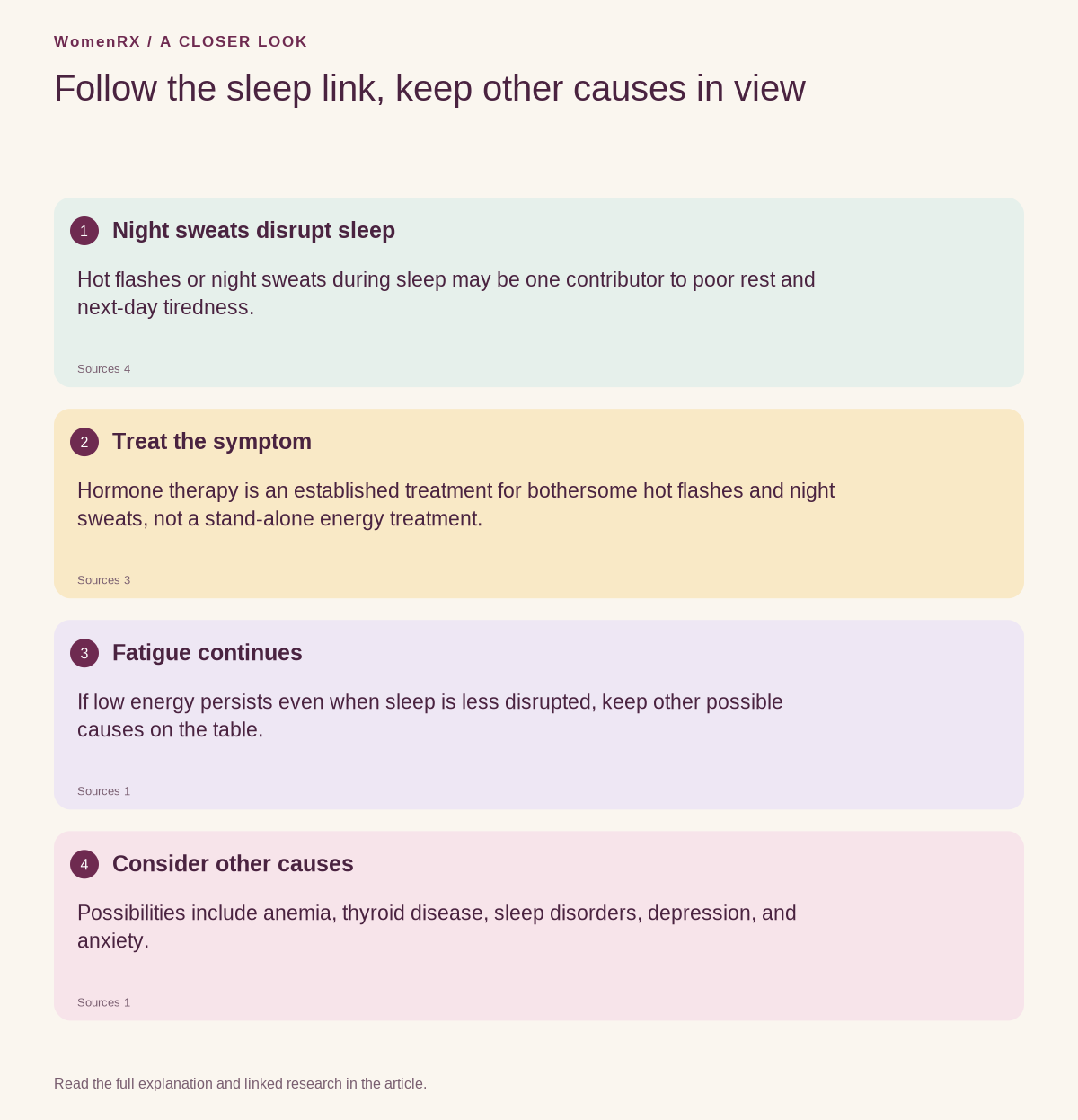
Follow the sleep link, keep other causes in view
Night sweats disrupt sleep: Hot flashes or night sweats during sleep may be one contributor to poor rest and next-day tiredness.4
Treat the symptom: Hormone therapy is an established treatment for bothersome hot flashes and night sweats, not a stand-alone energy treatment.3
Fatigue continues: If low energy persists even when sleep is less disrupted, keep other possible causes on the table.1
Consider other causes: Possibilities include anemia, thyroid disease, sleep disorders, depression, and anxiety.1
Read the figure as text
This flow distinguishes a possible link between night sweats and tiredness from fatigue that may need a broader look.- Night sweats disrupt sleep: Hot flashes or night sweats during sleep may be one contributor to poor rest and next-day tiredness.4
- Treat the symptom: Hormone therapy is an established treatment for bothersome hot flashes and night sweats, not a stand-alone energy treatment.3
- Fatigue continues: If low energy persists even when sleep is less disrupted, keep other possible causes on the table.1
- Consider other causes: Possibilities include anemia, thyroid disease, sleep disorders, depression, and anxiety.1
More questions, answered
Can hormone therapy be considered if fatigue is my main symptom?
Fatigue alone isn’t an established indication in the cited menopause guidance. The clearest role discussed here is treating bothersome hot flashes and night sweats; persistent fatigue also deserves consideration of other causes. 1 3
Could a menopause treatment make me feel drowsy?
Some women taking oral micronized progesterone experience drowsiness or dizziness, particularly when starting Prometrium. If your energy changed after starting a treatment, mention that timing when considering possible causes. 2
Sources you can check
- Fatigue: MedlinePlusAccessed 2026-09-25Return to first citation
- PROMETRIUM (PROGESTERONE) CAPSULE [ACERTIS PHARMACEUTICALS, LLC] | US prescribing information and patient instructionsAccessed 2026-09-25Return to first citation
- The 2022 hormone therapy position statement of The North American Menopause Society.“The 2022 Hormone Therapy Position Statement of The North American Menopause Society” Advisory Panel. · Menopause (New York, N.Y.) · 2022Return to first citation
- Hormone replacement therapy for menopausal mood swings and sleep quality: The current evidence.Borozan S, Kamrul-Hasan ABM, Pappachan JM. · World journal of psychiatry · 2024Return to first citation