Can Menopause Hormone Therapy Help With Fatigue?
It may help indirectly if hot flashes or night sweats are disrupting sleep, but fatigue alone doesn’t show that hormone therapy is the right treatment.
Menopausal hormone therapy is an established treatment for bothersome hot flashes and night sweats, not a proven stand-alone treatment for fatigue. If those symptoms are waking you, treating them could help your sleep and possibly your daytime energy, but that benefit isn’t guaranteed. Fatigue that persists or affects daily life deserves its own look at causes such as anemia, thyroid disease, sleep problems, mood, or medication effects. 1 3
The likely connection is through sleep
Fatigue can feel like a menopause symptom, but that doesn’t mean it’s caused by a hormone deficiency or that hormone therapy will fix it. Menopausal hormone therapy (MHT) is the most effective treatment for bothersome hot flashes and night sweats, according to the North American Menopause Society. Its position statement does not establish fatigue itself as a treatment benefit. 3
There is a reasonable indirect possibility: if night sweats or hot flashes repeatedly wake you, relief from those symptoms may make sleep less disrupted, which could help you feel more rested. But improvement in hot flashes isn’t the same as proof that MHT treats fatigue, and the benefit may be limited if another issue is draining your energy. 1 3
For example, someone who wakes several times a night with hot flashes might consider whether treating those symptoms is appropriate. Someone who sleeps through the night but remains exhausted has a different question: what else could be contributing?
When MHT may be part of the discussion
MHT is generally considered for bothersome menopause symptoms such as hot flashes and night sweats, with the decision tailored to your health and circumstances. The balance of benefits and risks depends on factors including the type and route of therapy, duration, timing, and whether a progestogen is used. The menopause society describes a more favorable benefit-risk balance for many women younger than 60 or within 10 years of menopause onset who have no contraindications, when treating bothersome vasomotor symptoms. Fatigue by itself doesn’t establish that MHT is appropriate. 3
If fatigue is your main concern, it can help to separate it from symptoms MHT is known to treat. Are hot flashes or night sweats interrupting your sleep? Or is fatigue present even when you sleep reasonably well? That distinction can guide whether symptom treatment, evaluation for another cause, or both deserve attention.
Fatigue has several possible causes
Fatigue is a symptom, not a diagnosis. MedlinePlus lists too little sleep, anemia, thyroid disease, sleep apnea and other sleep disorders, depression, anxiety, chronic illness, pain, and treatments among possible contributors. More than one can be present at once. 1
A practical way to sort the possibilities is to notice what else is happening:
- Sleep disruption: Hot flashes may be one reason for waking, but other sleep problems can also leave you tired. 1 3
- Possible anemia: Fatigue can occur with iron-deficiency anemia. Don’t assume low energy means you need iron; a blood test can help confirm anemia before treatment is considered. 1 2
- Thyroid or other health conditions: Thyroid disease and several chronic conditions can cause fatigue, so persistent tiredness isn’t specific to menopause. 1
- Mood, pain, or treatment effects: Depression, anxiety, untreated pain, and medical treatments can also contribute. 1
This isn’t a checklist for diagnosing yourself. It’s a way to see why treating hot flashes may not address every reason you feel worn out.
A useful next step depends on the pattern
If fatigue has lasted several weeks or isn’t improving, MedlinePlus recommends contacting a health care provider to look for a cause. Evaluation may include questions about sleep and daily life, an exam, and lab tests based on your situation. 1
If you have bothersome hot flashes or night sweats as well, bring those into the same conversation. The question isn’t simply whether hormones help fatigue; it’s whether treating the menopause symptoms you have is likely to address part of the problem, while checking for other plausible causes. That keeps the decision about MHT tied to symptoms it is known to treat, rather than treating fatigue as proof of hormone deficiency. 1 3
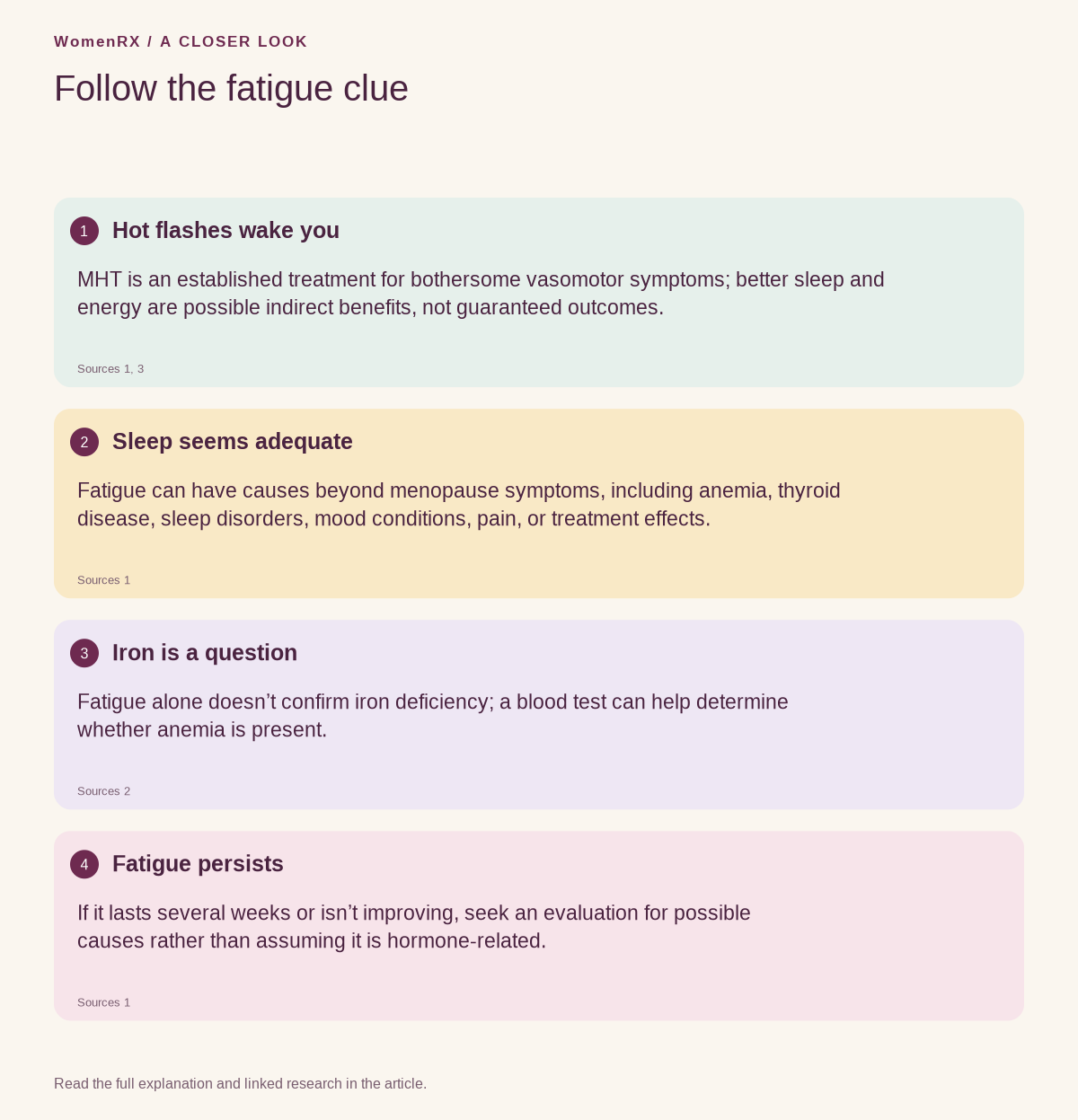
Follow the fatigue clue
Hot flashes wake you: MHT is an established treatment for bothersome vasomotor symptoms; better sleep and energy are possible indirect benefits, not guaranteed outcomes.13
Sleep seems adequate: Fatigue can have causes beyond menopause symptoms, including anemia, thyroid disease, sleep disorders, mood conditions, pain, or treatment effects.1
Iron is a question: Fatigue alone doesn’t confirm iron deficiency; a blood test can help determine whether anemia is present.2
Fatigue persists: If it lasts several weeks or isn’t improving, seek an evaluation for possible causes rather than assuming it is hormone-related.1
Read the figure as text
Use the pattern of symptoms to distinguish a possible sleep-related menopause link from fatigue that deserves a broader evaluation.- Hot flashes wake you: MHT is an established treatment for bothersome vasomotor symptoms; better sleep and energy are possible indirect benefits, not guaranteed outcomes.13
- Sleep seems adequate: Fatigue can have causes beyond menopause symptoms, including anemia, thyroid disease, sleep disorders, mood conditions, pain, or treatment effects.1
- Iron is a question: Fatigue alone doesn’t confirm iron deficiency; a blood test can help determine whether anemia is present.2
- Fatigue persists: If it lasts several weeks or isn’t improving, seek an evaluation for possible causes rather than assuming it is hormone-related.1
More questions, answered
Should I take iron for menopause fatigue?
Not just because you feel tired. Iron treats iron-deficiency anemia, and fatigue can have many causes. A blood test can help determine whether anemia is present; discuss iron treatment if it is confirmed rather than starting it on the assumption that fatigue means low iron. 1 2
When should I get persistent fatigue checked?
If tiredness has continued for several weeks or isn’t improving, MedlinePlus advises contacting a health care provider to look for a cause. 1
Sources you can check
- Fatigue: MedlinePlusAccessed 2026-09-25Return to first citation
- Common questions about ferrous sulfate - NHSAccessed 2026-09-25Return to first citation
- The 2022 hormone therapy position statement of The North American Menopause Society.“The 2022 Hormone Therapy Position Statement of The North American Menopause Society” Advisory Panel. · Menopause (New York, N.Y.) · 2022Return to first citation