Fatigue Around Menopause: Find the Cause and What May Help
Menopause can disrupt sleep, but persistent tiredness can have other causes worth checking.
If you’re tired around menopause, look first for a pattern: hot flashes or night sweats may be waking you, while snoring or gasping can point to a sleep problem. But fatigue can also come from mood changes, medicines, anemia, thyroid problems, or other conditions. If it lasts for weeks, affects daily life, or comes with other symptoms, arrange an evaluation rather than assuming it’s hormonal. 1 2 6
Start with the pattern, not a menopause label
Menopause-related changes can overlap with fatigue, especially when hot flashes or night sweats interrupt sleep. A review of studies in women found an association between menopausal status and poorer sleep, though experiences varied across populations. That makes sleep a useful place to look, not proof that hormones explain your tiredness. 6
For a week or two, make a brief note of when you feel tired and what happened the night before. Did you wake after feeling hot or sweaty? Were you awake for another reason? Are you sleepy during the day, or mainly low on energy? A short record can help you notice patterns and explain them clearly; it won’t diagnose the cause. 2
Check the clues that can change the next step
- Sleep: Note trouble falling or staying asleep, night sweats, and whether you feel restored in the morning. Loud snoring, or waking with gasping, snorting, or choking, is worth mentioning because it can point to sleep apnea. 1
- Periods and bleeding: If you still have periods, write down changes in timing and flow. Fatigue has more than one possible cause, and iron-deficiency anemia is one condition a clinician may consider checking for. A change in bleeding or tiredness alone doesn’t establish anemia. 1
- Mood and daily life: Note changes in mood, anxiety, or concentration, and whether fatigue is making ordinary tasks harder. Depression and anxiety can be associated with fatigue, and mood changes alongside tiredness are a reason to seek an assessment. 1 2
- Medicines and supplements: Make a list, including anything recently started or changed. Some medicines and medical treatments can contribute to tiredness. If you take levothyroxine, don’t use it as an energy aid or change your treatment to address fatigue: thyroid treatment is adjusted using thyroid tests, and overtreatment can cause harm. 1 2 4
- Other symptoms: Mention symptoms such as unexplained weight loss, palpitations, shortness of breath, unusual thirst, or needing to urinate more often. These details can help direct an evaluation; they don’t identify a cause by themselves. 1
When to seek an evaluation
Make an appointment if fatigue has lasted several weeks without a clear reason, is affecting your daily life, or comes with other symptoms or mood changes. An evaluation may include questions about sleep and everyday routines, an exam, and blood tests. Depending on the picture, testing may check for anemia, diabetes, or an overactive thyroid. Treatment depends on the cause, so iron or thyroid treatment shouldn’t be started just because you feel tired. 1 2
If poor sleep seems central, describe what is waking you. For example, repeated night sweats call for a different conversation than loud snoring and gasping. When hot flashes are the problem, treatments for menopausal symptoms are available; the right choice depends on your health and preferences. Cognitive behavioral therapy is among the nonhormonal options recommended for vasomotor symptoms, and a 2026 review of trials in menopausal women also found improvements in sleep quality and insomnia with psychosocial interventions, particularly cognitive behavioral approaches. 5 7
Be cautious about “energy” supplements
A supplement won’t tell you why you’re tired. Ashwagandha studies include short-term research in adults with sleep or stress concerns, and one mixed-sex trial in adults reporting low energy and fatigue found reduced fatigue compared with placebo. That isn’t evidence of a proven treatment for menopause-related fatigue: the participants weren’t a menopause-specific group, and the research used different preparations. 3
A more useful first move is to match the next step to the pattern: work on sleep habits if sleep is clearly disrupted, raise recurring hot flashes or night sweats as a treatable problem, and get persistent or unexplained fatigue assessed. 1 2 5
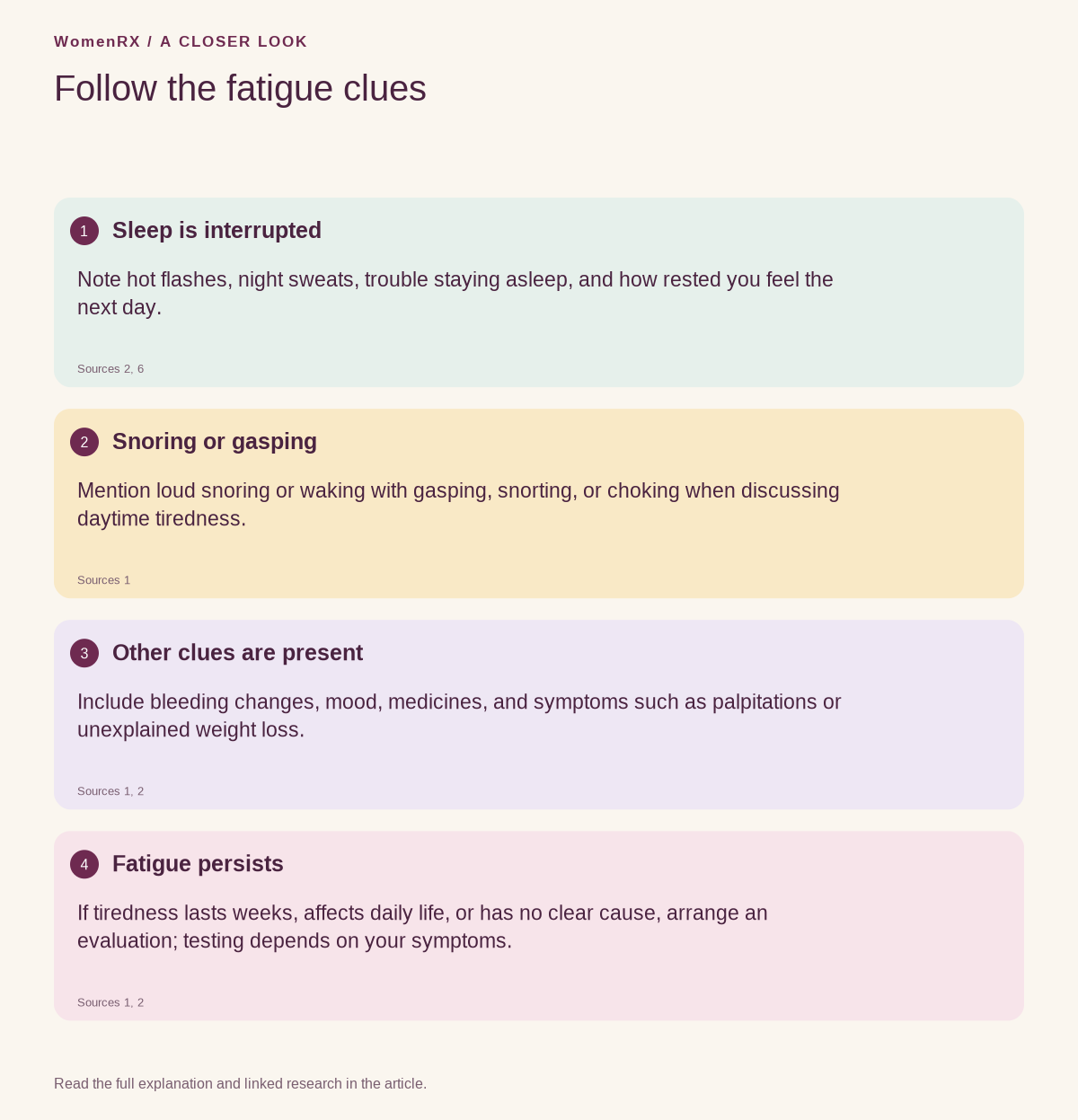
Follow the fatigue clues
Sleep is interrupted: Note hot flashes, night sweats, trouble staying asleep, and how rested you feel the next day.26
Snoring or gasping: Mention loud snoring or waking with gasping, snorting, or choking when discussing daytime tiredness.1
Other clues are present: Include bleeding changes, mood, medicines, and symptoms such as palpitations or unexplained weight loss.12
Fatigue persists: If tiredness lasts weeks, affects daily life, or has no clear cause, arrange an evaluation; testing depends on your symptoms.12
Read the figure as text
Use the pattern of tiredness and any accompanying symptoms to choose a practical next step; these clues are not a diagnosis.- Sleep is interrupted: Note hot flashes, night sweats, trouble staying asleep, and how rested you feel the next day.26
- Snoring or gasping: Mention loud snoring or waking with gasping, snorting, or choking when discussing daytime tiredness.1
- Other clues are present: Include bleeding changes, mood, medicines, and symptoms such as palpitations or unexplained weight loss.12
- Fatigue persists: If tiredness lasts weeks, affects daily life, or has no clear cause, arrange an evaluation; testing depends on your symptoms.12
More questions, answered
Should I try iron for menopause fatigue?
Not just because you’re tired. Iron-deficiency anemia is one possible cause, but fatigue alone doesn’t confirm it. An evaluation may include blood tests, and treatment depends on what they show. 1
Can poor sleep explain daytime fatigue?
It can contribute, and hot flashes or night sweats may disrupt sleep during the menopause transition. But snoring or waking while gasping can also point to a sleep disorder, so mention those clues rather than assuming menopause is the only explanation. 1 6
Sources you can check
- Tiredness and fatigue - NHSAccessed 2026-09-25Return to first citation
- Fatigue: MedlinePlusAccessed 2026-09-25Return to first citation
- Ashwagandha: Is it helpful for stress, anxiety, or sleep? - Health Professional Fact SheetAccessed 2026-09-25Return to first citation
- LEVOTHYROXINE SODIUM TABLET [CARDINAL HEALTH 107, LLC] | US prescribing information and patient instructionsAccessed 2026-09-25Return to first citation
- The 2023 nonhormone therapy position statement of The North American Menopause Society.Menopause (New York, N.Y.) · 2023Return to first citation
- The influence of menopausal status on sleep quality in different populations - a narrative review.Skibiak K, Dębski J, Przybyłowski J, Walędziak M, Różańska-Walędziak A. · Przeglad menopauzalny = Menopause review · 2025Return to first citation
- The effectiveness of psychosocial interventions on physiological symptoms of menopause: a systematic review and meta-analysis.Robinson K, Hardy R, Melville M, Saidel S, Desai R, Spector A. · BMC women's health · 2026Return to first citation