Can Menopause Contribute to Tiredness?
Menopause-related sleep disruption can leave you tired, but ongoing fatigue deserves a wider look than hormones alone.
Yes, menopause can contribute to tiredness, especially when hot flashes or night sweats interrupt sleep. But fatigue during perimenopause or after menopause isn’t proof that hormones are the only cause: sleep apnea, anemia, thyroid problems, diabetes, mood concerns, and other factors can also play a part. If tiredness lasts for weeks, affects daily life, or comes with other symptoms, get it checked. 1 2 5
The clearest link may be broken sleep
If you’re waking because of night sweats, hot flashes, or trouble staying asleep, it makes sense that you might feel drained the next day. Sleep disturbance is common around menopause, and menopause-related vasomotor symptoms can disrupt sleep. That’s a plausible indirect route from menopause symptoms to daytime tiredness. 5
A direct hormone-to-fatigue effect is harder to separate from disrupted sleep and other overlapping symptoms. Menopause is listed among possible causes of tiredness, but that doesn’t show that hormonal change alone explains an individual woman’s fatigue. 1 5
For example, if your energy is worst after nights when you’ve been repeatedly woken by sweating, sleep disruption may be part of the picture. If you’re tired regardless of how you sleep, or the tiredness is new and persistent, don’t assume menopause explains it.
Notice what comes with the tiredness
The details can point toward what’s worth checking, without diagnosing the cause yourself:
- Broken sleep, loud snoring, or gasping, snorting, or choking during sleep: Sleep apnea is one possible cause of daytime tiredness. The prevalence of obstructive sleep apnea increases after menopause, and those nighttime breathing signs are a reason to bring it up with a clinician. 1 5
- Palpitations, shortness of breath, or pale skin: These can occur with iron-deficiency anemia. 1
- Unusual thirst, peeing more often, or unexplained weight loss: These can be signs of diabetes that need assessment. 1
- Nervousness, irritability, or muscle weakness: Along with tiredness, these may occur with an overactive thyroid. 1
- Low mood, anxiety, stress, pain, or a medicine change: These can also contribute to fatigue. Some medicines used for menopause symptoms can cause drowsiness; clonidine is one example. 2 3
These clues overlap, and tiredness can have more than one contributor. A pattern is useful information, not a diagnosis.
What you can try while you look for a pattern
If night sweats or hot flashes are repeatedly waking you, note whether your daytime energy seems to track with those disrupted nights. A short record of sleep and energy can help you describe the pattern; it shouldn’t become a reason to delay care if fatigue is persistent or affecting daily life. 2
If menopause symptoms are disrupting sleep, discuss options for those symptoms rather than treating tiredness as a problem with one automatic solution. Hormone therapy is an effective treatment for bothersome vasomotor symptoms for some women, but its suitability depends on individual factors; that evidence does not establish it as a treatment for fatigue on its own. 4
If a medicine was started or changed around the time your tiredness began, ask whether it could be contributing. Don’t stop a prescribed medicine on your own. For instance, drowsiness is a reported side effect of clonidine, a medicine used for hot flashes. 3
When to get another explanation checked
Contact a health care provider if fatigue has lasted several weeks without a clear reason, is affecting your everyday activities, or comes with symptoms such as weight loss or mood changes. Mention loud snoring or nighttime gasping, too. Depending on your symptoms, assessment may include tests for problems such as anemia, diabetes, or an overactive thyroid. 1
The useful distinction is not “menopause or something else.” Menopause-related sleep loss can be part of the explanation while another treatable issue is also present. Looking at sleep, associated symptoms, and medicines together gives you a more useful next step than assuming all tiredness is inevitable.
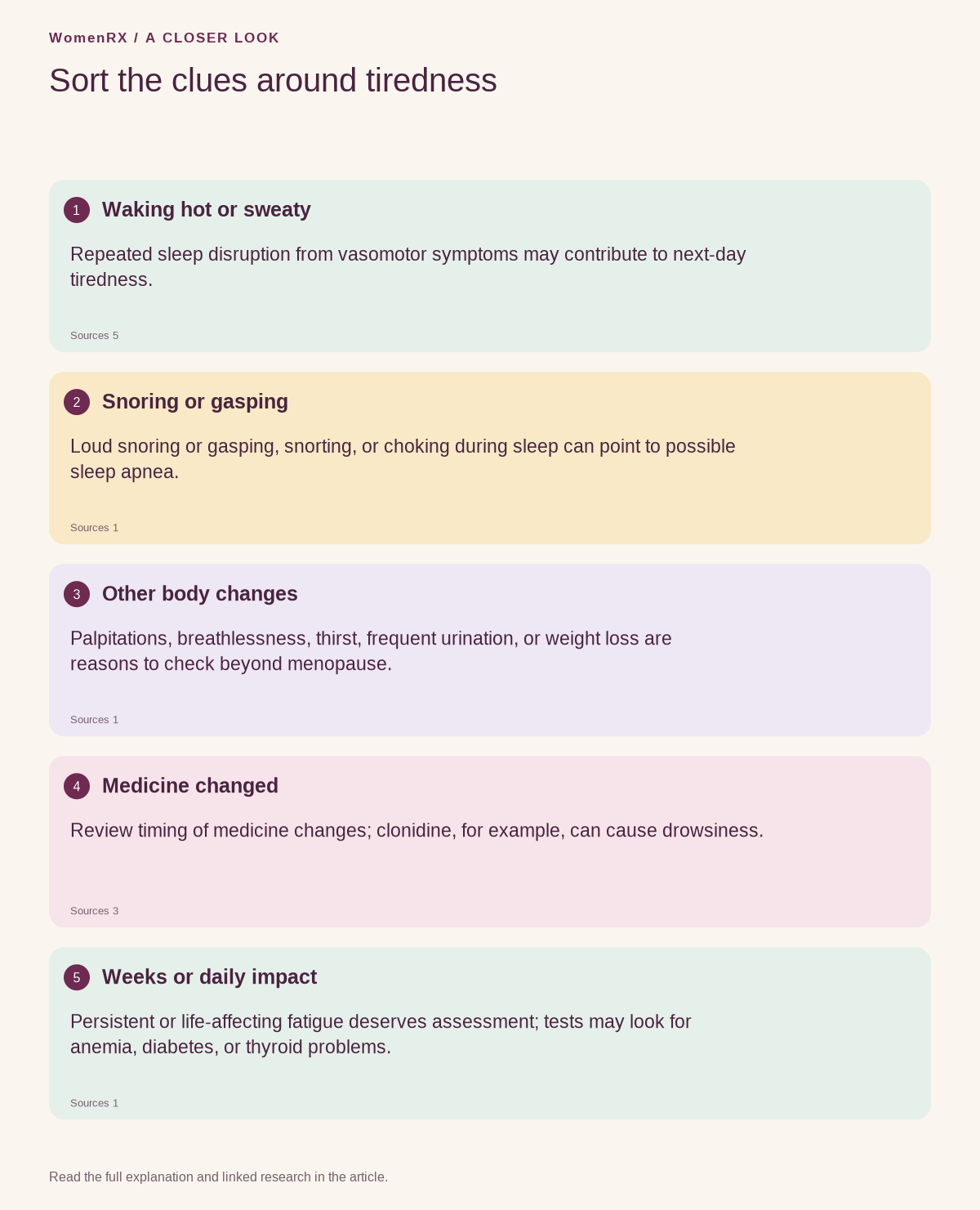
Sort the clues around tiredness
Waking hot or sweaty: Repeated sleep disruption from vasomotor symptoms may contribute to next-day tiredness.5
Snoring or gasping: Loud snoring or gasping, snorting, or choking during sleep can point to possible sleep apnea.1
Other body changes: Palpitations, breathlessness, thirst, frequent urination, or weight loss are reasons to check beyond menopause.1
Medicine changed: Review timing of medicine changes; clonidine, for example, can cause drowsiness.3
Weeks or daily impact: Persistent or life-affecting fatigue deserves assessment; tests may look for anemia, diabetes, or thyroid problems.1
Read the figure as text
Use the pattern around your fatigue to see what may be contributing and what is worth raising with a health care provider.- Waking hot or sweaty: Repeated sleep disruption from vasomotor symptoms may contribute to next-day tiredness.5
- Snoring or gasping: Loud snoring or gasping, snorting, or choking during sleep can point to possible sleep apnea.1
- Other body changes: Palpitations, breathlessness, thirst, frequent urination, or weight loss are reasons to check beyond menopause.1
- Medicine changed: Review timing of medicine changes; clonidine, for example, can cause drowsiness.3
- Weeks or daily impact: Persistent or life-affecting fatigue deserves assessment; tests may look for anemia, diabetes, or thyroid problems.1
More questions, answered
Does fatigue automatically mean I need hormone therapy?
No. Hormone therapy is an effective option for bothersome hot flashes and night sweats for some women, but fatigue alone doesn’t establish that it’s the right treatment. The decision depends on your symptoms and individual benefits and risks. 4
Can sleep apnea be relevant after menopause?
Yes. Obstructive sleep apnea becomes more prevalent after menopause. Loud snoring or waking with gasping, snorting, or choking are useful details to mention when you seek an assessment for daytime tiredness. 1 5
Sources you can check
- Tiredness and fatigue - NHSAccessed 2026-09-25Return to first citation
- Fatigue: MedlinePlusAccessed 2026-09-25Return to first citation
- Other medicines for menopause symptoms - NHSAccessed 2026-09-25Return to first citation
- The 2022 hormone therapy position statement of The North American Menopause Society.“The 2022 Hormone Therapy Position Statement of The North American Menopause Society” Advisory Panel. · Menopause (New York, N.Y.) · 2022Return to first citation
- Overview of Sleep and Gender Differences.Cherukuri CM, Padia H, Hassan F. · Sleep medicine clinics · 2026Return to first citation