Why Am I Always Tired? Patterns Worth Noticing
Whether you’re sleepy, low on energy, or worn out by ordinary activity, the pattern can point toward a useful next step.
Tiredness can follow poor sleep, stress, or activity, but it can also have a medical cause. If it’s lasted a few weeks without a clear reason, affects daily life, or comes with other changes, arrange an assessment. Notice whether you’re fighting sleep, generally low on energy, or unusually worn out by everyday tasks. Those details can help guide the conversation; they aren’t a diagnosis. 1 3
First, describe the kind of tiredness
Are you struggling to stay awake during the day? Do you feel short on energy even when you’re not sleepy? Or does an ordinary task leave you more worn out than it used to? You don’t have to choose a perfect label. The distinction helps you describe what has changed, while other symptoms and the length of time it’s been happening help determine what needs attention. Fatigue is a symptom with possible causes ranging from sleep loss and stress to physical and mental health conditions. 3
For example, waking often at night suggests a different line of questions from feeling breathless while doing a familiar task. Notice whether rest helps and whether the tiredness is occasional or has settled into your daily life. A brief record of when your energy dips may make a pattern easier to see. 1 2 3
Clues that change the conversation
Sleepy during the day? Start with your nights. If someone has noticed loud snoring or gasping, snorting, or choking sounds while you sleep, mention it when you seek care. Daytime tiredness alongside those signs can point to sleep apnea. 1
Worn out by ordinary activity? Say what has become harder. If tiredness comes with shortness of breath, dizziness, headaches, or feeling cold, anemia is one possibility. Heavy periods can contribute to anemia, but anemia also has other causes. Tiredness alone can’t tell you whether you need iron; an examination and blood tests help establish whether anemia is present, and treatment depends on its type. 1 2
Low on energy with other body changes? Unusual thirst, more frequent urination, and weight loss alongside tiredness are clues worth reporting together because they can occur with diabetes. Feeling tired while also restless, nervous, or irritable, or noticing muscle weakness, may prompt consideration of an overactive thyroid. These are clues, not ways to diagnose either condition yourself. 1
Has your mood, pain, or treatment changed? Depression, anxiety, untreated pain, some medicines, and medical treatments can contribute to fatigue. The timing may be useful: for example, did the change begin around a new treatment, or while pain was disrupting your sleep? Bring that connection up rather than assuming one cause explains everything. 1 3
Pregnancy is another possible context for fatigue. If tiredness starts around perimenopause or after menopause, that timing is worth mentioning too, but it doesn’t establish a hormonal cause. Sleep, mood, medicines, and other health conditions still deserve consideration. 1 3
When to stop pushing through
Arrange an assessment if you’ve felt tired for a few weeks and don’t know why, if it’s affecting daily life, or if it comes with changes such as weight loss or mood changes. Reports of gasping or choking during sleep also deserve attention. You don’t need to wait until you’ve identified a likely cause. 1
When you describe the problem, lead with its effect: “I’m sleepy at work despite sleeping,” or “My usual activities leave me unusually worn out.” Add when it began, whether rest helps, and any accompanying changes in sleep, breathing, periods, thirst, weight, mood, pain, or medicines. An assessment may include questions about your sleep and daily activities, an examination, and, when appropriate, blood tests for causes such as anemia, diabetes, or thyroid disease. 1 3
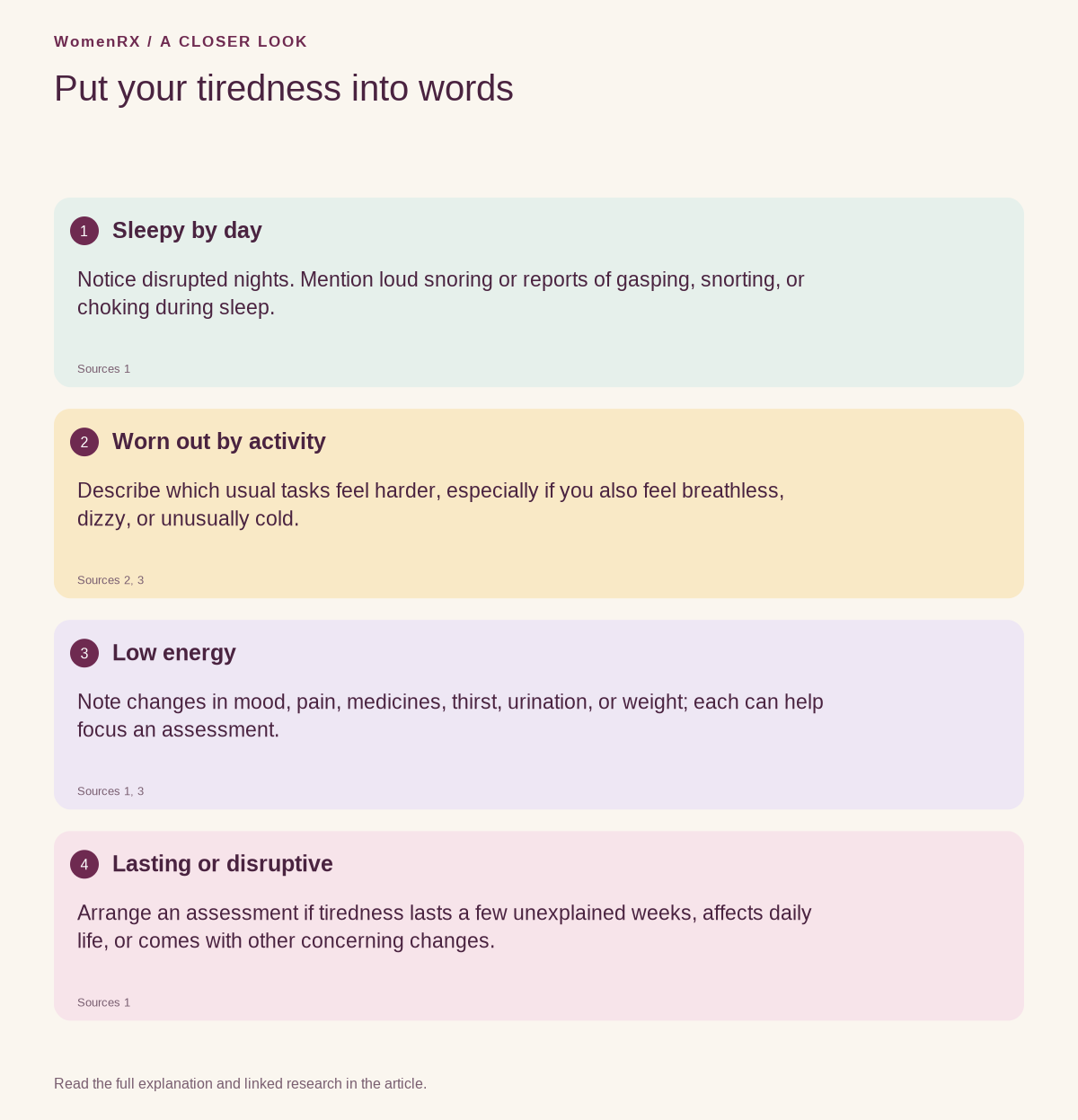
Put your tiredness into words
Sleepy by day: Notice disrupted nights. Mention loud snoring or reports of gasping, snorting, or choking during sleep.1
Worn out by activity: Describe which usual tasks feel harder, especially if you also feel breathless, dizzy, or unusually cold.23
Low energy: Note changes in mood, pain, medicines, thirst, urination, or weight; each can help focus an assessment.13
Lasting or disruptive: Arrange an assessment if tiredness lasts a few unexplained weeks, affects daily life, or comes with other concerning changes.1
Read the figure as text
Start with what the tiredness feels like, add any accompanying clues, then consider how long it has lasted and how much it affects you.- Sleepy by day: Notice disrupted nights. Mention loud snoring or reports of gasping, snorting, or choking during sleep.1
- Worn out by activity: Describe which usual tasks feel harder, especially if you also feel breathless, dizzy, or unusually cold.23
- Low energy: Note changes in mood, pain, medicines, thirst, urination, or weight; each can help focus an assessment.13
- Lasting or disruptive: Arrange an assessment if tiredness lasts a few unexplained weeks, affects daily life, or comes with other concerning changes.1
Sources you can check
- Tiredness and fatigue - NHSAccessed 2026-09-25Return to first citation
- Anemia | MedlinePlusAccessed 2026-09-25Return to first citation
- Fatigue: MedlinePlusAccessed 2026-09-25Return to first citation