Low Desire During Menopause: What May Be Behind It
Low desire can have several contributors, and the best next step depends on whether pain, sleep, mood, or another change is part of the picture.
Desire can change during perimenopause and after menopause, but it doesn’t change the same way for everyone. Pain or vaginal dryness, disrupted sleep, anxiety or depression, relationship strain, health conditions, and some medicines may all be relevant. Noticing which symptoms began alongside the change can help distinguish a vaginal symptom needing local treatment from concerns that call for broader menopause or sexual-health support. 2 5
Low desire during perimenopause or after menopause isn’t automatically a problem to fix, and it isn’t inevitable. Some women notice less interest, while others have stable or increased desire. When a change is unwanted or distressing, it helps to look at what else is happening rather than assume declining hormones explain everything. 5
Start with what changed alongside desire
Vaginal dryness or pain during sex can make sexual activity less comfortable, which may affect desire. A menopause-related drop in estrogen can contribute to dryness and irritation, but dryness can also have other causes. Vaginal soreness or itching, discomfort with sex, unusual discharge, and urinary symptoms are reasons to consider the vaginal or urinary concern on its own terms, rather than treating it as proof of a desire problem. 1 5
Sleep and mood deserve separate attention too. A review of research in peri- and postmenopausal women found that sleep disruption and anxiety or depression were associated with lower desire. Relationship dissatisfaction and other sexual difficulties also appeared among the factors linked with desire. These findings point to several possible contributors; they don’t establish that any one symptom caused an individual woman’s change. 5
Medicines and chronic health conditions can affect sexual health. If a change in desire began around the same time as a new medicine or health change, mention that timing when discussing it. 2
Match the concern to the kind of discussion
Dryness, irritation, or pain: Water-based lubricant during sex and vaginal moisturizers are options for dryness. If symptoms persist or bother you, ask about assessment and treatment for genitourinary symptoms of menopause. For bothersome symptoms not relieved by over-the-counter options, the North American Menopause Society recommends discussing low-dose vaginal estrogen or other therapies when systemic hormone therapy isn’t otherwise indicated. Vaginal estrogen is aimed at vaginal symptoms; it isn’t a treatment for sleep problems, mood swings, or hot flashes. 1 3 4
Hot flashes that disrupt sleep: This is a broader menopause-symptom question, not the same as treating vaginal dryness. Menopause hormone therapy is an effective treatment for bothersome vasomotor symptoms, but whether it suits you depends on your health and circumstances. A position statement from the North American Menopause Society advises individualizing treatment and periodically reevaluating its benefits and risks. Hormone therapy shouldn’t be assumed to be indicated solely to improve desire. 4
Mood, relationship strain, or a medicine change: These may call for a different conversation from one focused only on estrogen or vaginal treatment. Describe what changed, when it started, and what makes intimacy difficult or less appealing. This helps keep the discussion focused on the factors that may actually matter for you. Mood, relationship factors, health conditions, and medicines are among the influences identified in research and clinical information on sexual health. 2 5
Urinary symptoms: Frequent urination or repeated urinary infections can occur with vaginal dryness, but having urinary symptoms doesn’t tell you why desire has changed. Bring urinary concerns up separately so they can be assessed in their own right. 1 5
A useful way to describe the problem
Instead of starting with “I have low libido,” you might say, for example: “My interest changed around the time sex started hurting,” or “I’m less interested since my sleep became disrupted.” If the main issue is pain or dryness, ask about vaginal symptom treatment. If desire changed with mood, sleep, health, or a medicine, make that part of the conversation too. More than one factor can be present.
Bleeding after menopause, bleeding between periods, or bleeding after sex should be assessed rather than written off as part of low desire or dryness. Persistent vaginal dryness that affects daily life, or symptoms that don’t improve with measures you’ve tried, are also reasons to seek care. 1
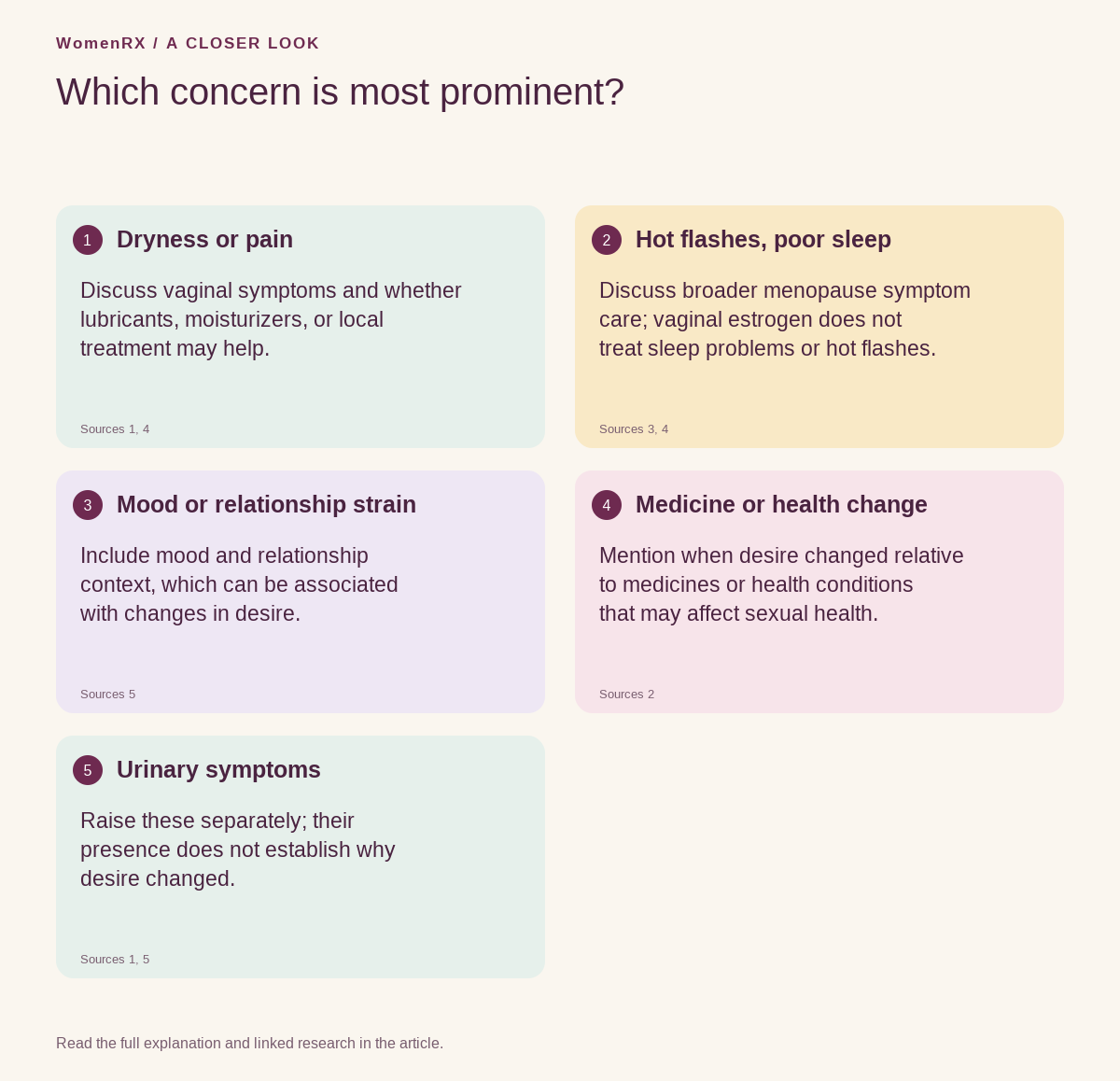
Which concern is most prominent?
Dryness or pain: Discuss vaginal symptoms and whether lubricants, moisturizers, or local treatment may help.14
Hot flashes, poor sleep: Discuss broader menopause symptom care; vaginal estrogen does not treat sleep problems or hot flashes.34
Mood or relationship strain: Include mood and relationship context, which can be associated with changes in desire.5
Medicine or health change: Mention when desire changed relative to medicines or health conditions that may affect sexual health.2
Urinary symptoms: Raise these separately; their presence does not establish why desire changed.15
Read the figure as text
A change in desire can overlap with other symptoms. The main accompanying concern can help focus the next conversation without assuming one cause.- Dryness or pain: Discuss vaginal symptoms and whether lubricants, moisturizers, or local treatment may help.14
- Hot flashes, poor sleep: Discuss broader menopause symptom care; vaginal estrogen does not treat sleep problems or hot flashes.34
- Mood or relationship strain: Include mood and relationship context, which can be associated with changes in desire.5
- Medicine or health change: Mention when desire changed relative to medicines or health conditions that may affect sexual health.2
- Urinary symptoms: Raise these separately; their presence does not establish why desire changed.15
More questions, answered
Does vaginal estrogen treat low desire?
It is used for vaginal dryness and irritation related to menopause, not for desire as a stand-alone concern. It also doesn’t treat hot flashes, mood symptoms, or sleep problems. If vaginal symptoms are part of what’s affecting sex, ask whether local treatment fits your situation. 3 4
Are urinary symptoms a sign that low desire is menopause-related?
Not by themselves. Urinary symptoms can occur alongside vaginal dryness, but that doesn’t show they are causing a change in desire. Mention them as a separate concern, especially if you have repeated urinary infections or symptoms that persist. 1 5
Sources you can check
- Vaginal dryness - NHSAccessed 2026-09-25Return to first citation
- Sexual Health | MedlinePlusAccessed 2026-09-25Return to first citation
- About vaginal oestrogen - NHSAccessed 2026-09-25Return to first citation
- The 2022 hormone therapy position statement of The North American Menopause Society.“The 2022 Hormone Therapy Position Statement of The North American Menopause Society” Advisory Panel. · Menopause (New York, N.Y.) · 2022Return to first citation
- A scoping review of the biopsychosocial factors influencing sexual desire in menopause.Metcalfe KB, Meston CM. · Sexual medicine reviews · 2026Return to first citation