Magnesium Glycinate or Citrate? Choose by Your Goal
Neither form is a universal winner: start with the reason you want magnesium, then check the evidence, your tolerance, and the elemental amount on the label.
Start with why you want magnesium, then check the product’s elemental magnesium and directions. The NIH fact sheet cited here reports that citrate is better absorbed than oxide and sulfate in small studies, but it doesn’t establish how citrate compares with glycinate. Tolerance, kidney health, pregnancy or breastfeeding, and medication interactions can also affect what makes sense for you. 1
Start with what you want magnesium to do
If you’re comparing magnesium glycinate (sometimes labeled bisglycinate) with magnesium citrate, the first question isn’t which name sounds gentler. It’s what you’re hoping to address. A product chosen for a general nutrition gap is a different decision from a magnesium-containing medicine used for a bowel-related purpose.
The NIH fact sheet cited here does not establish how magnesium citrate compares with glycinate. It reports that citrate is absorbed more completely than magnesium oxide and sulfate in small studies. That comparison doesn’t show which of these two forms works better for a particular symptom. 1
If you’re considering magnesium for a particular health outcome, check whether research or guidance actually studied that outcome and form. For example, NIH summarizes limited migraine-prevention research on magnesium supplements, but the fact sheet doesn’t establish that glycinate or citrate is the preferred form. It says magnesium used for migraine prevention should be directed and supervised by a health care provider because the amounts used in that research can exceed the supplemental upper limit. 1
Use your own tolerance, not a reputation
Magnesium from supplements or medicines can cause diarrhea, nausea, or abdominal cramping, especially at high amounts. MedlinePlus also lists antacids containing magnesium among possible causes of diarrhea. These effects don’t establish that one supplement form is gentler than the other; the NIH fact sheet cited here doesn’t compare their tolerability. 12
Some medicines, including certain laxatives, contain magnesium. Check the purpose and directions of the specific product rather than assuming products with different uses are interchangeable. 1
Read the magnesium amount, not just the compound name
On the Supplement Facts panel, look for the amount of elemental magnesium. That is the magnesium amount declared on the label, not the total weight of the magnesium-containing compound. Compare elemental amounts per serving, and check the serving directions before comparing products. 1
For adults, the upper limit for magnesium from supplements and medicines is 350 mg a day. This is a limit, not a target; it does not include magnesium naturally present in food. Also count magnesium in other supplements and medicines, including some antacids and laxatives. 1
When your life stage or health changes the choice
Pregnancy and breastfeeding don’t, by themselves, establish that glycinate or citrate is the better form. They do change the context for reviewing total intake: magnesium recommendations vary by age and life stage, while the adult upper limit for magnesium from supplements and medicines also applies during pregnancy and lactation. If you’re pregnant or breastfeeding, include your prenatal or other supplements and medicines in the discussion before adding another magnesium product. 1
Kidney health deserves particular attention. The kidneys help remove excess magnesium, and impaired kidney function raises the risk of magnesium building up. If you have kidney disease or reduced kidney function, don’t choose between these forms on your own. 1
A pharmacist can also check your medication list. Magnesium can reduce absorption of oral bisphosphonates and certain tetracycline or quinolone antibiotics. Diuretics and long-term proton pump inhibitor use can affect magnesium levels in the body. Ask about your specific medication directions and timing rather than guessing at a spacing schedule. 1
A practical decision path
- You have a specific health goal: Look for evidence or guidance on that outcome and the form studied. Don’t assume the compound name proves the benefit.
- You mainly want to avoid stomach trouble: Compare elemental amounts and product directions. The NIH fact sheet cited here doesn’t establish whether glycinate or citrate is gentler.
- You’re comparing labels: Compare elemental magnesium per serving and check for magnesium in other products you take.
- You’re pregnant, breastfeeding, have kidney concerns, or take interacting medicines: Have a pharmacist or clinician review the full product and medication list before choosing. 1
If those checks don’t point to one form, that’s a reasonable outcome. You can choose based on a clear label and your own tolerance without treating either product name as a guarantee.
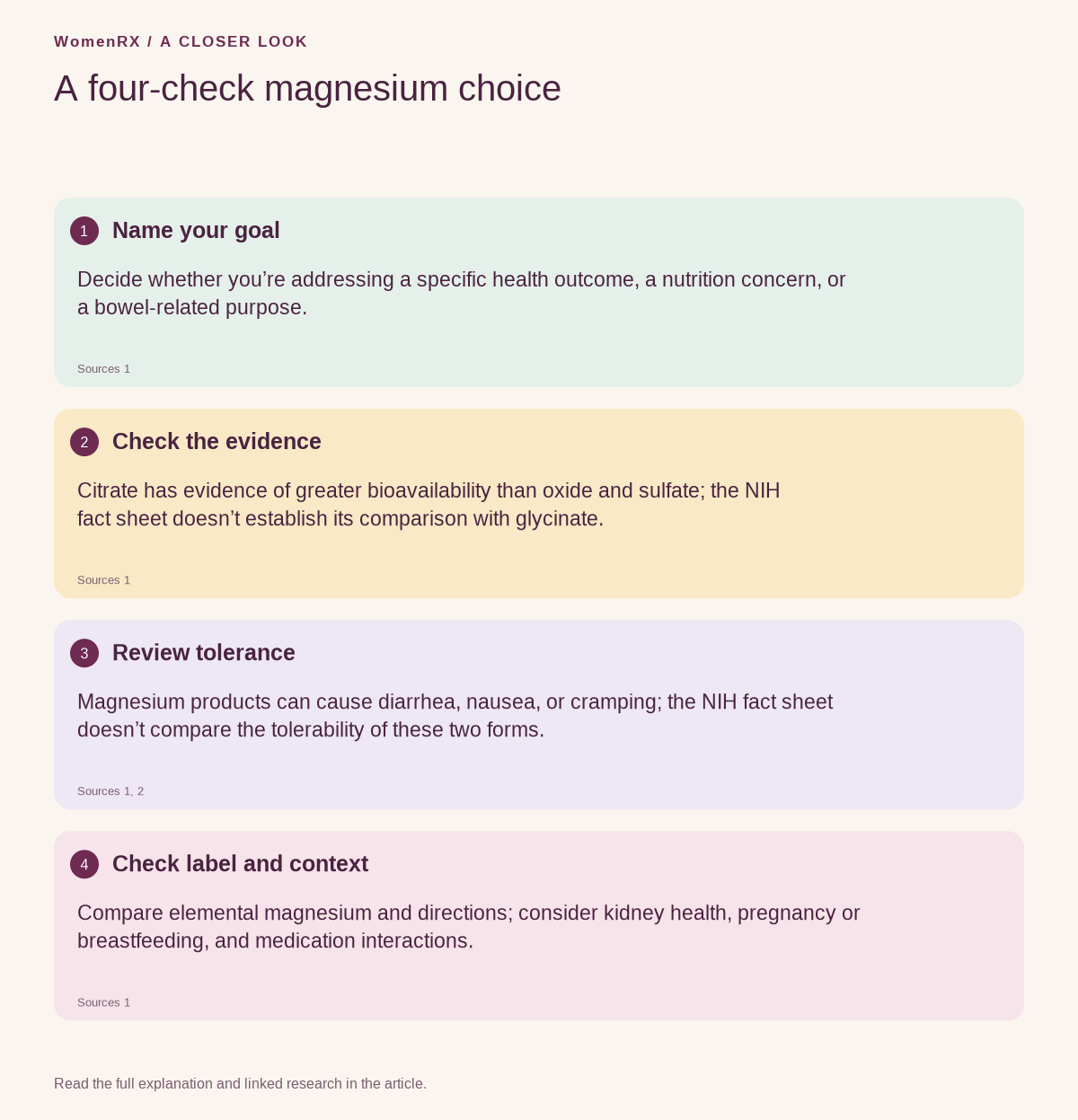
A four-check magnesium choice
Name your goal: Decide whether you’re addressing a specific health outcome, a nutrition concern, or a bowel-related purpose.1
Check the evidence: Citrate has evidence of greater bioavailability than oxide and sulfate; the NIH fact sheet doesn’t establish its comparison with glycinate.1
Review tolerance: Magnesium products can cause diarrhea, nausea, or cramping; the NIH fact sheet doesn’t compare the tolerability of these two forms.12
Check label and context: Compare elemental magnesium and directions; consider kidney health, pregnancy or breastfeeding, and medication interactions.1
Read the figure as text
Use these checks in order. They help separate a specific reason for taking magnesium from assumptions based on the form name.- Name your goal: Decide whether you’re addressing a specific health outcome, a nutrition concern, or a bowel-related purpose.1
- Check the evidence: Citrate has evidence of greater bioavailability than oxide and sulfate; the NIH fact sheet doesn’t establish its comparison with glycinate.1
- Review tolerance: Magnesium products can cause diarrhea, nausea, or cramping; the NIH fact sheet doesn’t compare the tolerability of these two forms.12
- Check label and context: Compare elemental magnesium and directions; consider kidney health, pregnancy or breastfeeding, and medication interactions.1
More questions, answered
Is magnesium citrate more absorbable than magnesium glycinate?
The NIH fact sheet cited here says citrate is more bioavailable than magnesium oxide and sulfate, based on small studies. It doesn’t establish how citrate compares with glycinate, so those findings don’t settle that comparison. 1
What if I take an antibiotic or osteoporosis medicine?
Magnesium can interfere with absorption of oral bisphosphonates and tetracycline or quinolone antibiotics. Ask a pharmacist how to handle your particular medication and product; the medicines have specific directions. 1
Sources you can check
- Magnesium - Health Professional Fact SheetAccessed 2026-09-25Return to first citation
- Diarrhea | MedlinePlusAccessed 2026-09-25Return to first citation