Magnesium Glycinate: How Much Elemental Magnesium Is in a Serving?
There’s no single elemental-magnesium amount for every magnesium glycinate serving; check the Supplement Facts panel and the serving size.
The amount of elemental magnesium in a serving varies by product and serving size. Read the Supplement Facts panel for the magnesium amount per listed serving; it’s not the same as the total weight of the magnesium glycinate compound. Compare that number with your age- and pregnancy-specific daily intake recommendation, and count magnesium from other supplements and medicines. The adult upper limit of 350 mg applies to supplements and medications, not naturally occurring food magnesium. 1
Start with the Supplement Facts panel
A bottle may describe its ingredient as magnesium glycinate or magnesium bisglycinate, but the Supplement Facts panel lists the amount of elemental magnesium in a serving. That’s the number to use when comparing the product with your intake guidance. The weight of the whole magnesium-containing compound is not the same as the amount of magnesium it provides. There isn’t one fixed elemental-magnesium amount for every glycinate serving; products and serving sizes vary, so use the amount listed for that product’s serving. 1
Check the serving size, too. If the panel’s amount is for more than one capsule, taking a different number changes how much elemental magnesium you get. Don’t use a front-label phrase such as “magnesium glycinate 1,000 mg” as a substitute for the elemental amount on the panel.
Your daily target and the supplement limit aren’t the same
The recommended dietary allowance (RDA) is a target for total magnesium from food, drinks, supplements, and medications. For women ages 19-30, it’s 310 mg per day; for women 31 and older, it’s 320 mg. During pregnancy, the RDA is 350 mg per day at ages 19-30, 360 mg at ages 31-50, and 400 mg for pregnant teens ages 14-18. 1
The adult tolerable upper intake level (UL) is different: 350 mg per day from supplements and medications. It doesn’t count magnesium naturally present in food and beverages. So the RDA isn’t a suggested supplement dose, and the UL isn’t a cap on magnesium-rich foods. 1
For example, a woman might get magnesium from meals and a multivitamin as well as from a separate glycinate product. The supplement amount alone doesn’t describe her total intake, and adding products can bring her closer to the supplemental UL. Check the elemental magnesium listed on each Supplement Facts panel and look for magnesium in medicines such as some antacids or laxatives. 1
Pregnancy changes the total-intake recommendation, but it doesn’t change how to read the label. If you’re pregnant and considering an added supplement, include your prenatal vitamin and other products in the count and ask the clinician guiding your pregnancy whether you need more. The RDA is a total-intake reference, not an instruction to add that full amount as a supplement. 1
What the number can’t tell you about glycinate
The label tells you how much elemental magnesium a serving contains. It doesn’t show that magnesium glycinate is better than another form for sleep, anxiety, menstrual symptoms, or menopause symptoms. The NIH Office of Dietary Supplements notes that absorption varies among forms; the cited comparisons identify some forms with higher bioavailability than oxide and sulfate, but do not establish a special advantage for glycinate. 1
A randomized trial did evaluate magnesium glycinate in adults with confirmed low magnesium and asthma or COPD, but it examined respiratory and inflammatory outcomes, not sleep. Those results don’t establish that glycinate helps people sleep. 2
If sleep is your reason for considering it, keep the label question separate from the benefit question: a clearly stated elemental amount helps you compare products, but it doesn’t prove that the product will address your sleep concern. The same applies to using glycinate for menstrual or menopause symptoms; the intake figures above are nutrient guidance, not evidence of a form-specific benefit.
When the amount needs a closer look
High supplemental or medication doses of magnesium can cause diarrhea, nausea, or abdominal cramping. 1 The risk of magnesium building up is greater when kidney function is impaired, because the kidneys help remove excess magnesium. 1
If you have kidney disease, are pregnant, or are combining several magnesium-containing products, it may be useful to have a clinician or pharmacist review the total before adding another product.
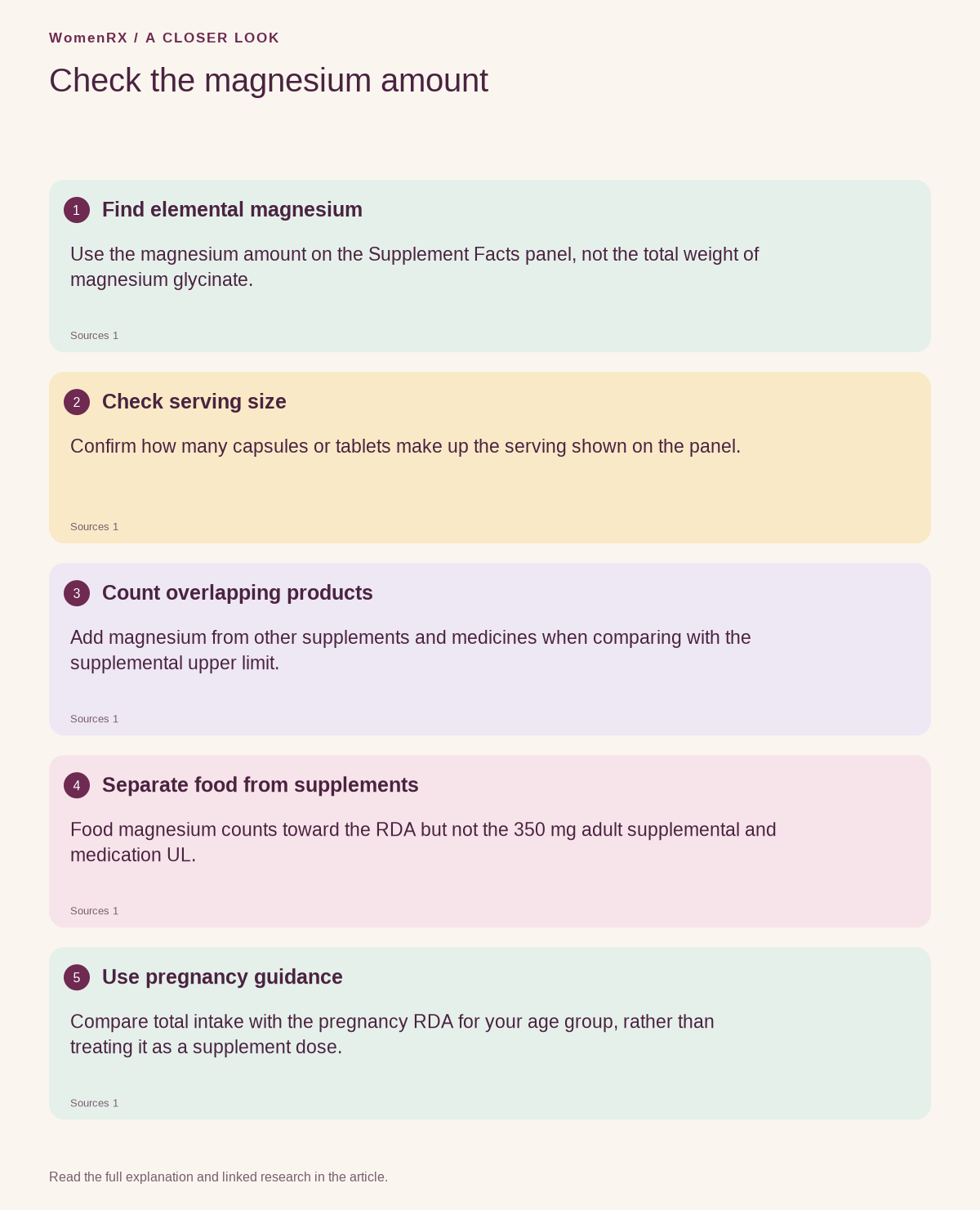
Check the magnesium amount
Find elemental magnesium: Use the magnesium amount on the Supplement Facts panel, not the total weight of magnesium glycinate.1
Check serving size: Confirm how many capsules or tablets make up the serving shown on the panel.1
Count overlapping products: Add magnesium from other supplements and medicines when comparing with the supplemental upper limit.1
Separate food from supplements: Food magnesium counts toward the RDA but not the 350 mg adult supplemental and medication UL.1
Use pregnancy guidance: Compare total intake with the pregnancy RDA for your age group, rather than treating it as a supplement dose.1
Read the figure as text
Use these label checks to distinguish elemental magnesium from compound weight and avoid overlooking other sources.- Find elemental magnesium: Use the magnesium amount on the Supplement Facts panel, not the total weight of magnesium glycinate.1
- Check serving size: Confirm how many capsules or tablets make up the serving shown on the panel.1
- Count overlapping products: Add magnesium from other supplements and medicines when comparing with the supplemental upper limit.1
- Separate food from supplements: Food magnesium counts toward the RDA but not the 350 mg adult supplemental and medication UL.1
- Use pregnancy guidance: Compare total intake with the pregnancy RDA for your age group, rather than treating it as a supplement dose.1
More questions, answered
Does magnesium from food count toward the 350 mg upper limit?
No. The adult 350 mg upper limit applies to magnesium from supplements and medications, not magnesium naturally present in food and beverages. Food magnesium does count toward the RDA. 1
Does the RDA mean I should take that much as a supplement?
No. The RDA is a daily total from all sources, including food and drinks. It is not a recommended supplement amount. 1
Sources you can check
- Magnesium - Health Professional Fact SheetAccessed 2026-09-25Return to first citation
- Efficacy and safety of magnesium glycinate as add on therapy in hypomagnesemic asthma and chronic obstructive pulmonary disease patients: A randomised controlled study assessing inflammatory biomarkers.Maddirevula MK, Rajanandh MG, Wesley B. · Pulmonary pharmacology & therapeutics · 2026Return to first citation