Magnesium Deficiency: Symptoms, Risk Factors, and Testing
Cramps and fatigue can happen with magnesium deficiency, but they’re common symptoms with many possible causes, so risk factors and clinical assessment matter.
Magnesium deficiency can cause appetite loss, nausea, vomiting, fatigue, and weakness; more severe deficiency can bring tingling, cramps, seizures, or abnormal heart rhythms. These symptoms alone can’t confirm the cause. Deficiency is more likely with certain gut conditions, type 2 diabetes, alcohol dependence, older age, or some medicines. A blood magnesium test is commonly used, but it doesn’t fully measure the body’s stores. 1
Symptoms can raise a question, not answer it
Low magnesium can cause loss of appetite, nausea, vomiting, fatigue, and weakness. As deficiency worsens, symptoms may include numbness or tingling, muscle contractions and cramps, seizures, and abnormal heart rhythms. Severe deficiency can also disrupt calcium and potassium levels. 1
But cramps, tiredness, nausea, and weakness are not specific to magnesium deficiency. Having one or several of them doesn’t establish that your magnesium is low, and taking a supplement may not address the real cause. Magnesium deficiency from low food intake alone is uncommon in otherwise healthy people because the kidneys conserve magnesium. 1
That makes context useful: symptoms matter more when they occur alongside a condition or circumstance that can make magnesium harder to absorb or easier to lose.
When deficiency is more plausible
Risk is higher with chronic diarrhea or poor absorption, including in some people with Crohn’s disease or celiac disease. Type 2 diabetes can increase magnesium loss in urine. Alcohol dependence, older age, and some medicines can also make low magnesium more likely. Habitually low intake may contribute, particularly when it occurs alongside these factors. 1
If you’re discussing symptoms with a clinician, mention ongoing diarrhea or vomiting, known digestive or kidney conditions, diabetes, alcohol use, and all medicines and supplements. Some medicines can affect magnesium balance, but the effect depends on the product and circumstances. Some heartburn and constipation remedies contain magnesium, too, so include those when describing what you take. 1
Pregnancy and breastfeeding have their own magnesium intake reference values. Fatigue or cramps during either stage don’t, by themselves, show that you’re deficient. If you’re pregnant or breastfeeding and considering a supplement, discussing your food intake and the product with your care team is a sensible way to account for your circumstances. 1
What a blood test can and can’t show
A serum magnesium test is the most commonly used and readily available test. It measures magnesium in the blood, not the full amount stored in the body: most magnesium is inside cells or in bone, and serum levels correlate poorly with total body magnesium or levels in specific tissues. A result is therefore one part of an assessment, not a complete inventory of your stores. 1 A recent review also describes serum magnesium as an insensitive measure of total-body status and notes that diagnostic thresholds aren’t settled. 2
There isn’t one test that is considered satisfactory in every situation. A clinician may interpret a lab result alongside your symptoms, health conditions, and medicines; evaluating magnesium status can require both laboratory testing and clinical assessment. Other tests exist, but they aren’t a simple, definitive way to measure total-body magnesium either. 1
In practice, the useful question isn’t just “Is my number low?” It’s whether the result makes sense alongside the reason you were tested and any conditions or ongoing losses that could affect magnesium. If symptoms persist despite a result that appears within the lab’s reference range, ask what else could explain them rather than assuming either that magnesium is the cause or that the test settles the question.
Why checking first can matter
A supplement isn’t automatically harmless. High amounts of magnesium from supplements or magnesium-containing medicines can cause diarrhea, nausea, and abdominal cramping. The risk of magnesium toxicity is higher when kidney function is impaired, because the kidneys may be less able to remove excess magnesium. 1
If you have kidney disease or reduced kidney function, check with your care team before starting a magnesium supplement or using a magnesium-containing laxative or antacid. It’s also worth checking before adding a supplement if you already use several medicines or products that contain magnesium. Bring the labels or a list so the total amount and your health context can be considered together. This is especially useful because symptoms alone don’t tell you whether more magnesium is needed.
Seizures or an abnormal heart rhythm can occur in severe deficiency and need prompt medical assessment, rather than a trial of supplements at home. 1 For less severe, ongoing symptoms, a reasonable next step is to discuss both possible causes and whether a magnesium test fits your risk factors.
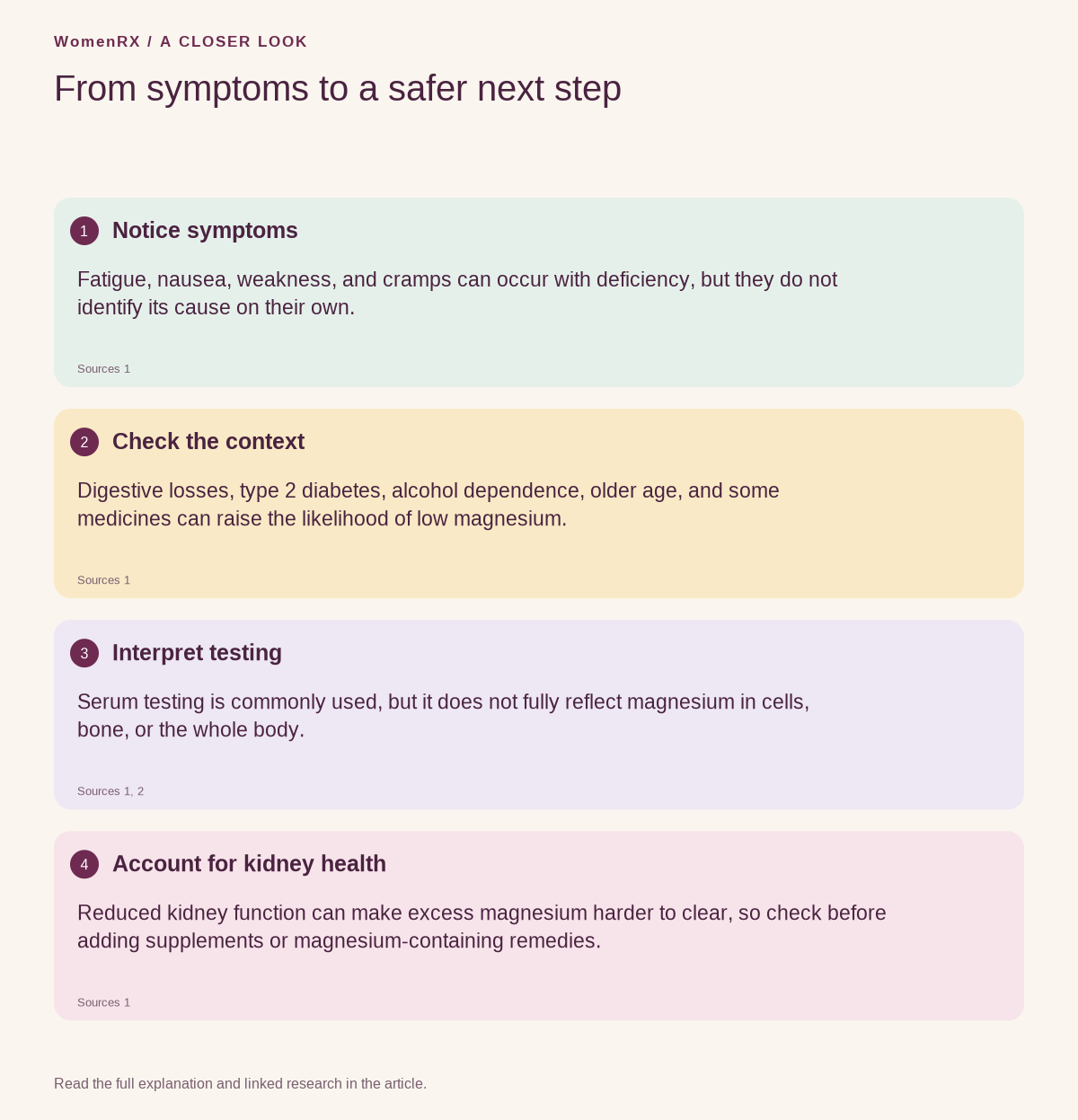
From symptoms to a safer next step
Notice symptoms: Fatigue, nausea, weakness, and cramps can occur with deficiency, but they do not identify its cause on their own.1
Check the context: Digestive losses, type 2 diabetes, alcohol dependence, older age, and some medicines can raise the likelihood of low magnesium.1
Interpret testing: Serum testing is commonly used, but it does not fully reflect magnesium in cells, bone, or the whole body.12
Account for kidney health: Reduced kidney function can make excess magnesium harder to clear, so check before adding supplements or magnesium-containing remedies.1
Read the figure as text
Symptoms can start the question, but risk factors, testing limits, and kidney health help shape what to do next.- Notice symptoms: Fatigue, nausea, weakness, and cramps can occur with deficiency, but they do not identify its cause on their own.1
- Check the context: Digestive losses, type 2 diabetes, alcohol dependence, older age, and some medicines can raise the likelihood of low magnesium.1
- Interpret testing: Serum testing is commonly used, but it does not fully reflect magnesium in cells, bone, or the whole body.12
- Account for kidney health: Reduced kidney function can make excess magnesium harder to clear, so check before adding supplements or magnesium-containing remedies.1
Sources you can check
- Magnesium - Health Professional Fact SheetAccessed 2026-09-25Return to first citation
- Hypomagnesemia: A Clinical and Nutritional Update.Papagiannidou A, Mitropoulou M, Papantzikos K, Petropoulou D, Tsilingiris D, Magkos F, Dalamaga M. · Current nutrition reports · 2026Return to first citation