Could You Have Low Calcium? Symptoms, Risk Factors, and Testing
Symptoms alone can’t tell you whether your blood calcium is low or whether your diet is short on calcium.
Cramps or other nonspecific symptoms can’t diagnose low calcium. Hypocalcemia means calcium in the blood is low; inadequate dietary calcium is a separate question, and a blood test does not measure how much calcium you eat. Sudden severe symptoms such as seizures or trouble breathing need urgent medical attention. For longer-term concerns, food intake and bone health call for different assessments. 13
Three different questions people call “low calcium”
“Low calcium” can mean low calcium in a blood test, not getting enough calcium from food, or concern about bone loss. These aren’t interchangeable. Your body tightly regulates calcium in the blood, so a blood level can look normal even when it doesn’t reflect your calcium intake. A blood test is useful for assessing blood calcium, not for checking whether your diet supplies enough. 1
That distinction matters for women at different life stages. During pregnancy and lactation, calcium needs are a dietary question; MedlinePlus lists 1,000 mg a day for pregnant and breastfeeding adults. After menopause, falling estrogen levels contribute to faster bone breakdown than bone formation for several years, which can reduce bone mass. Neither situation means that a blood calcium test alone can tell you whether your intake or bone health is adequate. 12
Symptoms aren’t a reliable self-test
Low blood calcium can cause symptoms, but how serious it is depends partly on the level and how quickly it falls. Severe hypocalcemia can cause laryngospasm, seizures, or dangerous heart rhythms. Those symptoms are not a reason to wait for a routine appointment: seek emergency care for a seizure or sudden trouble breathing. 3
Less dramatic symptoms can have many possible causes. A cramp or other isolated symptom cannot establish that blood calcium is low, and taking it as proof of a dietary deficiency can send you toward the wrong solution. If symptoms concern you, the useful next step is assessment in context, not self-diagnosis from a symptom list.
What testing can and can’t tell you
Clinicians assess suspected hypocalcemia with a blood calcium measurement. Total calcium is commonly interpreted alongside albumin, a blood protein that affects the result; an ionized calcium test measures the biologically active form. A result needs interpretation in context, and a low value may prompt additional tests rather than identifying the cause by itself. 134
When low calcium is confirmed, follow-up may include parathyroid hormone (PTH), magnesium, phosphate, kidney function, and other relevant tests. These help investigate causes such as problems with parathyroid hormone or mineral balance. A history of surgery in the front of the neck is also relevant because hypoparathyroidism can follow damage to the parathyroid glands. 4
For a different question, start with your usual food and drink, including calcium-fortified foods, rather than treating a blood test as a dietary score. Dairy foods, some fish with edible bones, and fortified foods are possible sources. If bone health is the concern, a clinician may consider bone-density testing based on your risk; that assesses bone density, not calcium intake. 24
When it’s worth getting assessed
A prompt assessment makes sense if you’ve been told a calcium result is low, have symptoms that are new or worsening, or have a relevant medical history such as neck surgery. Severe symptoms like seizures or trouble breathing call for emergency care. If your concern is that you may not be getting enough calcium, bring the focus to your overall food intake and life stage; the answer may call for a nutrition discussion rather than a blood calcium test. 34
For postmenopausal women, bone health deserves attention, but low blood calcium and osteoporosis are not the same diagnosis. Calcium is one part of bone health, and evidence linking higher calcium intake to stronger bones in older adults is mixed. A bone-health assessment is more informative than trying to infer bone strength from a calcium blood result. 1
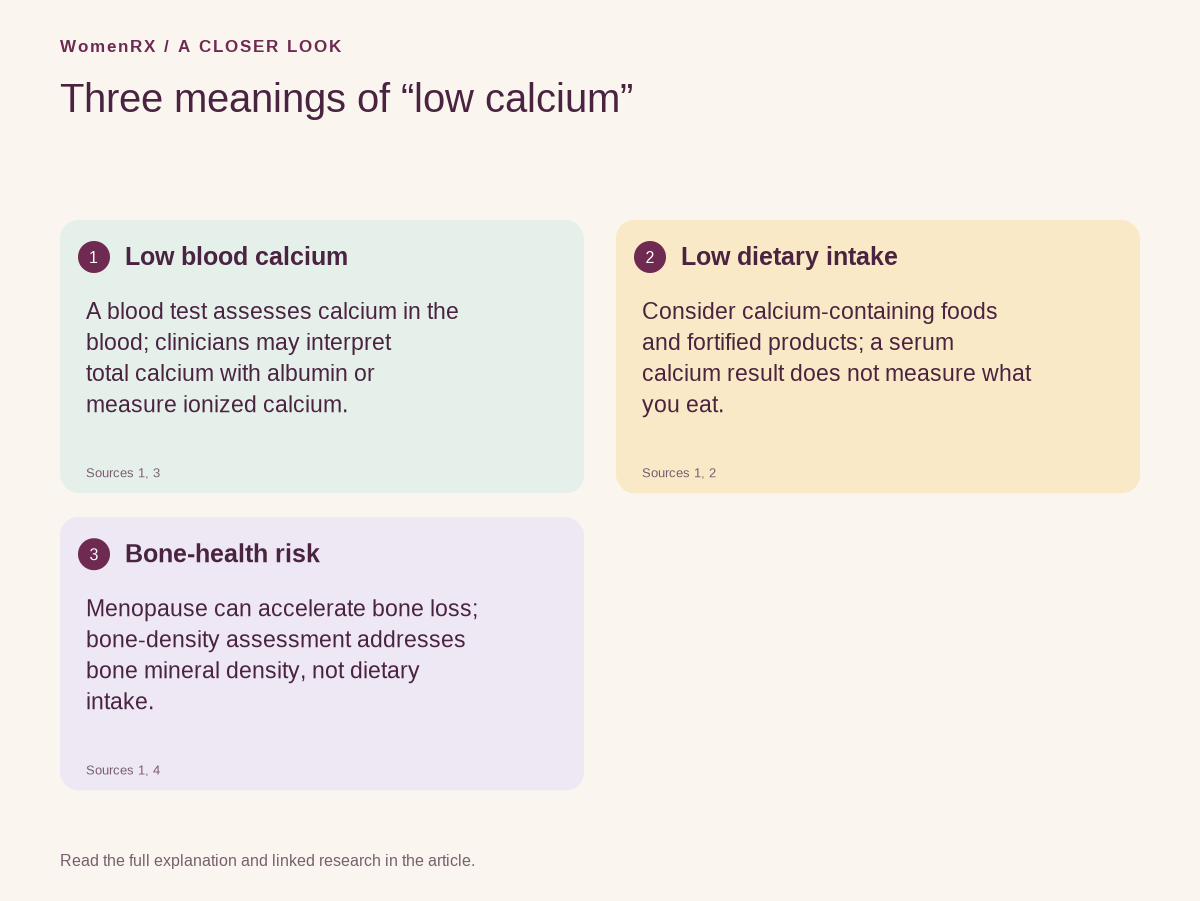
Three meanings of “low calcium”
Low blood calcium: A blood test assesses calcium in the blood; clinicians may interpret total calcium with albumin or measure ionized calcium.13
Low dietary intake: Consider calcium-containing foods and fortified products; a serum calcium result does not measure what you eat.12
Bone-health risk: Menopause can accelerate bone loss; bone-density assessment addresses bone mineral density, not dietary intake.14
Read the figure as text
Each concern calls for a different kind of assessment; one blood result cannot answer all three questions.- Low blood calcium: A blood test assesses calcium in the blood; clinicians may interpret total calcium with albumin or measure ionized calcium.13
- Low dietary intake: Consider calcium-containing foods and fortified products; a serum calcium result does not measure what you eat.12
- Bone-health risk: Menopause can accelerate bone loss; bone-density assessment addresses bone mineral density, not dietary intake.14
More questions, answered
Can a normal blood calcium result rule out low dietary intake?
No. Blood calcium is tightly regulated and does not reflect nutritional status, so a normal result can’t establish that your diet provides enough calcium. 1
Does menopause mean I have hypocalcemia?
No. Menopause-related estrogen changes can speed bone loss, but that is a bone-health concern, not proof of low calcium in the blood. A blood calcium test and a bone-density assessment answer different questions. 14
Sources you can check
- Calcium - Health Professional Fact SheetAccessed 2026-09-25Return to first citation
- Calcium | MedlinePlusAccessed 2026-09-25Return to first citation
- [Hypocalcemia, emergency or not ?]Christe A, Fourré N, Lamy O. · Revue medicale suisse · 2025Return to first citation
- Unveiling the complexities of hypoparathyroidism: a comprehensive review of clinical manifestations, diagnosis, and novel therapies.Cetani F, Bertoldo F, Bononi M, Tarallo M, Camozzi V, Cipriani C, Palermo A, Pasquali D, Zavatta G. · Journal of endocrinological investigation · 2026Return to first citation