Can Symptoms Tell You If Your Vitamin D Is Low?
Aches or fatigue may prompt a question, but they can’t confirm your vitamin D level.
Severe vitamin D deficiency can cause bone pain and muscle weakness, but those symptoms alone can’t show whether your level is low. A blood test measures vitamin D status. Risk factors such as trouble absorbing nutrients, kidney or liver disease, or certain medicines can make testing worth discussing. Pregnancy or menopause, by themselves, don’t confirm deficiency. 12
What symptoms can, and can’t, tell you
Vitamin D helps your body absorb calcium, a key building block of bone. It also has roles in muscle and nerve function. When deficiency is severe, adults can develop osteomalacia, which can cause bone pain and muscle weakness. 12
That’s different from saying that fatigue, everyday aches, or a general worry about bone health reveal your vitamin D level. Symptoms can raise a question; they don’t measure the level or establish the cause. A blood test can measure vitamin D status. 1
Risk factors add useful context
A conversation about testing may be more relevant if you have a condition that makes it harder to absorb nutrients, such as celiac disease or Crohn’s disease; have had gastric bypass surgery; or have chronic kidney or liver disease. Obesity and certain medicines, including some seizure, steroid, cholesterol, and weight-loss medicines, are also listed as risk factors. None of these factors proves that you’re deficient. 1
If a test is being considered, you can ask whether it would help explain your concern and what the result would change. The test described in clinical information is a blood test for 25-hydroxy vitamin D. 12
Keep pregnancy and menopause in perspective
Pregnancy is a context for discussing nutrition, not proof of a deficiency. Recommended vitamin D intake during pregnancy and breastfeeding is a nutrition guideline; it is not itself a test result. 12
Menopause also can’t tell you whether your vitamin D level is low. If bone health is on your mind, keep the question broader than one nutrient: vitamin D deficiency can contribute to reduced bone density, osteoporosis, and fractures, but concern about bone health alone doesn’t identify the cause. 1
Let a result guide the next step
If testing confirms a deficiency, supplements are used for treatment, with the amount and duration based on the person’s situation. Taking more without a reason isn’t automatically safer: very high vitamin D levels can raise blood calcium and damage the kidneys. 1
The practical distinction is straightforward: symptoms may start the conversation, risk factors add context, and a blood test measures vitamin D status. Neither symptoms nor a life stage can substitute for that measurement.
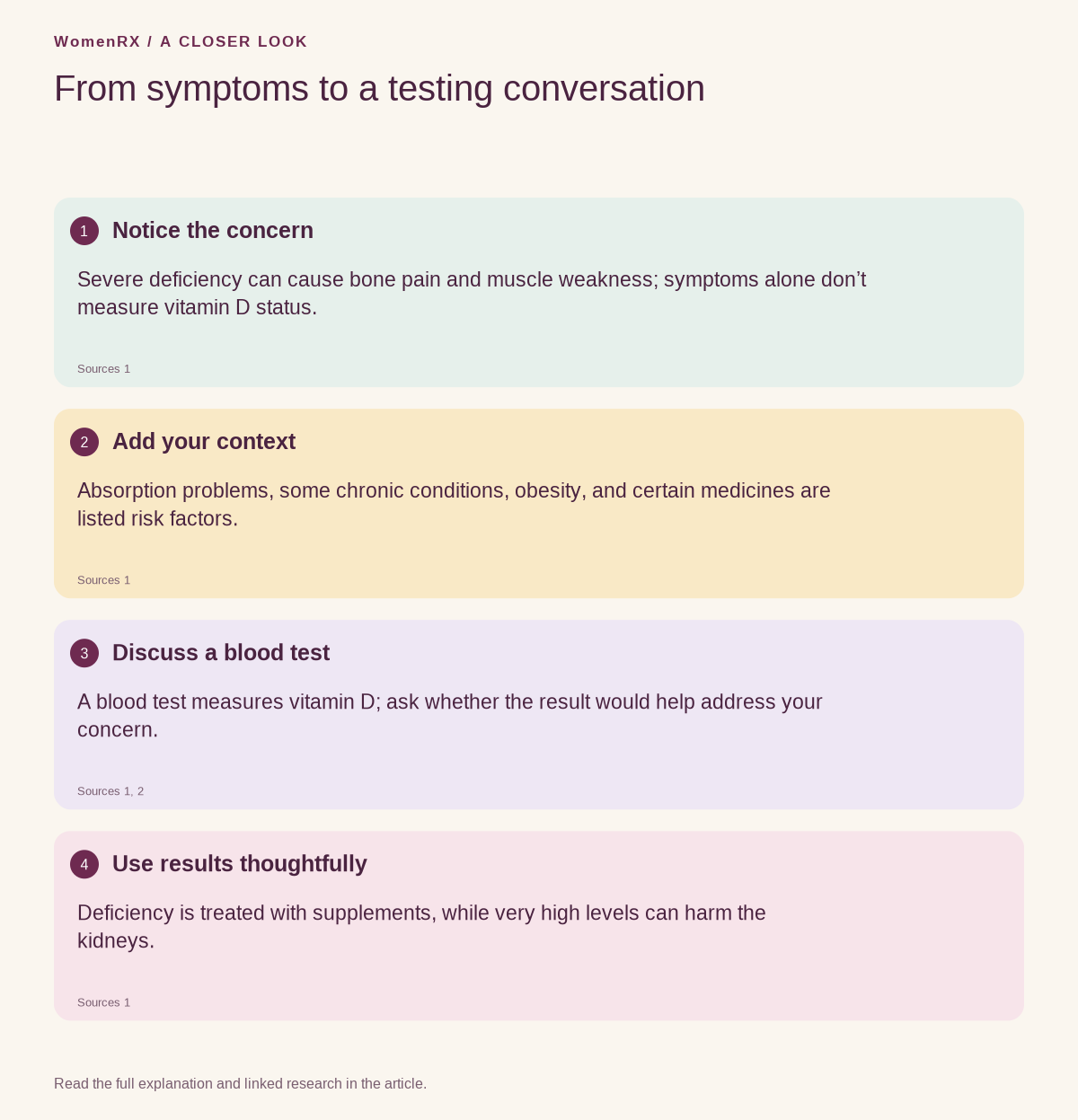
From symptoms to a testing conversation
Notice the concern: Severe deficiency can cause bone pain and muscle weakness; symptoms alone don’t measure vitamin D status.1
Add your context: Absorption problems, some chronic conditions, obesity, and certain medicines are listed risk factors.1
Discuss a blood test: A blood test measures vitamin D; ask whether the result would help address your concern.12
Use results thoughtfully: Deficiency is treated with supplements, while very high levels can harm the kidneys.1
Read the figure as text
Symptoms can raise a question; risk factors add context, and a blood test measures vitamin D status.- Notice the concern: Severe deficiency can cause bone pain and muscle weakness; symptoms alone don’t measure vitamin D status.1
- Add your context: Absorption problems, some chronic conditions, obesity, and certain medicines are listed risk factors.1
- Discuss a blood test: A blood test measures vitamin D; ask whether the result would help address your concern.12
- Use results thoughtfully: Deficiency is treated with supplements, while very high levels can harm the kidneys.1
More questions, answered
What vitamin D test measures your level?
A blood test can measure vitamin D status; the test described is called 25-hydroxy vitamin D. 12
Should I take a high-dose supplement because I feel tired?
Feeling tired doesn’t establish that your vitamin D is low. If a deficiency is found, supplements are used for treatment, but the amount and duration depend on your situation. Very high levels can raise blood calcium and damage the kidneys. 1
Sources you can check
- Vitamin D Deficiency: MedlinePlusAccessed 2026-09-25Return to first citation
- Vitamin D: MedlinePlusAccessed 2026-09-25Return to first citation