Vitamin D Foods: What They Can and Can’t Do
Fatty fish and fortified foods can add meaningful vitamin D, but your usual food intake can’t tell you whether you have a deficiency.
The richest everyday food sources include cooked trout or salmon, UV-treated mushrooms, and vitamin D-fortified milk or plant beverages. Eggs and some other foods contribute smaller amounts. For most adults through age 70, the recommended intake is 600 IU (15 mcg) daily, including during pregnancy and breastfeeding. Food choices help you estimate intake, but only a blood test measures vitamin D status. 2 3

Start with the foods that contribute most
Few foods naturally contain much vitamin D. Fatty fish is the strongest food option in the examples listed here: a 3-ounce serving of cooked rainbow trout has 645 IU (16.2 mcg), and 3 ounces of cooked sockeye salmon has 570 IU (14.2 mcg). UV-treated mushrooms can also contribute a substantial amount: half a cup of sliced white mushrooms exposed to UV light has 366 IU (9.2 mcg). Mushroom vitamin D varies, so check the package or nutrition label rather than assuming all mushrooms provide that amount. 2
Fortified foods are another practical source, and they provide most of the vitamin D in American diets. One cup of fortified cow’s milk has about 120 IU (2.9 mcg); fortified soy, almond, and oat beverages in the listed examples range from 100 to 144 IU (2.5 to 3.6 mcg) per cup. Some cereals, orange juice, and yogurt are fortified too, but amounts vary by product. Look for vitamin D on the Nutrition Facts label. 2
Egg yolks, canned tuna, sardines, and beef liver contain smaller amounts in the listed servings. A large egg has about 44 IU (1.1 mcg), and 3 ounces of canned light tuna has about 40 IU (1 mcg). Cheese contributes very little in the example provided. These foods can add to an overall intake, but they aren’t interchangeable with a serving of fatty fish or a fortified beverage when comparing vitamin D amounts. 2
What a food estimate can tell you
For adults ages 19 through 70, the recommended intake is 600 IU (15 mcg) daily. The same amount is listed for pregnancy and breastfeeding. That’s a general intake recommendation, not a test result or a treatment plan for deficiency. The guidance is based on age and pregnancy or lactation, not on menopause alone; postmenopause doesn’t automatically mean every woman needs the same supplement. 2 3
You can add up the vitamin D on labels to see what your usual meals and drinks contribute. But an intake estimate can’t show how much vitamin D is in your blood. Sun exposure, absorption, and the body’s processing of vitamin D also matter. For instance, limited absorption from some digestive conditions and certain medicines can affect vitamin D status. If you have a reason to worry about deficiency, a blood test can measure vitamin D; diet tracking by itself cannot confirm or rule it out. 1 2
A study of 13,340 Hispanic/Latino adults ages 18-74 found average food-only vitamin D intake of about 5 mcg per day among both supplement users and nonusers. Among people who did not use supplements, 95.2% had estimated intake below the Estimated Average Requirement (EAR). This is a population-specific study, not a women-only result or a prediction for any individual. It does illustrate why a list of vitamin D foods doesn’t guarantee that a person’s usual diet meets their needs. The EAR is a benchmark for groups and differs from the recommended intake for an individual. 4 2
When food may not be the whole answer
A varied diet can provide vitamin D, especially when it includes fatty fish or regularly used fortified foods. Still, food alone may not meet your needs if your usual choices provide little vitamin D, or if absorption or other health factors are affecting your status. People with conditions that make nutrient absorption difficult and people taking some medicines are among those who may be at higher risk of deficiency. 1 2
If deficiency has been diagnosed, food choices aren’t a substitute for the treatment plan: MedlinePlus describes treatment as supplements, with the amount and duration determined for the individual. That doesn’t mean every woman needs a supplement. It means a concern about deficiency is a different question from whether your meals contain vitamin D, and it may call for a blood test and individualized guidance. 1
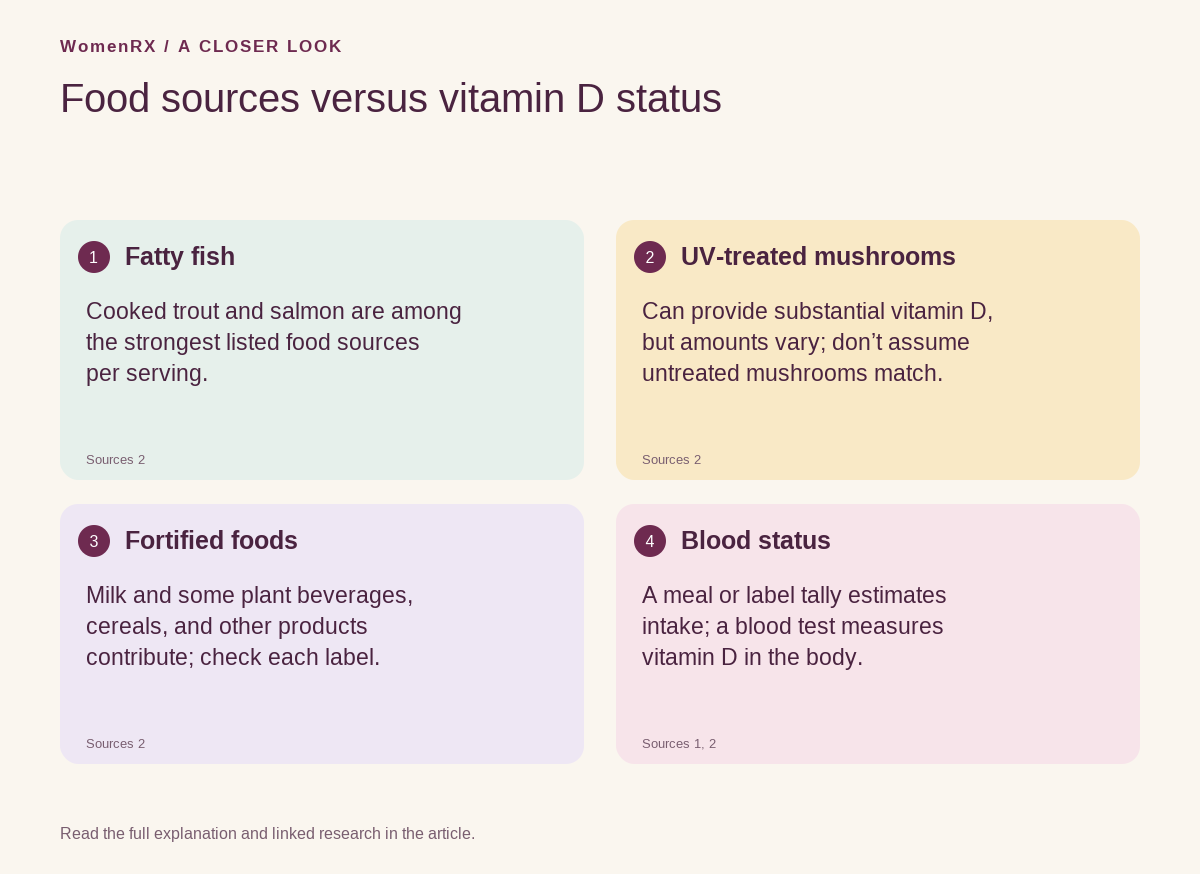
Food sources versus vitamin D status
Fatty fish: Cooked trout and salmon are among the strongest listed food sources per serving.2
UV-treated mushrooms: Can provide substantial vitamin D, but amounts vary; don’t assume untreated mushrooms match.2
Fortified foods: Milk and some plant beverages, cereals, and other products contribute; check each label.2
Blood status: A meal or label tally estimates intake; a blood test measures vitamin D in the body.12
Read the figure as text
Compare foods that contribute vitamin D with what a food tally can, and cannot, tell you.- Fatty fish: Cooked trout and salmon are among the strongest listed food sources per serving.2
- UV-treated mushrooms: Can provide substantial vitamin D, but amounts vary; don’t assume untreated mushrooms match.2
- Fortified foods: Milk and some plant beverages, cereals, and other products contribute; check each label.2
- Blood status: A meal or label tally estimates intake; a blood test measures vitamin D in the body.12
More questions, answered
Do all mushrooms contain a lot of vitamin D?
No. The amount varies, and UV-treated mushrooms can have more vitamin D than untreated ones. Check the product information; the listed amount for UV-exposed white mushrooms should not be applied to mushrooms generally. 2
Does menopause change the vitamin D recommendation?
The guidance cited here gives recommendations by age and pregnancy or breastfeeding, not by menopausal status. It lists 600 IU (15 mcg) daily for adults ages 19-70, including pregnant and breastfeeding women. 2 3
Sources you can check
- Vitamin D Deficiency: MedlinePlusAccessed 2026-09-25Return to first citation
- Vitamin D - Health Professional Fact SheetAccessed 2026-09-25Return to first citation
- Vitamin D: MedlinePlusAccessed 2026-09-25Return to first citation
- Vitamin D Intake from Foods, Supplements, and Food Sources: Findings from the Hispanic Community Health Study/Study of Latinos.Mendez I, Farmer N, Pujol JJ, Camargo JT, Hinerman AS, Rodriquez EJ, Nápoles AM, Daviglus ML, Pirzada A, Cordero C, Sotres-Alvarez D, Pérez-Stable EJ. · The Journal of nutrition · 2025Return to first citation