When to Take Vitamin D: Morning or Evening?
Taking vitamin D with food may help absorption; the best time of day is the one that works for your routine.
You can choose morning or evening based on when you’re likely to take your vitamin D. A meal or snack containing some fat may help your body absorb it, but some vitamin D is absorbed without food. That food-related benefit doesn’t establish that breakfast works better than dinner, or vice versa. Check your product’s directions and use a meal that fits your day. 12
Food matters more than the hour
If you’re deciding between taking vitamin D with breakfast and taking it with dinner, look at what comes with each option. Vitamin D is absorbed in the small intestine, and fat present in the gut enhances that absorption. MedlinePlus suggests taking a supplement with a meal or snack that contains some fat. 12
That could be an ordinary meal, not a special high-fat one. And if you’ve taken vitamin D without food, it wasn’t necessarily wasted: some is absorbed even without dietary fat. 1
Does morning have an advantage over evening?
The food finding doesn’t tell us whether clock time changes vitamin D levels or health outcomes. A morning-versus-evening advantage remains uncertain, so there’s no need to rearrange your day around a supposed best hour.
Instead, pair vitamin D with a meal or snack you regularly have. For example, breakfast might be the easy choice if you eat it most days; dinner might make more sense if mornings are rushed. Those are ways to make the routine workable, not claims that one meal is biologically better.
The same practical choice applies whether your supplement contains vitamin D2 or D3. Both forms are well absorbed in the small intestine; that fact doesn’t point to a different time of day for either one. 1
When your usual routine needs a second look
Read the directions on the product you actually take, particularly if your vitamin D is part of a multivitamin rather than a standalone supplement. If you’ve been given individual instructions, use those instead of switching to a general meal-time routine.
Food and timing are also different from an underlying absorption problem. MedlinePlus notes that people with conditions that limit fat absorption, and people who’ve had gastric bypass surgery, may need extra attention to vitamin D intake. If that applies to you, simply moving your supplement from evening to morning may not answer whether you’re getting enough. 2
Pregnancy and breastfeeding can change the question of how much vitamin D you need, but they don’t turn breakfast or bedtime into a proven better time to take it. Keep your intake plan separate from the choice of a convenient hour. 2
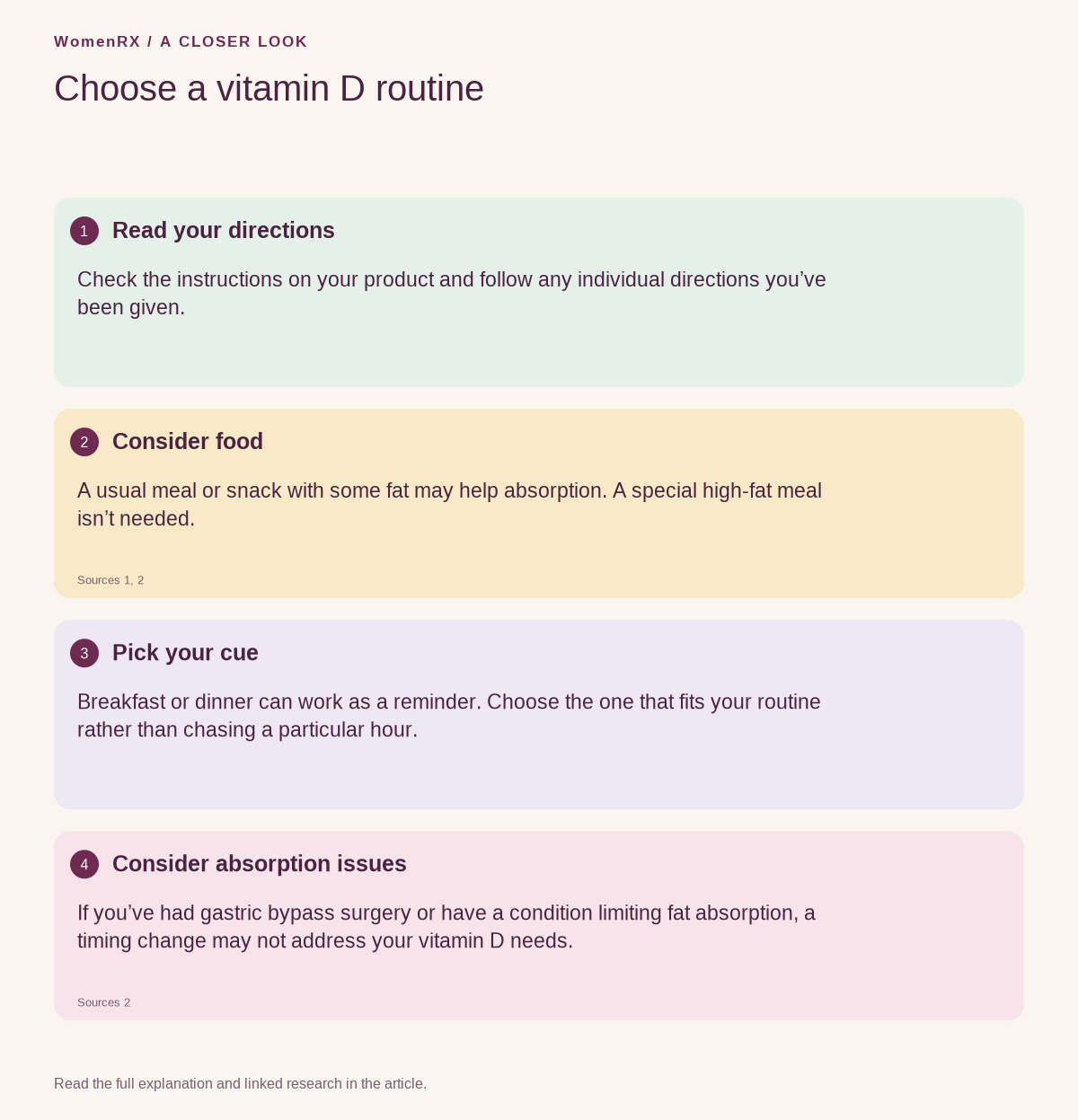
Choose a vitamin D routine
Read your directions: Check the instructions on your product and follow any individual directions you’ve been given.
Consider food: A usual meal or snack with some fat may help absorption. A special high-fat meal isn’t needed.12
Pick your cue: Breakfast or dinner can work as a reminder. Choose the one that fits your routine rather than chasing a particular hour.
Consider absorption issues: If you’ve had gastric bypass surgery or have a condition limiting fat absorption, a timing change may not address your vitamin D needs.2
Read the figure as text
Use food and your own schedule to make the timing decision.- Read your directions: Check the instructions on your product and follow any individual directions you’ve been given.
- Consider food: A usual meal or snack with some fat may help absorption. A special high-fat meal isn’t needed.12
- Pick your cue: Breakfast or dinner can work as a reminder. Choose the one that fits your routine rather than chasing a particular hour.
- Consider absorption issues: If you’ve had gastric bypass surgery or have a condition limiting fat absorption, a timing change may not address your vitamin D needs.2
Sources you can check
- Vitamin D - Health Professional Fact SheetAccessed 2026-09-25Return to first citation
- Vitamin D: MedlinePlusAccessed 2026-09-25Return to first citation