Low Calcium: Symptoms, Testing, and When to Seek Care
Tingling and muscle cramps can happen with low blood calcium, but symptoms alone can’t show whether you have hypocalcemia or are getting too little calcium from food.
Tingling around your mouth or in your hands and feet, or muscle spasms, can occur with low blood calcium, but these symptoms have other possible causes and don’t confirm a calcium deficiency. A blood test checks for hypocalcemia; it doesn’t reliably measure how much calcium you get from food. Seizures, throat spasms, or trouble breathing need emergency assessment. 1 3

Two different questions: blood calcium and dietary calcium
“Low calcium” can mean two different things. Hypocalcemia is a low level of calcium circulating in your blood. Dietary calcium inadequacy means you regularly get less calcium from food and supplements than your body needs. They’re related, but they aren’t interchangeable: the body tightly regulates blood calcium, drawing on its reserves, so a blood test isn’t a reliable measure of your usual calcium intake. 1
That’s why cramps don’t tell you whether you have a dietary deficiency, and a normal blood calcium result doesn’t establish that your diet provides enough calcium. A clinician may assess these questions differently: blood testing for suspected hypocalcemia, and a review of usual food and supplement intake for dietary adequacy. 1 2
Which symptoms deserve attention?
Mild or chronic hypocalcemia can cause no symptoms. When symptoms do occur, low blood calcium can make nerves and muscles more excitable. Tingling around the mouth or in the hands and feet, and muscle spasms, are among the symptoms reported with hypocalcemia. These signs aren’t specific to calcium, though, so don’t use them to diagnose yourself or assume that taking a supplement will address the cause. 1
Severe hypocalcemia can cause seizures or laryngospasm, a spasm involving the voice box that can threaten breathing; dangerous heart-rhythm problems are also described. If you have a seizure, a throat spasm, or trouble breathing, seek emergency care now. New or recurring tingling or muscle spasms also deserve medical assessment, especially if they’re worsening. 1 3
How clinicians check for hypocalcemia
The first step is a blood test. Clinicians can measure total calcium in serum or plasma, and may measure ionized calcium, the biologically active form. A recent clinical review describes hypocalcemia using ionized calcium or total calcium interpreted in relation to albumin. Results need clinical interpretation rather than a symptom checklist alone. 1 3
A low result doesn’t automatically mean you simply haven’t eaten enough calcium. Causes can include vitamin D or magnesium deficiency, problems with parathyroid hormone, critical illness, and some medications. The next evaluation depends on the result and the person’s situation; treatment is directed at the cause as well as the low calcium. 1 3
If the concern is your longer-term intake, ask a separate question: what calcium do you typically get from food, fortified foods, and supplements? Dairy foods are common sources in the U.S.; calcium-fortified drinks and tofu, and fish eaten with soft bones, are examples of nondairy sources. Food labels can help you estimate what you’re getting. 1 2
Life stage can change intake needs, not diagnose deficiency
Pregnancy and breastfeeding are reasons to review whether your intake meets your needs, not signs that you have hypocalcemia. The NIH reference lists a recommended intake of 1,000 mg per day for pregnant and lactating adults ages 19-50. For women over 50, it lists 1,200 mg per day. These are intake recommendations, not blood-test thresholds or a treatment plan. 1
After menopause, lower estrogen is associated with changes in bone remodeling and bone loss. That’s a bone-health consideration, not proof of low blood calcium. If you’re postmenopausal or avoiding dairy, reviewing your usual calcium sources may be useful; symptoms alone still can’t establish dietary inadequacy. 1
A practical way to sort out the concern
If you’re having new or recurring tingling or spasms, note what’s happening and seek medical assessment rather than assuming the cause is low dietary calcium. If a clinician suspects hypocalcemia, blood testing addresses the blood-calcium question. If the concern is whether your routine provides enough calcium, review your usual foods and supplements separately. Taking more calcium without knowing which question you’re trying to answer can blur the distinction rather than resolve it. 1 3
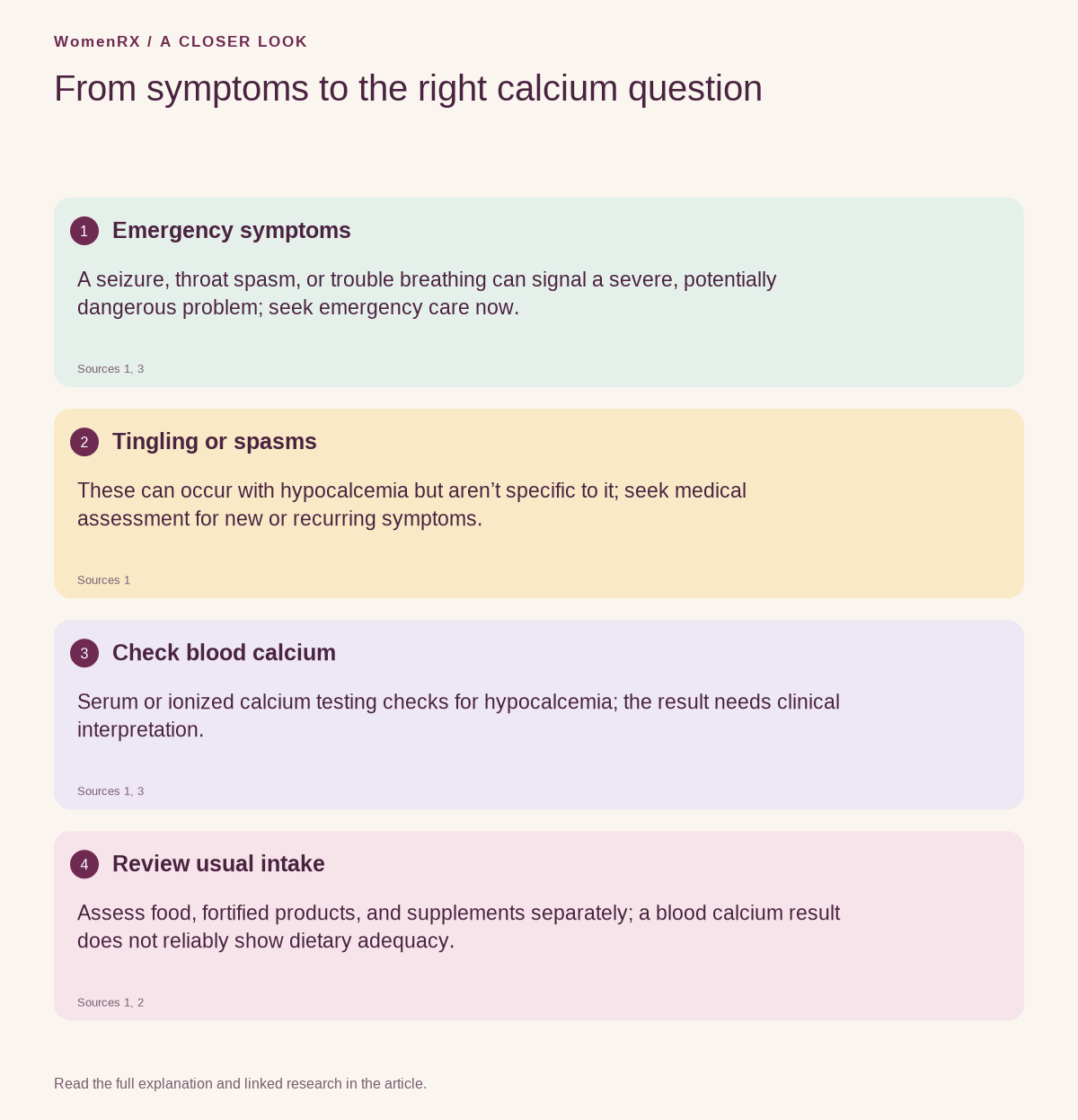
From symptoms to the right calcium question
Emergency symptoms: A seizure, throat spasm, or trouble breathing can signal a severe, potentially dangerous problem; seek emergency care now.13
Tingling or spasms: These can occur with hypocalcemia but aren’t specific to it; seek medical assessment for new or recurring symptoms.1
Check blood calcium: Serum or ionized calcium testing checks for hypocalcemia; the result needs clinical interpretation.13
Review usual intake: Assess food, fortified products, and supplements separately; a blood calcium result does not reliably show dietary adequacy.12
Read the figure as text
This flow separates symptoms that need emergency assessment from testing for low blood calcium and a separate review of longer-term dietary intake.- Emergency symptoms: A seizure, throat spasm, or trouble breathing can signal a severe, potentially dangerous problem; seek emergency care now.13
- Tingling or spasms: These can occur with hypocalcemia but aren’t specific to it; seek medical assessment for new or recurring symptoms.1
- Check blood calcium: Serum or ionized calcium testing checks for hypocalcemia; the result needs clinical interpretation.13
- Review usual intake: Assess food, fortified products, and supplements separately; a blood calcium result does not reliably show dietary adequacy.12
More questions, answered
Do muscle cramps mean I’m calcium deficient?
No. Muscle spasms can occur with hypocalcemia, but cramps by themselves don’t confirm low blood calcium or inadequate calcium intake. A blood test checks blood calcium; a review of your usual diet helps assess intake. 1
Can a blood test tell whether I get enough calcium from food?
Not reliably. Blood calcium is tightly regulated and doesn’t reflect usual dietary calcium intake. Intake is assessed by looking at foods, fortified products, and supplements over time. 1
Sources you can check
- Calcium - Health Professional Fact SheetAccessed 2026-09-25Return to first citation
- Calcium | MedlinePlusAccessed 2026-09-25Return to first citation
- [Hypocalcemia, emergency or not ?]Christe A, Fourré N, Lamy O. · Revue medicale suisse · 2025Return to first citation