Low Potassium: What Symptoms Can and Can't Tell You
Weakness or fatigue can have many causes; a blood test, not symptoms alone, confirms low potassium.
Low potassium, or hypokalemia, is diagnosed with a blood potassium test; symptoms such as fatigue, weakness, and constipation can be clues but don’t confirm it. Vomiting, diarrhea, and some medicines can lower potassium. Severe weakness, paralysis, breathing problems, or a dangerous heart rhythm can occur when levels are very low, so don’t try to treat a suspected deficiency on your own. 1
Symptoms can’t tell you your potassium level
Potassium helps nerves and muscles work, including the heart muscle. When blood potassium is mildly low, symptoms can include constipation, fatigue, muscle weakness, and a general feeling of being unwell. More serious lows can affect muscle function, breathing, and heart rhythm. But those symptoms aren’t unique to low potassium, and how you feel can’t show what your blood level is. 1
Cramps alone don’t establish that your potassium is low. The symptoms listed in clinical references are clues, not a way to diagnose yourself. A blood test is needed to confirm hypokalemia. 1
When potassium loss is more plausible
Vomiting and diarrhea can lead to potassium loss. Some medicines can, too: loop and thiazide diuretics increase potassium loss in urine, while large doses of laxatives can increase losses in stool. Low potassium is rarely caused by low dietary intake alone. Magnesium depletion can also contribute by increasing potassium loss through the kidneys. 1
Pregnancy-related vomiting is one possible setting for potassium loss, but vomiting doesn’t prove that a person’s potassium is low. Pregnancy guidance for severe nausea and vomiting includes checking electrolytes to guide intravenous fluids in women receiving that treatment. If vomiting is severe or food and fluid intake is markedly reduced, the guidance describes medical management rather than trying to correct potassium yourself. 12
Some medicines have the opposite effect. ACE inhibitors, ARBs, and potassium-sparing diuretics can raise blood potassium, particularly when kidney function is impaired. That’s one reason taking potassium supplements or using potassium-based salt substitutes without guidance can be risky: too much potassium can also affect heart rhythm. 1
What testing can clarify
A blood test measures potassium in the blood. The NIH Office of Dietary Supplements gives a typical serum range of about 3.6 to 5.0 mmol/L; hypokalemia is below about 3.6 mmol/L. Your care team can interpret the result alongside your symptoms, recent vomiting or diarrhea, health conditions, and medicines. 1
A blood result is useful for identifying a low level, but it doesn’t perfectly reflect the body’s potassium stored inside cells. That makes the number one part of the picture, not a complete account of total body stores. If potassium is low, magnesium may matter too, because magnesium depletion can contribute to ongoing potassium loss. 1
Choose a next step based on what’s happening
- Symptoms without a known cause: Weakness, fatigue, or cramps don’t confirm a potassium problem. If they persist or concern you, seek medical advice rather than starting potassium on your own.
- Ongoing losses or a relevant medicine: Vomiting, diarrhea, or use of a loop or thiazide diuretic can raise the possibility of low potassium. Ask about whether a blood test is appropriate, and mention all medicines and supplements you take. 1
- Severe symptoms: Very low potassium can cause paralysis, poor breathing, and dangerous heart rhythm problems. If you have severe weakness, trouble breathing, paralysis, or a concerning irregular heartbeat, seek urgent medical assessment rather than waiting to see if food or supplements help. 1
- A test shows low potassium: Follow up on both the level and its cause. Treatment may require addressing the cause and checking related electrolytes; don’t assume a routine supplement is enough or safe for you. 1
The useful distinction is simple: symptoms can raise a question, risk factors can make testing more relevant, and a blood test can confirm whether potassium is low. The same symptoms can also have other causes, so self-treatment can miss the real issue or push potassium too high.
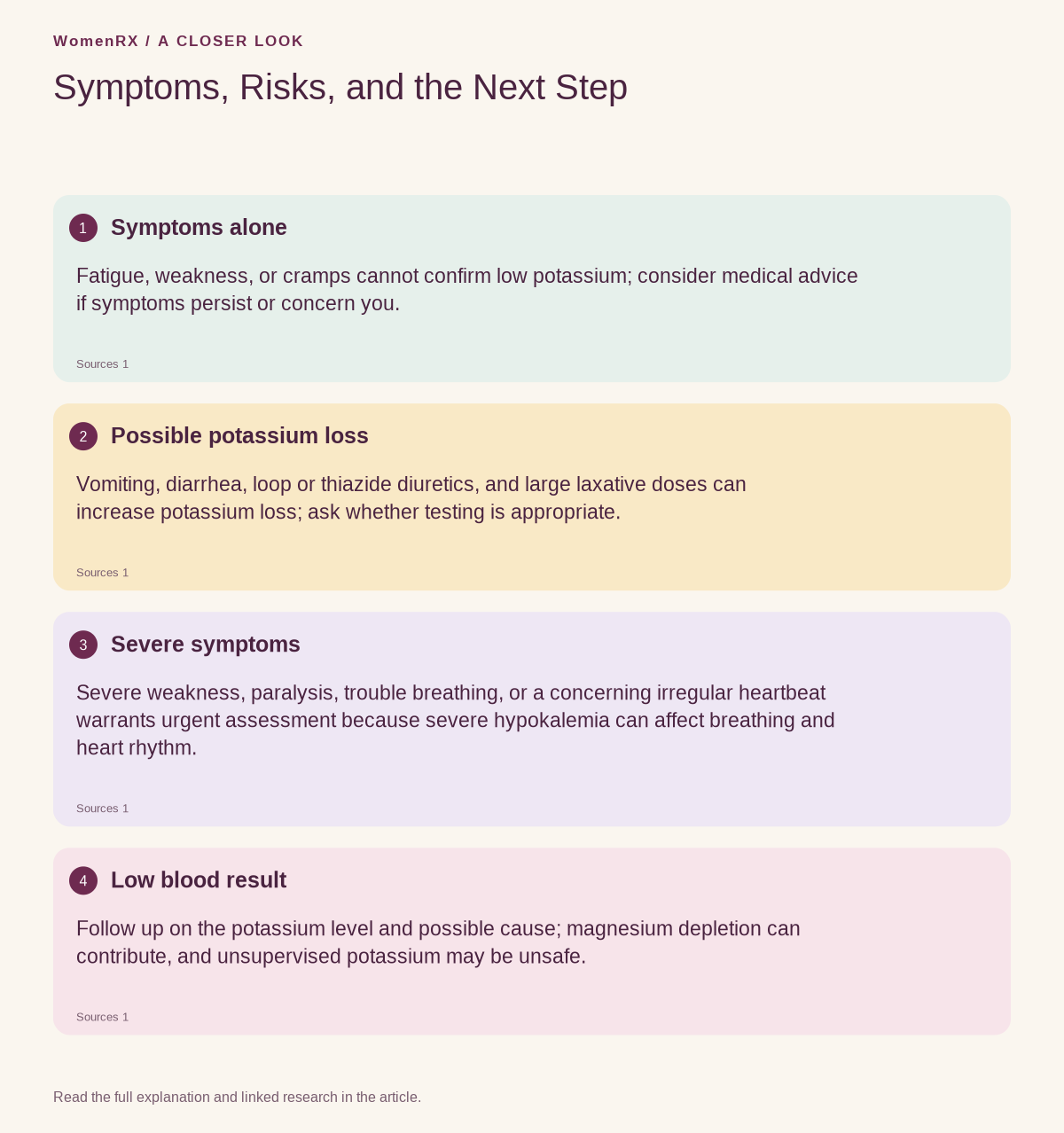
Symptoms, Risks, and the Next Step
Symptoms alone: Fatigue, weakness, or cramps cannot confirm low potassium; consider medical advice if symptoms persist or concern you.1
Possible potassium loss: Vomiting, diarrhea, loop or thiazide diuretics, and large laxative doses can increase potassium loss; ask whether testing is appropriate.1
Severe symptoms: Severe weakness, paralysis, trouble breathing, or a concerning irregular heartbeat warrants urgent assessment because severe hypokalemia can affect breathing and heart rhythm.1
Low blood result: Follow up on the potassium level and possible cause; magnesium depletion can contribute, and unsupervised potassium may be unsafe.1
Read the figure as text
Symptoms and risk factors can prompt testing, but only a blood test confirms low potassium. Severe complications call for urgent assessment.- Symptoms alone: Fatigue, weakness, or cramps cannot confirm low potassium; consider medical advice if symptoms persist or concern you.1
- Possible potassium loss: Vomiting, diarrhea, loop or thiazide diuretics, and large laxative doses can increase potassium loss; ask whether testing is appropriate.1
- Severe symptoms: Severe weakness, paralysis, trouble breathing, or a concerning irregular heartbeat warrants urgent assessment because severe hypokalemia can affect breathing and heart rhythm.1
- Low blood result: Follow up on the potassium level and possible cause; magnesium depletion can contribute, and unsupervised potassium may be unsafe.1
More questions, answered
Do muscle cramps mean I have low potassium?
No. Cramps by themselves can’t diagnose hypokalemia. A blood test is needed to confirm a low potassium level. 1
Can pregnancy vomiting cause low potassium?
Vomiting can cause potassium loss, but it doesn’t show whether your level is low. Guidance for severe pregnancy nausea and vomiting includes electrolyte monitoring when intravenous fluids are given. 12
Sources you can check
- Potassium - Health Professional Fact SheetAccessed 2026-09-25Return to first citation
- The Management of Nausea and Vomiting in Pregnancy and Hyperemesis Gravidarum (Green-top Guideline No. 69).Nelson-Piercy C, Dean C, Shehmar M, Gadsby R, O'Hara M, Hodson K, Nana M, Royal College of Obstetricians and Gynaecologists. · BJOG : an international journal of obstetrics and gynaecology · 2024Return to first citation