Magnesium Deficiency Symptoms: What to Notice and How to Check
Fatigue or cramps can raise the question, but your symptoms and health history matter more than a symptom list alone.
Low magnesium can cause fatigue, weakness, nausea, cramps or tingling, but symptoms alone cannot confirm it. A magnesium blood test, interpreted alongside your health history and medicines, helps investigate the possibility. 113 A first seizure, or a racing or irregular heartbeat with chest pain, breathlessness or faintness, needs emergency help. 1514
What your symptoms can tell you
Magnesium helps muscles, nerves, and the heart work properly. When magnesium deficiency causes symptoms, early signs can include loss of appetite, nausea, vomiting, fatigue, and weakness. More advanced deficiency can involve tingling, muscle contractions or cramps, seizures, and abnormal heart rhythms. The list is useful for recognizing a possibility, not for confirming what’s happening in your body. 111
A cramp after exercise, for example, doesn’t tell you that your magnesium is low. Nor does fatigue on its own. The context matters: symptomatic deficiency from low dietary intake alone is uncommon in otherwise healthy people because the kidneys reduce magnesium loss in urine. Ongoing low intake or excessive losses, however, can contribute to deficiency. 1
What makes low magnesium more plausible?
A clinician will look beyond the symptom itself. Health conditions that affect magnesium absorption or increase its loss, chronic heavy alcohol use, and certain medicines can all change the picture. Diuretics can affect magnesium status. Long-term use of prescription proton pump inhibitors, medicines used to reduce stomach acid, can also cause low blood magnesium in some people. Older adults may face several factors at once, including lower dietary intake, changes in absorption and kidney handling, and greater likelihood of taking medicines that affect magnesium. 1
Intake is another piece of the picture, but eating less than the recommended amount isn’t the same as having symptomatic deficiency. Magnesium is found in leafy greens, beans and other legumes, nuts, seeds, and whole grains. Reviewing what you eat may help identify a gap; it can’t measure how much magnesium your body has. 1
How is deficiency assessed?
A serum magnesium blood test is the most commonly used test, but it gives only part of the answer. Most of the body’s magnesium is inside cells or in bone, so a serum result doesn’t accurately reflect total-body magnesium or the amount in particular tissues. A thorough assessment may combine laboratory results with symptoms, health history, and possible causes of magnesium loss. 1
Don’t assume magnesium was checked because you had an electrolyte panel. Magnesium isn’t generally included in routine electrolyte testing in clinics and hospitals. If you’ve already had blood work, the test names can tell you whether a magnesium level was measured. Other electrolyte problems can matter too: severe magnesium deficiency can occur alongside low calcium or low potassium. 111
When should you get care?
If ongoing weakness, tingling or muscle cramps have you wondering about magnesium, ask whether testing fits your symptoms and medical history. Bring the names of your medicines, supplements, antacids and laxatives, since some can change magnesium levels. That gives the appointment a clearer starting point than trying a supplement and guessing from how you feel. 13
Get emergency help for a first seizure, or for a racing or irregular heartbeat with chest pain, breathlessness, dizziness or faintness. These symptoms need attention whatever their cause. For repeated or worsening palpitations without those accompanying symptoms, arrange an appointment. 1514
Taking magnesium to see whether you feel better can muddy that picture. Supplements and magnesium-containing medicines can cause diarrhea, nausea, and abdominal cramping; diarrhea may itself make you feel unwell. Very high intakes can cause toxicity, with greater risk when kidney function is impaired. Food sources are a reasonable way to consider your usual intake, while symptoms that concern you deserve an explanation rather than a guess. 1
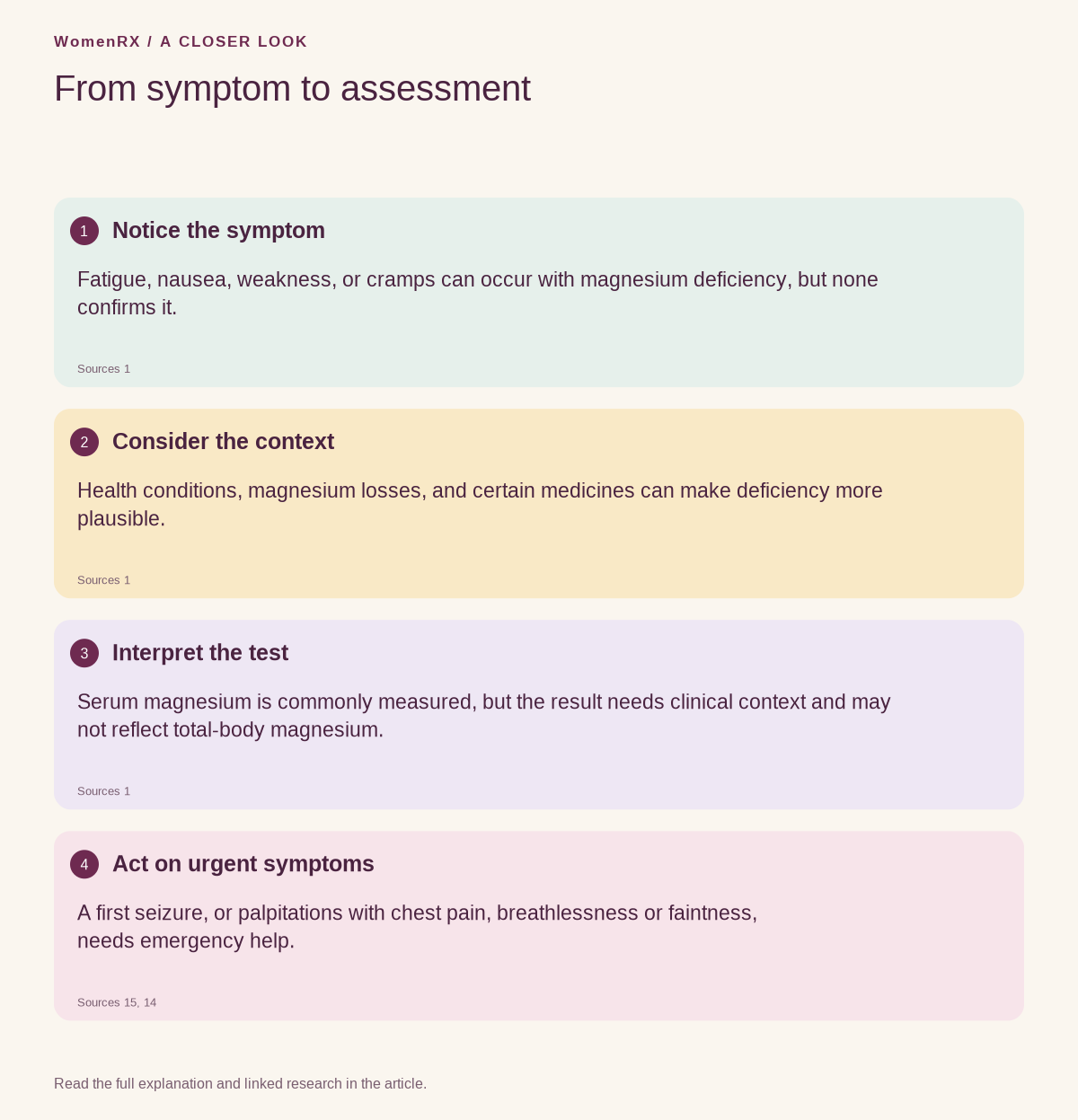
From symptom to assessment
Notice the symptom: Fatigue, nausea, weakness, or cramps can occur with magnesium deficiency, but none confirms it.1
Consider the context: Health conditions, magnesium losses, and certain medicines can make deficiency more plausible.1
Interpret the test: Serum magnesium is commonly measured, but the result needs clinical context and may not reflect total-body magnesium.1
Act on urgent symptoms: A first seizure, or palpitations with chest pain, breathlessness or faintness, needs emergency help.1514
Read the figure as text
A symptom starts a question; context and assessment help answer it.- Notice the symptom: Fatigue, nausea, weakness, or cramps can occur with magnesium deficiency, but none confirms it.1
- Consider the context: Health conditions, magnesium losses, and certain medicines can make deficiency more plausible.1
- Interpret the test: Serum magnesium is commonly measured, but the result needs clinical context and may not reflect total-body magnesium.1
- Act on urgent symptoms: A first seizure, or palpitations with chest pain, breathlessness or faintness, needs emergency help.1514
Can a normal magnesium blood result rule out a problem?
Not completely. Serum magnesium is the most common measure, but it doesn’t accurately reflect total-body magnesium. The result needs to be interpreted alongside your symptoms, history, and other relevant findings. 1
Was magnesium included in my routine electrolyte panel?
Not necessarily. Magnesium isn’t generally part of routine electrolyte testing, so check the names of the tests that were ordered rather than assuming it was measured. 1
Sources you can check
- Magnesium - Health Professional Fact SheetAccessed 2026-09-25Return to first citation
- Fluid and Electrolyte Balance: MedlinePlusAccessed 2026-09-25Return to first citation
- MedlinePlus: Magnesium Blood TestAccessed 2026-09-26Return to first citation
- NHS: Heart rhythm problemsAccessed 2026-09-26Return to first citation
- NHS: Epilepsy, emergency action for seizuresAccessed 2026-09-26Return to first citation