Potassium From Food or Supplements: Which Is Appropriate?
For most people, food is the practical starting point, but kidney function and certain medicines can make extra potassium unsafe.
If you’re generally healthy, build potassium into meals with foods such as beans, potatoes, fruit, vegetables, dairy, fish, or meat rather than reaching for a supplement. Supplements are usually not a routine way to close a dietary gap. Kidney disease and some medicines can make potassium build up, while other medicines can lower it, so the right choice depends on your health and treatment. 1 2
Food is the usual starting point
Potassium helps nerves and muscles work, including the heart muscle. It’s naturally present in a wide range of foods, so you don’t need to rely on one “superfood” to get it. Lentils, beans, potatoes, squash, dried fruit, bananas, milk, yogurt, fish, and leafy greens all contribute. For example, one medium baked potato contains about 610 mg and a cup of cooked lentils about 731 mg. Those are examples of individual food amounts, not a required daily menu. 1 2
For healthy adult women, the Adequate Intake (AI) is 2,600 mg per day. It’s 2,900 mg during pregnancy and 2,800 mg while breastfeeding. An AI is a planning reference for healthy people, not a diagnosis of deficiency or a personal prescription. These values do not apply in the same way when a medical condition or medicine impairs potassium excretion. 1
You may see a different number on a Nutrition Facts label: the Daily Value is 4,700 mg. That figure helps compare products on labels; it isn’t the same as the AI used to describe intake for a healthy adult woman. 1
A manageable approach is to add a potassium-containing food to meals you already eat. For example, you might choose beans in a soup, a potato or squash alongside dinner, or yogurt with fruit. The point is to build variety into your usual eating pattern, not to force a particular food or hit a number with every meal.
Why a supplement isn’t simply concentrated food
Most potassium-only supplements contain up to 99 mg per serving, a small amount compared with many foods. Some multivitamins that include potassium provide about 80 mg. So a supplement label may look like an easy solution, but a typical product may contribute little toward overall intake. 1
Potassium supplements can still have a role when a clinician is treating a documented problem, such as low blood potassium. But choosing one on your own isn’t a reliable way to tell whether you need more, and potassium isn’t a nutrient where “more” is automatically better. 1
Salt substitutes deserve the same caution as supplements. Many replace some or all of the sodium chloride with potassium chloride, and their potassium content varies widely. A product used in cooking can therefore add a substantial amount without looking like a pill or supplement. 1
Kidney function and medicines change the decision
Your kidneys help keep potassium levels in balance. With chronic kidney disease, they may not remove extra potassium effectively, allowing it to build up in the blood. MedlinePlus notes that some medicines can also raise potassium, and people with kidney disease may need a tailored diet rather than general advice to eat more potassium-rich foods. 2
The direction of a medicine’s effect matters. Thiazide diuretics can increase potassium loss, while potassium-sparing diuretics can raise potassium levels. That means the same supplement or salt substitute could be inappropriate for one person and relevant to another, depending on kidney function, test results, and treatment. Don’t start potassium products or make a major change to potassium intake to counter a medicine’s effect on your own. 1
If you have kidney disease or take regular medicines, check the ingredients on supplements and salt substitutes, and ask the clinician managing your care whether your potassium intake should change. This is especially relevant if you’ve been told your blood potassium is abnormal or you follow a kidney-specific diet. A general AI for healthy adults isn’t a safe target for everyone. 1 2
A practical way to choose
- No known kidney problem or potassium-related medicine: Start with food variety. A supplement is not routinely needed just because you want to improve your diet.
- Known kidney disease or a medicine that affects potassium: Don’t assume that more potassium is beneficial. Check with your care team before adding a supplement or potassium-based salt substitute.
- A clinician has identified low potassium: Follow the treatment plan they give you. The cause and the right response matter more than a general food or supplement target. 1
Pregnancy and breastfeeding change the AI reference amounts, but that alone doesn’t mean you need a potassium supplement. Food remains a useful source, and any concern about your intake should be considered alongside your health and medications. 1
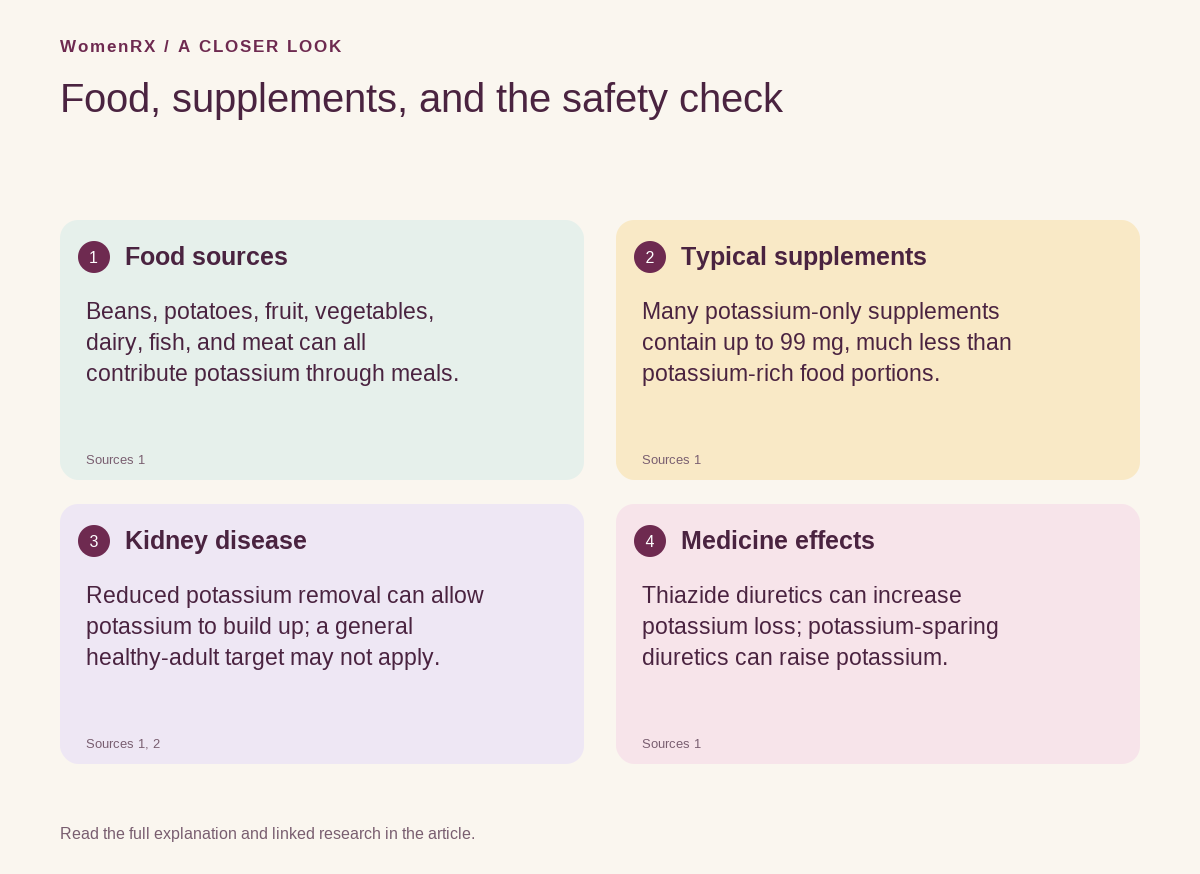
Food, supplements, and the safety check
Food sources: Beans, potatoes, fruit, vegetables, dairy, fish, and meat can all contribute potassium through meals.1
Typical supplements: Many potassium-only supplements contain up to 99 mg, much less than potassium-rich food portions.1
Kidney disease: Reduced potassium removal can allow potassium to build up; a general healthy-adult target may not apply.12
Medicine effects: Thiazide diuretics can increase potassium loss; potassium-sparing diuretics can raise potassium.1
Read the figure as text
Compare everyday food sources with supplements, then follow the safety branch that applies when kidney function or medicines affect potassium.- Food sources: Beans, potatoes, fruit, vegetables, dairy, fish, and meat can all contribute potassium through meals.1
- Typical supplements: Many potassium-only supplements contain up to 99 mg, much less than potassium-rich food portions.1
- Kidney disease: Reduced potassium removal can allow potassium to build up; a general healthy-adult target may not apply.12
- Medicine effects: Thiazide diuretics can increase potassium loss; potassium-sparing diuretics can raise potassium.1
More questions, answered
Are potassium-based salt substitutes different from regular salt?
Many replace some or all of sodium chloride with potassium chloride. Their potassium content varies widely, so they can add much more potassium than a typical supplement. If you have kidney disease or take medicine that affects potassium, check before using one. 1
Sources you can check
- Potassium - Health Professional Fact SheetAccessed 2026-09-25Return to first citation
- Potassium | Dietary Potassium | MedlinePlusAccessed 2026-09-25Return to first citation