Potassium in Everyday Foods: Serving Sizes Matter
Lentils, potatoes, milk, fruit, and vegetables all provide potassium, but the portion beside each number matters.
A cup of cooked lentils provides 731 mg of potassium, a medium baked potato’s flesh only provides 610 mg, and a medium banana provides 422 mg. The adequate intake for healthy women ages 19 and older is 2,600 mg daily, with different figures during pregnancy and breastfeeding. Kidney disease or medicines that affect potassium can change what intake is appropriate. 1 2
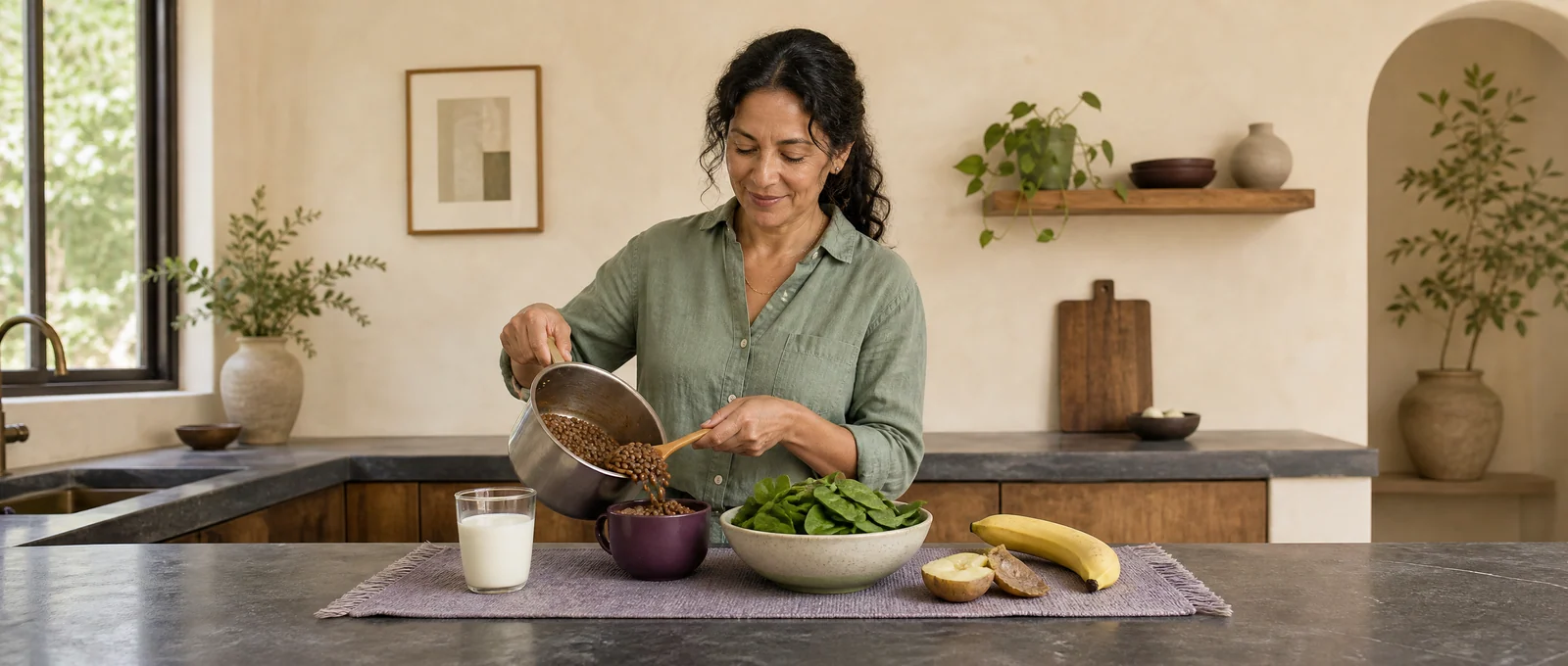
Compare potassium by the portion
Potassium comes from more than bananas. Beans, potatoes, dried fruit, dairy, vegetables, meat, and fish all contribute. The amounts below belong to the specific portions shown, so look at the serving as well as the number. 1
| Food | Portion | Potassium |
|---|---|---|
| Dried apricots | ½ cup | 755 mg |
| Cooked lentils | 1 cup | 731 mg |
| Baked potato, flesh only | 1 medium | 610 mg |
| Canned kidney beans | 1 cup | 607 mg |
| Banana | 1 medium | 422 mg |
| 1% milk | 1 cup | 366 mg |
| Raw spinach | 2 cups | 334 mg |
| Grilled boneless chicken breast | 3 ounces | 332 mg |
| Cooked broccoli | ½ cup | 229 mg |
| Apple with skin | 1 medium | 195 mg |
These are selected examples from the NIH Office of Dietary Supplements food table, not an exact count of what you’ll get from every meal. 1
Why the highest number isn’t always the most useful
The portions aren’t equal: lentils are measured by the cup, chicken by ounces, and spinach by two raw cups. A ranked list makes foods look directly comparable even though you may eat them in different amounts and in different kinds of meals. A better question is which potassium-containing foods fit the portions you actually eat.
Potassium isn’t limited to produce, either. A cup of 1% milk provides 366 mg, close to the 334 mg in two cups of raw spinach and the 332 mg in 3 ounces of grilled boneless chicken breast. Whole-wheat flour and brown rice also contain more potassium than their refined counterparts. 1
For example, lentils might contribute potassium at one meal and milk or fruit at another. You don’t need to build your choices around a single “top” food to get potassium from your diet.
What changes during pregnancy and breastfeeding?
For healthy women ages 19 and older, the potassium adequate intake, or AI, is 2,600 mg per day. The reference table lists 2,900 mg during pregnancy and 2,800 mg during breastfeeding for ages 19-50. It doesn’t specify separate pregnancy or breastfeeding figures for ages 51 and older. 1
There’s no separate AI for perimenopause or postmenopause. An AI is a reference value for healthy people, not a precise personal requirement: the National Academies established potassium AIs because there wasn’t enough evidence to set an estimated average requirement. 1
When a general food list may not fit
Your kidneys help keep the right amount of potassium in your blood. Chronic kidney disease can make it harder to remove extra potassium, and some medicines can raise potassium levels. Potassium-sparing diuretics are one example. 1 2
If you have kidney disease or take a medicine that affects potassium, don’t treat the general AI as a goal to reach by adding foods, supplements, or salt substitutes. Ask what guidance fits your kidney function and medicines before deliberately increasing your intake. Salt substitutes deserve particular attention: many contain potassium chloride, with amounts ranging from about 440 to 2,800 mg per teaspoon. 1
For most readers, the useful starting point is the serving, not the ranking. Compare foods in amounts you’d actually eat, and remember that a general food chart can’t tell you whether your potassium intake should go up.
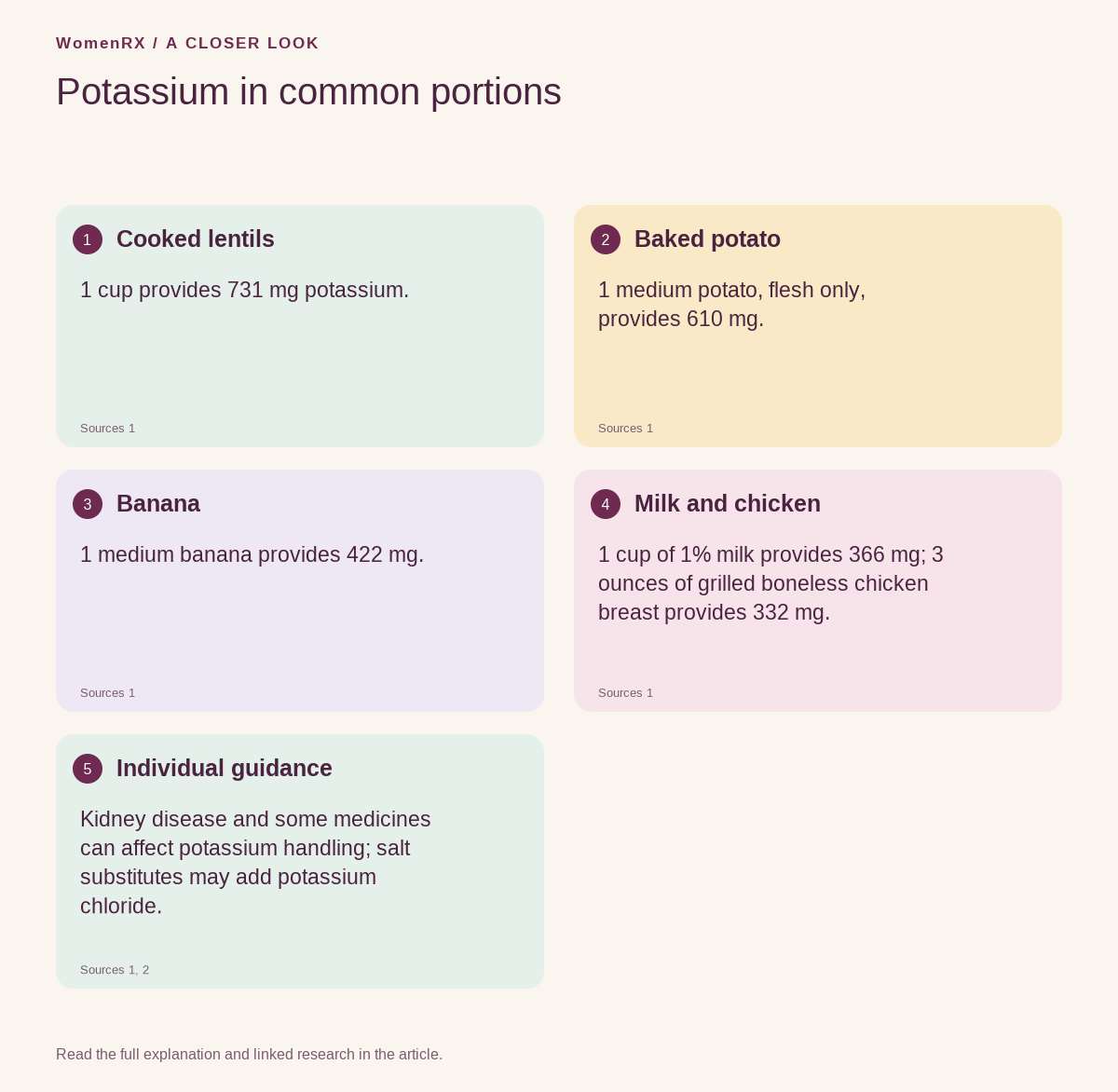
Potassium in common portions
Cooked lentils: 1 cup provides 731 mg potassium.1
Baked potato: 1 medium potato, flesh only, provides 610 mg.1
Banana: 1 medium banana provides 422 mg.1
Milk and chicken: 1 cup of 1% milk provides 366 mg; 3 ounces of grilled boneless chicken breast provides 332 mg.1
Individual guidance: Kidney disease and some medicines can affect potassium handling; salt substitutes may add potassium chloride.12
Read the figure as text
Compare the amount with the portion shown. Serving sizes differ, and kidney disease or some medicines can change what intake is appropriate.- Cooked lentils: 1 cup provides 731 mg potassium.1
- Baked potato: 1 medium potato, flesh only, provides 610 mg.1
- Banana: 1 medium banana provides 422 mg.1
- Milk and chicken: 1 cup of 1% milk provides 366 mg; 3 ounces of grilled boneless chicken breast provides 332 mg.1
- Individual guidance: Kidney disease and some medicines can affect potassium handling; salt substitutes may add potassium chloride.12
More questions, answered
Can a diuretic lower potassium instead of raising it?
Yes. Thiazide diuretics can increase potassium loss in urine, while potassium-sparing diuretics can raise potassium levels. The type of diuretic matters, so don’t assume that all medicines in this category call for the same food changes. 1
Sources you can check
- Potassium - Health Professional Fact SheetAccessed 2026-09-25Return to first citation
- Potassium | Dietary Potassium | MedlinePlusAccessed 2026-09-25Return to first citation