Itchy Skin in Your 40s: Could It Be Perimenopause?
New itching can occur alongside perimenopause, but changes in your periods, skin, and recent exposures give you better clues than age alone.
Perimenopause is worth considering if itchy or dry skin arrives alongside changes in your periods, especially if you’ve also developed hot flashes or night sweats. Dry, itchy skin is a reported symptom of the menopause transition, but itching alone can’t tell you its cause. New products, medicines, skin conditions, and other health problems deserve attention too. 561
Start with your periods, not your birthday
Your 40s are a plausible time for perimenopause, but turning 40 doesn’t make a new itch hormonal. One of the first signs of perimenopause is often a change in your periods: they may come more or less often, with heavier or lighter bleeding. Recently started hot flashes or night sweats alongside cycle changes make perimenopause more relevant. Clinical guidance also calls for considering menopause-related symptoms and cycle changes in people ages 40 to 45, rather than dismissing them because they seem young. 65
For example, if your periods have become unpredictable and you’ve started having night sweats and dry, itchy skin, the transition is a reasonable possibility to discuss. If your periods haven’t changed and the itch began just after you switched laundry detergent, the detergent deserves a closer look first. Neither pattern proves a cause. 561
Hormonal contraception complicates this comparison: some methods make bleeding irregular or stop it, while the combined pill can produce monthly bleeds. In that situation, your bleeding pattern may be a less useful clue to where you are in the transition. 6
What your skin and the timing can tell you
Dry and itchy skin can occur during perimenopause and menopause. That establishes a possible connection, not a way to identify the cause of any particular itch. Pay attention to whether the skin looks dry or cracked, has a rash or hives, or looks unchanged. Also notice whether the itch is in one spot or all over. Those details help sort through possibilities, but they aren’t diagnoses on their own. 612
A new cosmetic, fragranced soap, cleaning product, or medicine is another clue worth taking seriously. Irritants and allergic reactions, including reactions to medicines, can cause itching. Dry skin, eczema, psoriasis, insect bites, and parasites are other possibilities. Less commonly, itching can accompany thyroid, liver, or kidney problems. These alternatives matter particularly if the itching is widespread or you can’t find an obvious skin trigger. 12
Location changes the question. Itching on your arms, back, or legs isn’t the same symptom as itching in or around the vagina. Vaginal dryness, burning, irritation, and itching can occur with perimenopause and menopause. Vulvovaginal symptoms related to lower estrogen are a distinct condition from general itchy skin, and other causes of genital itching are possible too. If that’s where the discomfort is, describe the location clearly when seeking care rather than treating it as an all-over skin symptom. 632
Ease the itch while you work out what changed
For dry or irritated skin, try a moisturizer, a cool compress, and lukewarm rather than hot baths. Avoid perfumed products and scratching when you can; heat and irritating fabrics may make itching worse. If a new product seems connected, stopping that exposure gives you a practical place to start. These steps may ease discomfort, but improvement doesn’t establish that the original cause was hormonal. 12
Get the itch assessed if it’s severe, affects your daily life, lasts more than a few weeks, or has no apparent cause. A clinician can examine the skin, ask about other symptoms and exposures, and decide whether testing might help. Mention cycle changes if you have them, but don’t let a possible perimenopause explanation crowd out a new medicine, a visible rash, or an itch that won’t settle. 125
Menopause treatments aren’t interchangeable itch remedies. Guidance on systemic hormone therapy focuses on symptoms such as bothersome hot flashes and night sweats, while treatment for vulvovaginal symptoms is considered separately. That’s another reason to identify where you itch and what else has changed before assuming you need a hormone treatment. 4
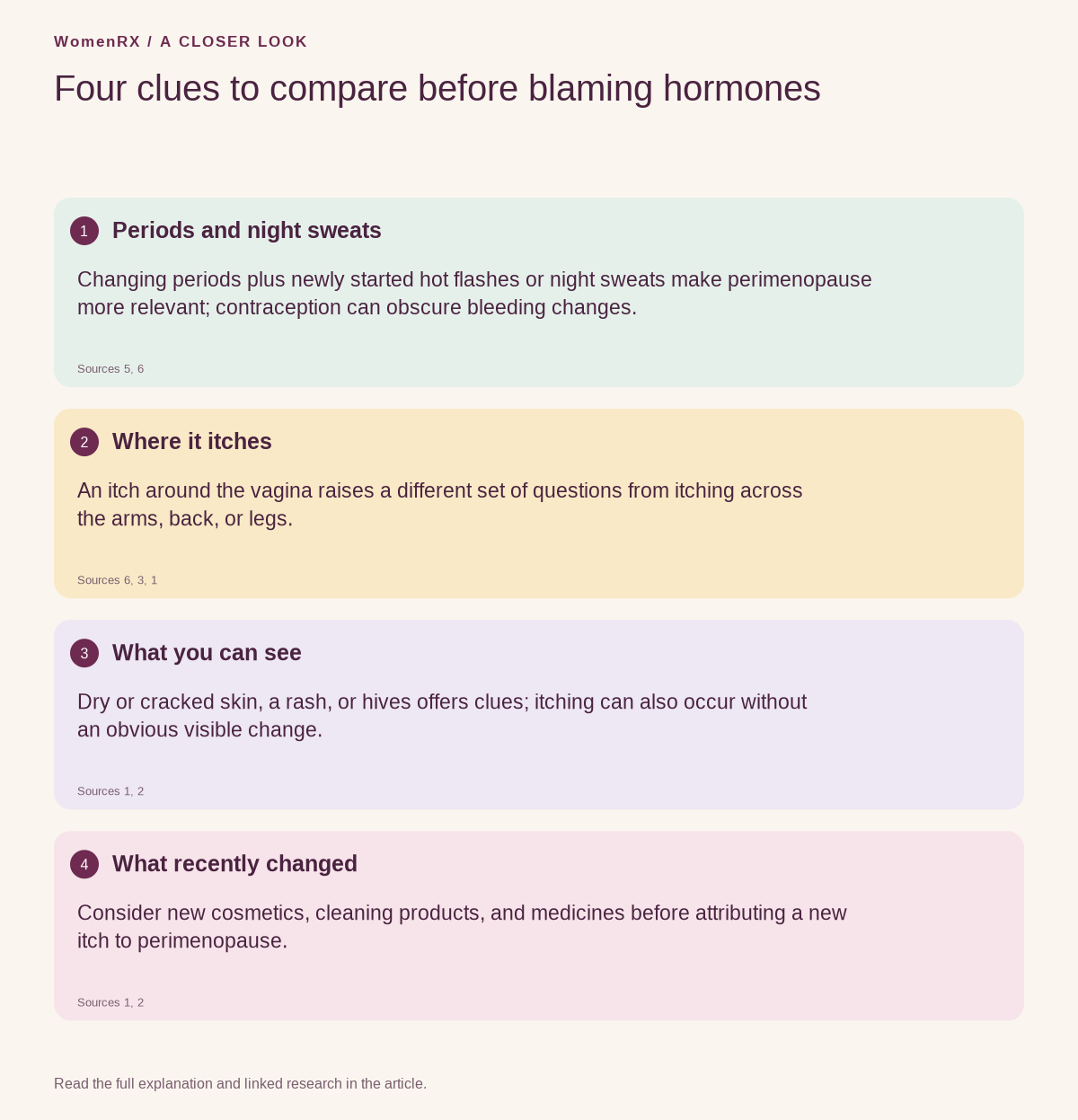
Four clues to compare before blaming hormones
Periods and night sweats: Changing periods plus newly started hot flashes or night sweats make perimenopause more relevant; contraception can obscure bleeding changes.56
Where it itches: An itch around the vagina raises a different set of questions from itching across the arms, back, or legs.631
What you can see: Dry or cracked skin, a rash, or hives offers clues; itching can also occur without an obvious visible change.12
What recently changed: Consider new cosmetics, cleaning products, and medicines before attributing a new itch to perimenopause.12
Read the figure as text
These details help you describe the itch and weigh possible explanations. They are not a diagnostic score.- Periods and night sweats: Changing periods plus newly started hot flashes or night sweats make perimenopause more relevant; contraception can obscure bleeding changes.56
- Where it itches: An itch around the vagina raises a different set of questions from itching across the arms, back, or legs.631
- What you can see: Dry or cracked skin, a rash, or hives offers clues; itching can also occur without an obvious visible change.12
- What recently changed: Consider new cosmetics, cleaning products, and medicines before attributing a new itch to perimenopause.12
More questions, answered
Can perimenopause still be relevant if I haven’t noticed a period change?
It may be, especially if hormonal contraception is affecting your bleeding pattern. But itch without a clear cycle clue is less useful for identifying perimenopause, so look closely at the skin, recent products and medicines, and other symptoms too. 61
Sources you can check
- Itching | Pruritus | Itchy skin | MedlinePlusAccessed 2026-09-25Return to first citation
- Itchy skin - NHSAccessed 2026-09-25Return to first citation
- Case-Based Perspectives on the Management of Genitourinary Syndrome of Menopause.Cyriac J, Sood R. · Clinics and practice · 2026Return to first citation
- The 2022 hormone therapy position statement of The North American Menopause Society.“The 2022 Hormone Therapy Position Statement of The North American Menopause Society” Advisory Panel. · Menopause (New York, N.Y.) · 2022Return to first citation
- Recommendations | Menopause: identification and management | Guidance | NICEAccessed 2026-09-25Return to first citation
- Symptoms of menopause and perimenopause - NHSAccessed 2026-09-25Return to first citation