Dry Skin in Perimenopause: What Else Could Be Going On?
Skin can feel drier around the menopause transition, but the pattern of dryness may tell you more than its timing.
Dry skin can appear during perimenopause, but it isn’t a reliable sign that hormone changes are the cause. Aging, cold weather and frequent bathing can also affect the skin’s moisture barrier. An itchy rash, persistent scaling or painful cracks may point toward eczema rather than simple dryness and are worth having assessed. 231
Why the timing doesn’t tell the whole story
If your usual lotion suddenly doesn’t seem to keep up, it’s reasonable to wonder whether perimenopause is involved. A review of menopausal skin changes describes reduced hydration and changes in skin texture as possible features of the transition. It also discusses ways declining estrogen might affect skin structure. But those changes happen alongside ordinary aging and other exposures, so the timing alone can’t establish why your skin feels dry. 2
Your skin’s outer layer helps hold moisture in. With age, changes in that layer’s lipids can make dryness more likely. Cold weather and frequent bathing can add to the problem. These factors may overlap with a menopause transition rather than compete with it as a single explanation. 3
Look at the pattern, not just the dryness
Mostly dry, without a distinct rash: Notice whether it’s worse in cold weather or after a period of more frequent bathing. Those are recognized contributors to dry, irritated skin. If you’ve also changed your skin-care routine, note when that happened. The observation may help you spot a pattern, even though it won’t diagnose the cause. 3
Dry and itchy, with patches of rash: Eczema becomes a more useful possibility to consider. It’s a group of inflammatory skin conditions, not simply a stronger version of everyday dryness. Eczema often causes itching and rash, including on the hands, feet, face, inside the elbows or behind the knees. It can affect adults and may come and go. 1
Scaly skin with fine cracks, especially on the lower legs: This pattern can fit asteatotic eczema, an inflammation that develops on very dry skin. It occurs most often in older adults and may flare in winter. Its fine fissures can form a pattern sometimes described as a dried riverbed. That description is a clue to have the skin examined, not a way to diagnose yourself from appearance alone. 3
These distinctions matter because an itchy rash or cracking may need more than the skin care you’d use for uncomplicated dryness. Eczema care can include skin creams, other treatments and attention to aggravating factors, depending on what’s causing the rash. 13
What’s worth noting, and when to get it checked
A short description is more useful than trying to decide whether your skin is “menopausal.” Where is the dryness? Is there itch, a visible rash, scaling or cracking? Does it change with the weather or your bathing routine? Those details help distinguish general dryness from an inflammatory pattern. 13
Arrange an assessment if an itchy rash persists or keeps returning, or if dry skin develops painful cracks. Asteatotic eczema can lead to painful fissures and sometimes secondary infection, so worsening cracks shouldn’t be dismissed as an inevitable part of getting older. 13
You don’t have to settle the hormone question before caring for your skin. If bathing has become more frequent, that’s one contributor you can reconsider. A skin cream may help with dryness, but a persistent rash deserves a closer look rather than a search for a menopause-specific cosmetic fix. 31
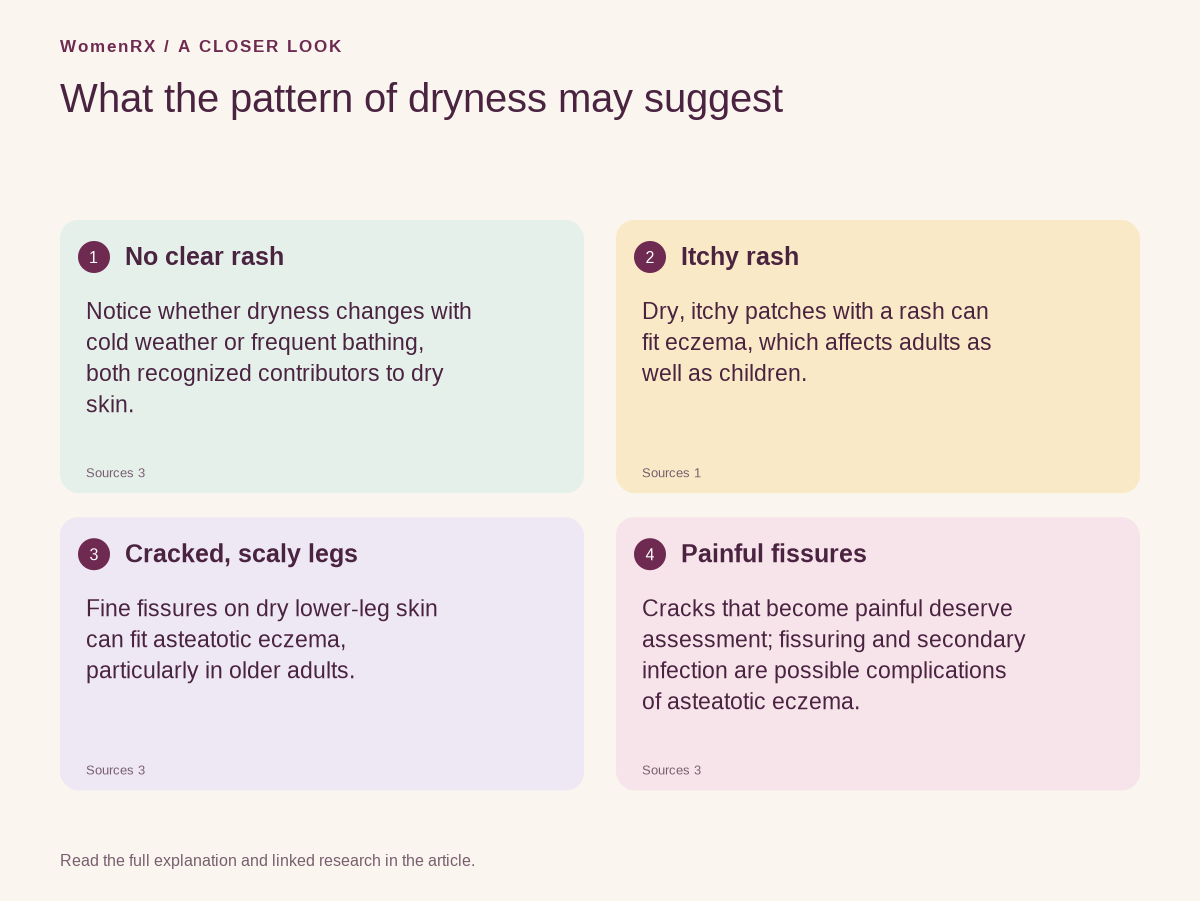
What the pattern of dryness may suggest
No clear rash: Notice whether dryness changes with cold weather or frequent bathing, both recognized contributors to dry skin.3
Itchy rash: Dry, itchy patches with a rash can fit eczema, which affects adults as well as children.1
Cracked, scaly legs: Fine fissures on dry lower-leg skin can fit asteatotic eczema, particularly in older adults.3
Painful fissures: Cracks that become painful deserve assessment; fissuring and secondary infection are possible complications of asteatotic eczema.3
Read the figure as text
These observations can help describe the problem; they do not diagnose its cause.- No clear rash: Notice whether dryness changes with cold weather or frequent bathing, both recognized contributors to dry skin.3
- Itchy rash: Dry, itchy patches with a rash can fit eczema, which affects adults as well as children.1
- Cracked, scaly legs: Fine fissures on dry lower-leg skin can fit asteatotic eczema, particularly in older adults.3
- Painful fissures: Cracks that become painful deserve assessment; fissuring and secondary infection are possible complications of asteatotic eczema.3
More questions, answered
Does dry skin mean I’m in perimenopause?
No. Skin changes may occur during the transition, but dryness also has age-related and environmental contributors. Dry skin by itself can’t tell you whether you’re in perimenopause or what is causing it. 23
Can eczema first become noticeable in adulthood?
Yes. Adults can have eczema. Dryness together with itch and a recurring rash is worth considering as a skin condition in its own right, regardless of where you are in the menopause transition. 1
Sources you can check
- Eczema | Dermatitis | Atopic Dermatitis | MedlinePlusAccessed 2026-09-25Return to first citation
- Menopause and Dermal White Adipose Tissue Depletion: Mechanistic Links, Adipogenesis, and Regenerative Therapeutic Replacement.Widgerow AD, Ziegler ME, Shafiq F. · Journal of cosmetic dermatology · 2026Return to first citation
- Asteatotic EczemaSrivastava D, Sathe NC, Persaud Y. · 2026Return to first citation