Itchy Skin in Perimenopause: What to Notice and When to Get Help
Dryness and itch are associated with menopause, but the pattern and any recent skin, product, or medication changes can point to other possible causes.
Menopause-related skin dryness and itch are possible, and guidance says itchy skin after menopause often improves over time. That doesn’t predict how long your itch will last or explain its cause. Notice whether it’s in one area or widespread, what your skin looks like, and whether new products, medicines, or heat could be relevant. Get assessed if itch is severe, persistent, unexplained, recurring, or disruptive. 1 2 3
Start with what you can observe
Dryness and itch are described among skin changes associated with menopause, but that doesn’t mean menopause is the cause of a particular person’s symptoms. Itch can affect one area or the whole body, and it may come with a rash or hives. 1 3
Note where the itch is and what the skin looks like. Dryness, a rash, bumps, hives, or swelling are useful details to mention. Skin conditions, including eczema and psoriasis, can cause itch, as can allergies, insect bites, irritating chemicals, cosmetics, and medicines. Heat can also be relevant. 1 2
If itch is widespread, record that pattern rather than treating it as proof of a menopause-related cause. Less commonly, itchy skin can be associated with thyroid, liver, or kidney problems. 2
Keep a short list of clues
For a few episodes, jot down the location, whether you see a skin change, and what may have changed around the time it began. Examples include a new soap or moisturizer, a medicine change, or exposure to heat. These are possible clues, not a way to diagnose the cause. 1 2
Also note whether the itch keeps returning or affects sleep or daily activities. That helps make the impact clear if you seek care. You don’t need to track every detail.
Try gentle steps if skin seems irritated
Avoiding perfumed soaps, deodorants, and moisturizers may help if a product is irritating your skin. Pat or tap itchy skin instead of scratching; scratching can damage the skin. 2
These steps may ease irritation, but improvement or lack of improvement doesn’t confirm what caused the itch. If a medicine change seems connected, include that in your notes and raise it when you seek care rather than assuming menopause is responsible. Medicines are one possible cause of itching. 1
What the timeline can and can’t tell you
Guidance says itchy skin is common after menopause and usually gets better over time. That general pattern doesn’t predict when an individual’s itch will improve, and it doesn’t show that menopause is the reason for your symptoms. 2 A menopause review describes dryness and pruritus among skin symptoms associated with menopause, but doesn’t provide an individual timeline. 3
Use severity, persistence, recurrence, and impact as practical signals. MedlinePlus advises contacting a health care provider for severe itch, itch that does not go away after a few weeks, or itch without an apparent cause. Other guidance recommends an assessment if itch affects daily life, does not improve with self-care, keeps coming back, or comes with a new rash, lump, or swelling that concerns you. 1 2
An assessment may include looking at your skin and asking about your symptoms. Depending on the situation, a clinician may arrange a blood test or refer you to a dermatologist. 2
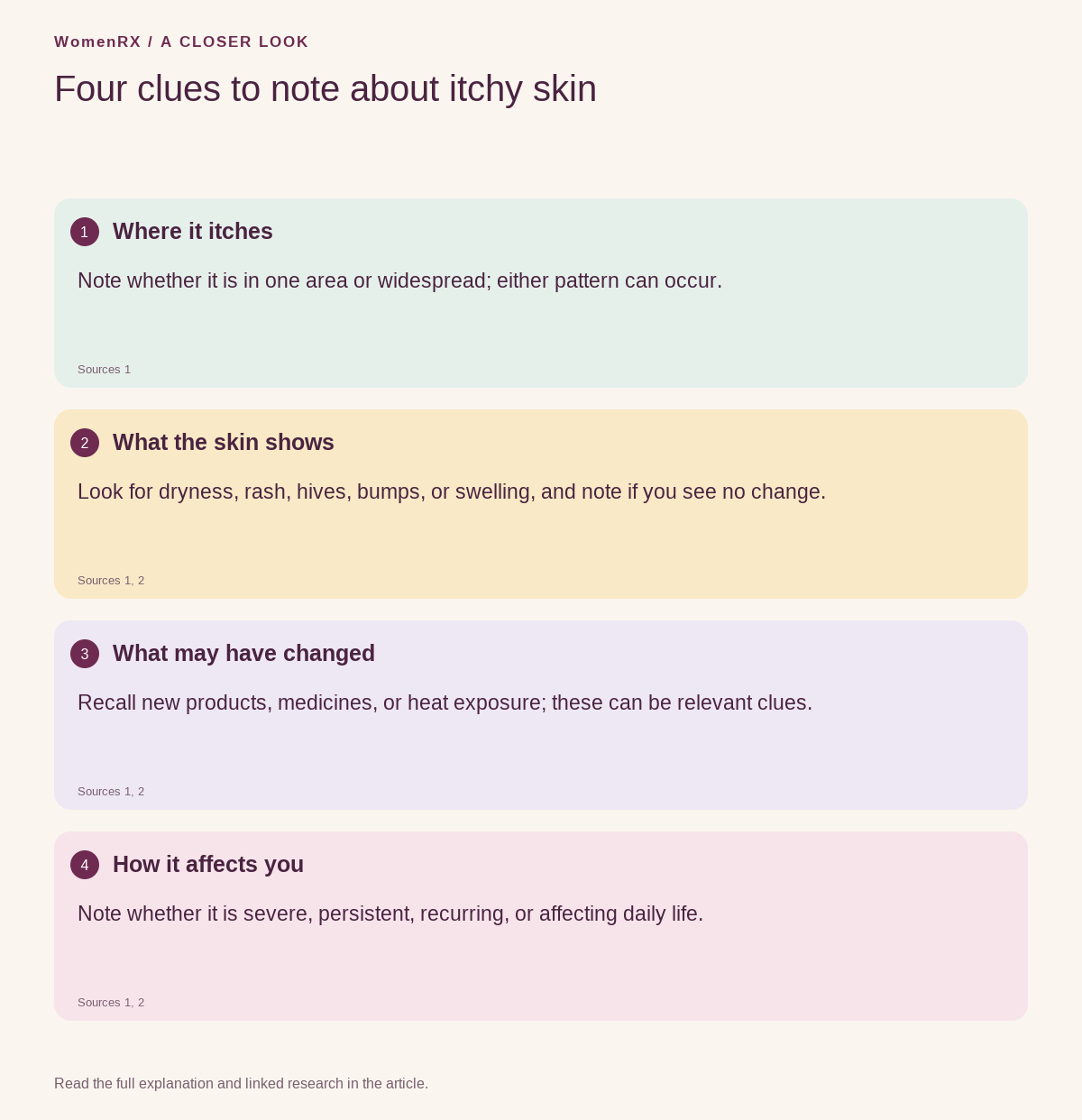
Four clues to note about itchy skin
Where it itches: Note whether it is in one area or widespread; either pattern can occur.1
What the skin shows: Look for dryness, rash, hives, bumps, or swelling, and note if you see no change.12
What may have changed: Recall new products, medicines, or heat exposure; these can be relevant clues.12
How it affects you: Note whether it is severe, persistent, recurring, or affecting daily life.12
Read the figure as text
These observations help you describe the pattern and possible contributors without treating any one clue as a diagnosis.- Where it itches: Note whether it is in one area or widespread; either pattern can occur.1
- What the skin shows: Look for dryness, rash, hives, bumps, or swelling, and note if you see no change.12
- What may have changed: Recall new products, medicines, or heat exposure; these can be relevant clues.12
- How it affects you: Note whether it is severe, persistent, recurring, or affecting daily life.12
More questions, answered
Does itchy skin mean my estrogen is low?
No single itch pattern can establish that. Dryness and pruritus are described among menopause-related skin symptoms, but itch also has many other possible causes, including skin conditions, irritants, allergies, and medicines. 1 3
Should widespread itch be checked?
Widespread itch is worth noting and describing, but location alone isn’t identified as a reason for assessment in the guidance. Seek care if it’s severe, lasts for a few weeks, has no apparent cause, keeps returning, affects daily life, doesn’t improve with self-care, or comes with a concerning new rash, lump, or swelling. 1 2
Sources you can check
- Itching | Pruritus | Itchy skin | MedlinePlusAccessed 2026-09-25Return to first citation
- Itchy skin - NHSAccessed 2026-09-25Return to first citation
- Skin, hair and beyond: the impact of menopause.Zouboulis CC, Blume-Peytavi U, Kosmadaki M, Roó E, Vexiau-Robert D, Kerob D, Goldstein SR. · Climacteric : the journal of the International Menopause Society · 2022Return to first citation