Iron Supplements: Testing, Side Effects, and When They Help
Iron can help when your body is low, but fatigue or heavy periods alone can’t tell you whether a supplement is the right next step.
Iron supplements treat or prevent low iron in some situations, but the right plan depends on your blood tests and why your iron is low. A blood count and ferritin can help distinguish anemia from depleted iron stores; ferritin can be harder to interpret during inflammation. Menstruation, pregnancy, and breastfeeding affect iron needs differently, so don’t assume one dose fits every stage. 1
Start with the result, not the symptom
Fatigue, weakness, and trouble concentrating can occur with iron-deficiency anemia, but they don’t establish that iron is the cause. Iron deficiency can also develop before hemoglobin falls, so a normal blood count alone may not rule out low iron stores. 1
A clinician may look at a complete blood count, including hemoglobin, alongside ferritin, which reflects stored iron. No single result always tells the whole story: ferritin can rise with inflammation, and blood-count measures can miss earlier stages of deficiency. Other kinds of anemia have different causes, so taking iron without checking what the results mean can send you in the wrong direction. 12
A useful question is not only “Is my iron low?” but also “Why?” Heavy menstrual bleeding, pregnancy, blood loss, a diet low in iron, and some gastrointestinal conditions or surgeries can contribute. If the cause isn’t clear, evaluation may include looking for other sources of blood loss or problems with absorption. Treating the underlying reason matters, especially if iron keeps falling again. 12
How life stage changes the calculation
If you menstruate: Menstrual blood loss raises the chance of iron deficiency, particularly when periods are heavy. That risk makes testing more relevant; it doesn’t mean everyone who menstruates needs an iron pill. If heavy bleeding is the likely cause, addressing the bleeding may be part of preventing the problem from returning. 12
During pregnancy: Iron needs rise as the body supports increased blood volume and the developing pregnancy. The recommended dietary allowance is 27 mg a day during pregnancy, compared with 18 mg for women ages 19 to 50 who aren’t pregnant. These are total daily intake targets, not a one-size-fits-all treatment dose. 1
Guidance on routine supplementation for pregnant people without symptoms or anemia isn’t uniform. The NIH fact sheet describes different positions from professional groups, and a review of international guidelines found that only half recommended routine iron during pregnancy. That uncertainty is separate from treating confirmed iron-deficiency anemia, for which iron is commonly used. 14
After birth and while breastfeeding: The recommended dietary allowance while lactating is 9 mg a day for adults ages 19 to 50, lower than the pregnancy recommendation. That number is a dietary reference, not a personal supplement prescription. A history of low iron or blood loss may affect an individual plan, so don’t assume that breastfeeding alone means you need the same supplement as during pregnancy. 1
If you take iron, expect possible tradeoffs
Iron supplements can cause nausea, constipation, stomach upset, abdominal pain, vomiting, or diarrhea. Side effects vary; some people have none or only mild effects. Taking iron with food may ease stomach symptoms, although food can affect absorption. If side effects make it hard to keep taking a prescribed supplement, tell the person who recommended it rather than silently stopping or changing the amount. 13
Check the label for elemental iron, the amount of iron supplied. Ferrous sulfate, ferrous fumarate, and ferrous gluconate contain different proportions of elemental iron, so comparing tablets by the salt name or tablet weight can be misleading. 1
Iron can also affect how some medicines are absorbed. Taking iron at the same time as levothyroxine can reduce absorption; some levothyroxine product labels advise separating the medicines by four hours. Iron can also reduce levodopa absorption. Calcium supplements may interfere with iron absorption, so the NIH fact sheet describes taking separate calcium and iron supplements at different times as a precaution. Ask a pharmacist or prescriber to check your specific medicines and schedule. 1
Treatment includes checking whether it worked
When tests show iron deficiency, treatment should match the cause and the degree of deficiency. Follow-up blood tests can show whether iron status is improving; persistent or recurring deficiency may mean the cause needs another look. Iron may be prescribed at amounts higher than the general upper intake level when treating deficiency, so that limit should not be used to set or change your treatment on your own. 12
Iron isn’t harmless when you don’t need it. People with hereditary hemochromatosis can be vulnerable to iron overload, and supplements can also cause significant harm if a young child swallows them. Store iron products out of children’s reach. 1
The practical takeaway: verify the lab result, understand what may be causing it, and agree on how progress will be checked. That’s more useful than choosing a supplement based on tiredness alone.
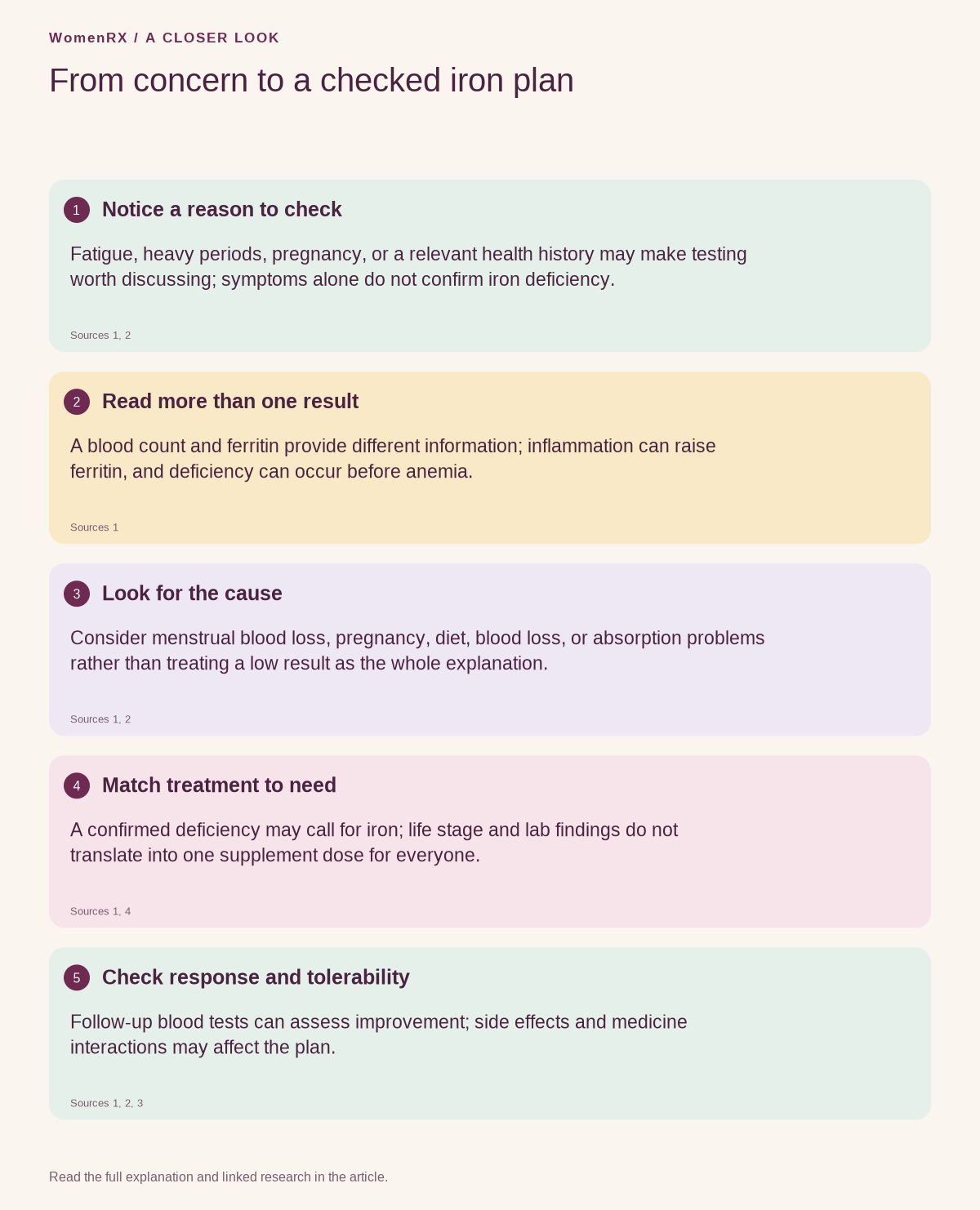
From concern to a checked iron plan
Notice a reason to check: Fatigue, heavy periods, pregnancy, or a relevant health history may make testing worth discussing; symptoms alone do not confirm iron deficiency.12
Read more than one result: A blood count and ferritin provide different information; inflammation can raise ferritin, and deficiency can occur before anemia.1
Look for the cause: Consider menstrual blood loss, pregnancy, diet, blood loss, or absorption problems rather than treating a low result as the whole explanation.12
Match treatment to need: A confirmed deficiency may call for iron; life stage and lab findings do not translate into one supplement dose for everyone.14
Check response and tolerability: Follow-up blood tests can assess improvement; side effects and medicine interactions may affect the plan.123
Read the figure as text
Symptoms and risk factors can prompt testing, but the result and likely cause guide whether treatment is appropriate and what follow-up is useful.- Notice a reason to check: Fatigue, heavy periods, pregnancy, or a relevant health history may make testing worth discussing; symptoms alone do not confirm iron deficiency.12
- Read more than one result: A blood count and ferritin provide different information; inflammation can raise ferritin, and deficiency can occur before anemia.1
- Look for the cause: Consider menstrual blood loss, pregnancy, diet, blood loss, or absorption problems rather than treating a low result as the whole explanation.12
- Match treatment to need: A confirmed deficiency may call for iron; life stage and lab findings do not translate into one supplement dose for everyone.14
- Check response and tolerability: Follow-up blood tests can assess improvement; side effects and medicine interactions may affect the plan.123
More questions, answered
Does the iron amount on a label mean elemental iron?
Check the Supplement Facts panel for the elemental iron amount. Ferrous sulfate, fumarate, and gluconate contain different proportions of elemental iron, so the form’s name doesn’t tell you how much iron the product supplies. 1
Can iron make stool look dark?
Dark stool can happen with iron. Red stool, stool that looks black and tar-like, or stool changes accompanied by feeling unwell should not automatically be assumed to be a routine supplement effect. 3
Sources you can check
- Iron - Health Professional Fact SheetAccessed 2026-09-25Return to first citation
- Iron deficiency anaemia - NHSAccessed 2026-09-25Return to first citation
- Side effects of ferrous sulfate - NHSAccessed 2026-09-25Return to first citation
- Screening and treatment of iron deficiency anemia in pregnancy: A review and appraisal of current international guidelines.O'Toole F, Sheane R, Reynaud N, McAuliffe FM, Walsh JM. · International journal of gynaecology and obstetrics: the official organ of the International Federation of Gynaecology and Obstetrics · 2024Return to first citation