Who Needs Iron Supplements, and How Is the Dose Decided?
Heavy periods, pregnancy, and other sources of blood loss can raise the chance of low iron, but symptoms alone can’t tell you whether a supplement is needed.
Iron supplements are most useful when testing and the situation point to low iron or a higher need; fatigue by itself isn’t enough to diagnose it. A blood count and ferritin can help distinguish depleted iron stores from anemia. The right plan depends on results and cause, so daily dietary targets aren’t treatment doses, and ongoing iron needs reassessment. 1 2
Start with risk, not a bottle
Iron helps your body make hemoglobin, the protein in red blood cells that carries oxygen. Low iron can develop gradually: iron stores may fall before hemoglobin does. That means a normal hemoglobin result doesn’t always rule out early iron depletion. 1
Fatigue, weakness, and trouble concentrating can occur with iron-deficiency anemia, but they don’t identify its cause. Anemia can result from blood loss, reduced red blood cell production, or red blood cells being destroyed too quickly; not all anemia is caused by low iron. 1 2
It’s reasonable to ask about testing if you have symptoms along with a reason your iron might be low, such as heavy periods, pregnancy, frequent blood donation, a restrictive diet, or a condition or surgery that can interfere with absorption. Heavy menstrual bleeding raises the risk because it increases iron loss. 1 3
What the tests can and can’t tell you
A complete blood count (CBC) measures hemoglobin and other blood-cell features. Ferritin gives information about the body’s iron stores and can fall before anemia develops. Clinicians may consider more than one measurement, along with your diet, supplements, symptoms, and health history. 1 2
NIH’s Office of Dietary Supplements says ferritin below 30 micrograms per liter suggests iron deficiency. Ferritin can be elevated by inflammation, though, so a result that isn’t low may need context rather than being treated as a complete answer on its own. 1
Three different situations, three different decisions
Meeting everyday needs through food. The recommended dietary allowance (RDA) is a daily intake target for healthy people, not a treatment prescription. For adults ages 19-50, the RDA is 18 mg per day for women and 27 mg during pregnancy; for adults 51 and older, it’s 8 mg per day. These figures include iron from food and supplements. They don’t tell you how much to take to treat a deficiency. Plant-based diets need particular attention because iron from plant foods is less readily absorbed than iron from meat; NIH sets a higher intake target for people following vegetarian diets. 1
Pregnancy. Iron needs rise during pregnancy. Guidance on routine supplementation for people without symptoms isn’t uniform: the NIH fact sheet reports that ACOG recommends low-dose supplementation starting in the first trimester, while the U.S. Preventive Services Task Force finds the evidence insufficient to assess routine screening and supplementation for asymptomatic pregnant women. That difference is about prevention in people without symptoms; it isn’t a reason to ignore a low result or symptoms. Ask your prenatal care team how your prenatal vitamin and test results fit together. 1
Treating confirmed deficiency. A treatment plan isn’t simply the RDA in pill form. Iron deficiency can range from low stores with normal hemoglobin to iron-deficiency anemia, and assessment may use multiple lab measures. Supplement products also contain different amounts of elemental iron, and higher supplemental intakes can cause nausea, constipation, or other stomach and bowel symptoms. A clinician can use your results and circumstances to choose a plan rather than guessing from the label or taking extra iron “just in case.” 1
Find the reason, then check whether the plan worked
Replacing iron may address a shortage without addressing why it happened. Heavy periods can cause ongoing loss; digestive conditions or gastrointestinal surgery can affect absorption or involve blood loss. Frequent blood donation is another recognized risk. If iron deficiency is found after periods have stopped, don’t assume menstruation explains it: ask what might account for the result, including possible blood loss or absorption problems. 1
Before starting treatment, ask what the tests showed, what cause is being considered, and when to recheck your blood count or iron stores. Because the plan depends on your results and circumstances, agree on when to reassess rather than taking iron indefinitely. Too much supplemental iron can cause gastrointestinal effects, and people with hereditary hemochromatosis can be at risk of iron overload. 1 3
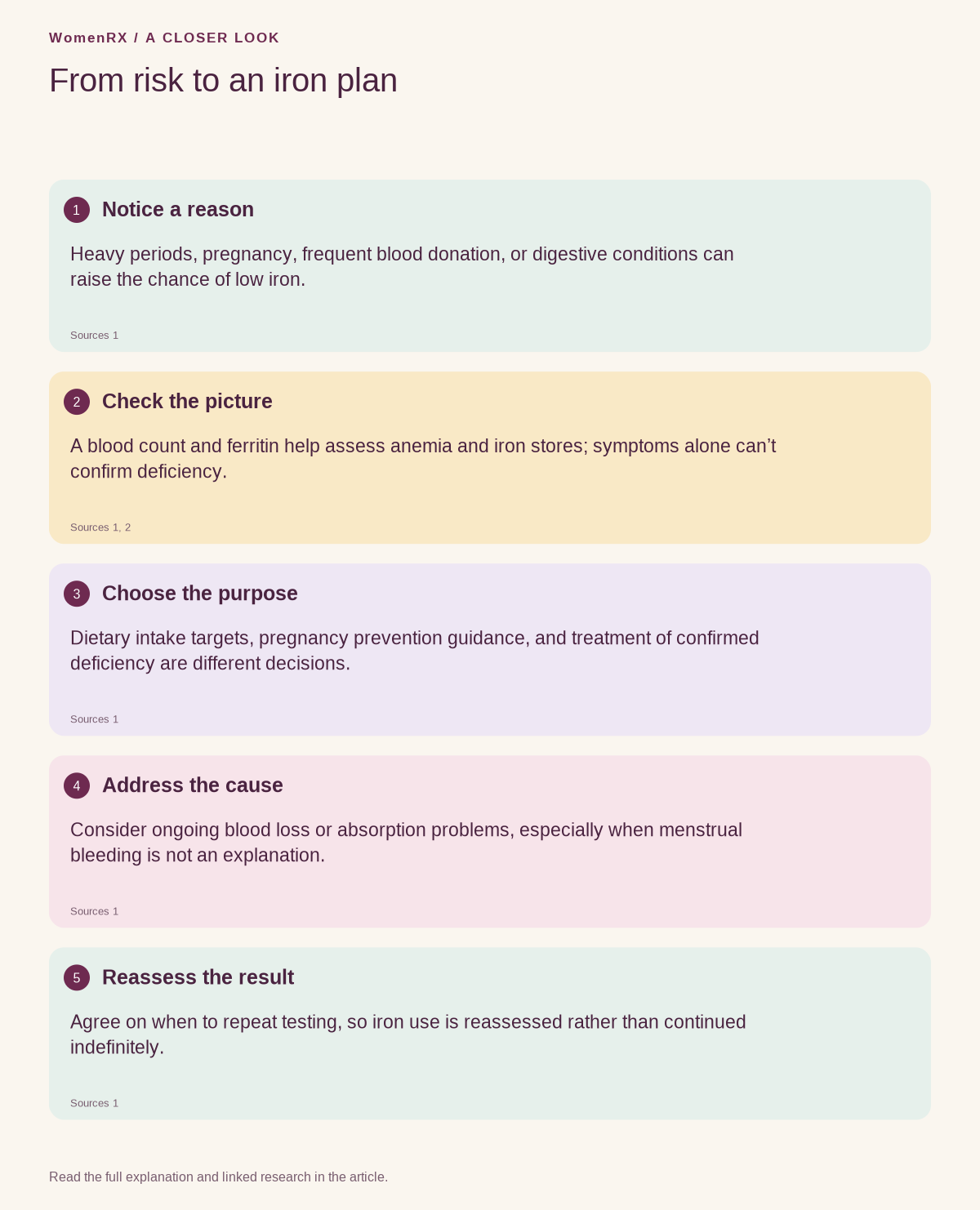
From risk to an iron plan
Notice a reason: Heavy periods, pregnancy, frequent blood donation, or digestive conditions can raise the chance of low iron.1
Check the picture: A blood count and ferritin help assess anemia and iron stores; symptoms alone can’t confirm deficiency.12
Choose the purpose: Dietary intake targets, pregnancy prevention guidance, and treatment of confirmed deficiency are different decisions.1
Address the cause: Consider ongoing blood loss or absorption problems, especially when menstrual bleeding is not an explanation.1
Reassess the result: Agree on when to repeat testing, so iron use is reassessed rather than continued indefinitely.1
Read the figure as text
A decision path that separates reasons to test from the decision to supplement and emphasizes checking the result afterward.- Notice a reason: Heavy periods, pregnancy, frequent blood donation, or digestive conditions can raise the chance of low iron.1
- Check the picture: A blood count and ferritin help assess anemia and iron stores; symptoms alone can’t confirm deficiency.12
- Choose the purpose: Dietary intake targets, pregnancy prevention guidance, and treatment of confirmed deficiency are different decisions.1
- Address the cause: Consider ongoing blood loss or absorption problems, especially when menstrual bleeding is not an explanation.1
- Reassess the result: Agree on when to repeat testing, so iron use is reassessed rather than continued indefinitely.1
More questions, answered
Can I tell I’m iron deficient from symptoms alone?
No. Fatigue, weakness, and concentration problems can occur with iron-deficiency anemia, but symptoms can’t confirm low iron or distinguish it from other causes of anemia. Blood tests help clarify the picture. 1 2
Does a normal hemoglobin mean my iron stores are fine?
Not necessarily. Ferritin can fall as iron stores are depleted, before hemoglobin becomes low. A clinician may consider ferritin and other blood-count measures together. 1
Sources you can check
- Iron - Health Professional Fact SheetAccessed 2026-09-25Return to first citation
- Anemia | MedlinePlusAccessed 2026-09-25Return to first citation
- Iron: MedlinePlusAccessed 2026-09-25Return to first citation