Iron During Pregnancy: What Testing and Supplements Can Tell You
Routine prenatal iron helps prevent deficiency, while treating iron-deficiency anemia calls for a plan based on your blood tests.
Iron needs rise during pregnancy, so iron is often part of routine prenatal care. That’s different from treating iron-deficiency anemia, which may require iron beyond a prenatal vitamin. Hemoglobin testing identifies anemia, while ferritin can help assess iron stores that may fall before hemoglobin does. Your results can guide whether you need further testing, treatment, or follow-up. 1 3 4
Why iron comes up in prenatal care
Pregnancy increases the amount of iron your body needs. Your blood volume and red blood cell production expand as you support the fetus and placenta. Iron helps make hemoglobin, the protein in red blood cells that carries oxygen. 2 3
That’s why iron may be part of a prenatal vitamin even when you haven’t been diagnosed with a deficiency. ACOG guidance summarized by the NIH Office of Dietary Supplements recommends low-dose iron beginning in the first trimester to reduce anemia at delivery. The summary does not specify a dose. If tests show iron-deficiency anemia, ACOG recommends iron supplementation in addition to prenatal vitamins. Routine prevention and treatment are related, but they aren’t the same plan. 1 3
There’s evidence that iron supplementation during pregnancy reduces iron-deficiency anemia, although professional organizations differ on whether everyone without symptoms needs routine screening and supplementation. Your prenatal care team can explain which guidance it follows and how your results affect the plan. 3
Hemoglobin and ferritin answer different questions
A blood count measures hemoglobin and can show whether you have anemia. It cannot, by itself, tell you whether your iron stores are low. Iron stores can decline before hemoglobin falls enough to indicate anemia; ferritin is a blood marker often used to assess those stores. Interpreting iron markers during pregnancy takes care, though, because pregnancy-specific diagnostic thresholds remain uncertain. 3 4
A biomarker subanalysis of 135 nonanemic pregnant participants from a larger randomized trial shows why the distinction matters. At 26 to 30 weeks, 69% to 72% met that study’s ferritin definition of iron deficiency across the supplement schedules studied, while hemoglobin generally remained within the normal range. That finding does not establish how common deficiency is in every pregnancy or which supplement schedule is best. It does show why a normal hemoglobin result and adequate iron stores aren’t interchangeable ideas. 4
The reverse distinction matters too: anemia does not always mean iron deficiency. Anemia can result from blood loss, reduced red blood cell production, or increased red blood cell destruction, and its treatment depends on the cause. If you’re told your hemoglobin is low, it’s reasonable to ask what points to iron deficiency and whether another cause needs consideration. 2
What to discuss before pregnancy and as care continues
If you’re planning pregnancy, bring up a history of anemia or low iron when discussing prenatal supplements. Guidance supports starting folic acid before conception, but that does not make a separate iron supplement or routine preconception iron test the right choice for everyone. If you already take an iron product, include it when you review your supplements. 1 5
During pregnancy, ask which blood tests are planned and when results will be revisited. For context, FIGO, an international professional organization, recommends anemia screening at the first prenatal visit and again at 28 weeks. That is not necessarily the schedule your US practice uses. 5
If you receive a result or an iron recommendation, a few questions can make the next step clearer:
- Is this routine prenatal iron, low iron stores, or iron-deficiency anemia?
- Was ferritin measured, and how does it fit with my hemoglobin result?
- Does my prenatal vitamin already contain iron, and is any additional product meant to treat a diagnosed deficiency?
- Which result will we check again to see whether the plan is working?
Bring your prenatal vitamin’s label if you’re unsure what it contains. If an iron product is hard on your stomach, say so rather than silently stopping it; tolerability is a useful part of the treatment discussion. Unusual tiredness, dizziness, or shortness of breath are also worth mentioning. They can occur with anemia, but symptoms alone cannot identify its cause. 1 2 5
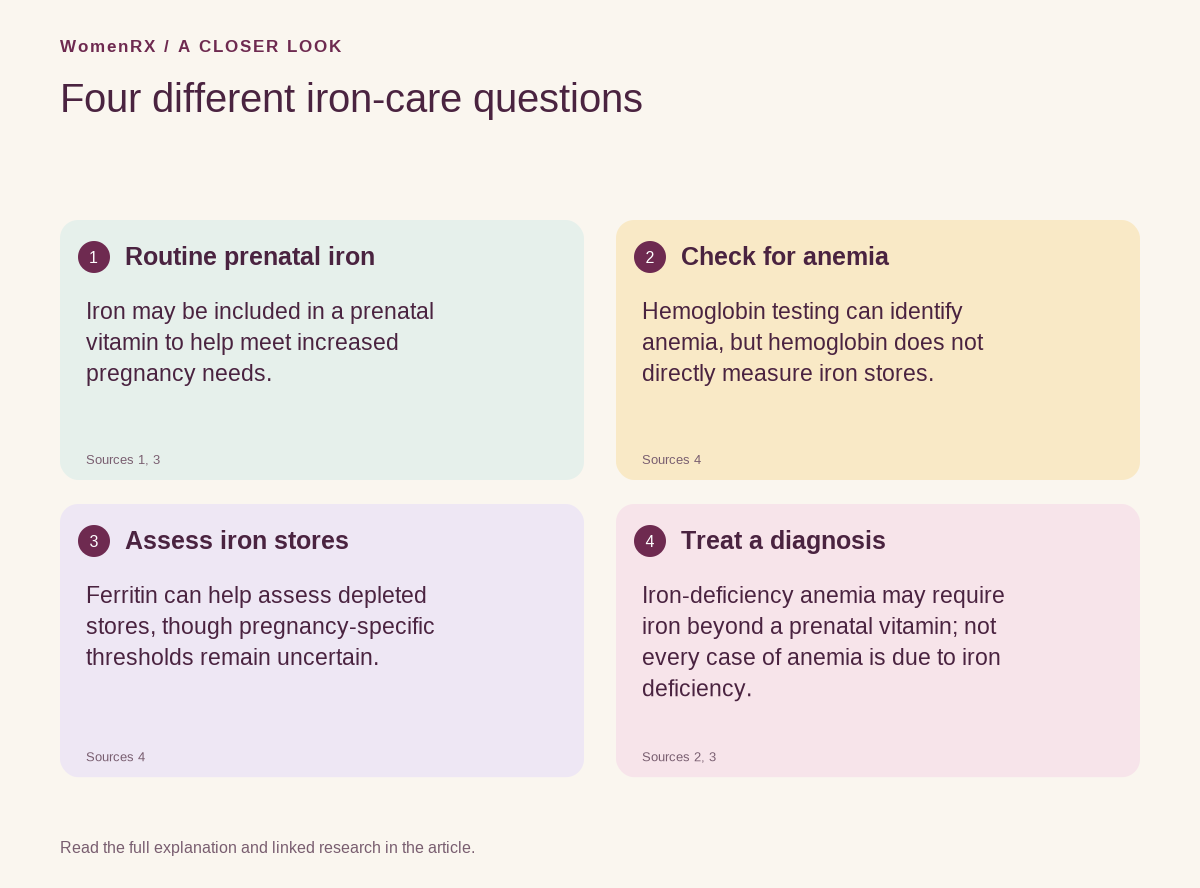
Four different iron-care questions
Routine prenatal iron: Iron may be included in a prenatal vitamin to help meet increased pregnancy needs.13
Check for anemia: Hemoglobin testing can identify anemia, but hemoglobin does not directly measure iron stores.4
Assess iron stores: Ferritin can help assess depleted stores, though pregnancy-specific thresholds remain uncertain.4
Treat a diagnosis: Iron-deficiency anemia may require iron beyond a prenatal vitamin; not every case of anemia is due to iron deficiency.23
Read the figure as text
A prenatal supplement, anemia screening, iron-store testing, and treatment answer different questions.- Routine prenatal iron: Iron may be included in a prenatal vitamin to help meet increased pregnancy needs.13
- Check for anemia: Hemoglobin testing can identify anemia, but hemoglobin does not directly measure iron stores.4
- Assess iron stores: Ferritin can help assess depleted stores, though pregnancy-specific thresholds remain uncertain.4
- Treat a diagnosis: Iron-deficiency anemia may require iron beyond a prenatal vitamin; not every case of anemia is due to iron deficiency.23
More questions, answered
Can my hemoglobin be normal if my iron is low?
Yes. Iron stores can decline before hemoglobin indicates anemia. Ferritin can help assess iron stores, although thresholds for interpreting it during pregnancy remain uncertain. 3 4
Should I add iron if my prenatal vitamin already contains it?
Not automatically. Iron in routine prenatal care serves a different purpose from additional iron used to treat diagnosed iron-deficiency anemia. Ask which purpose applies to you and review all the supplements you take together. 1 3
Sources you can check
- Pregnancy | Pregnant | Prenatal Care | MedlinePlusAccessed 2026-09-25Return to first citation
- Anemia | MedlinePlusAccessed 2026-09-25Return to first citation
- Iron - Health Professional Fact SheetAccessed 2026-09-25Return to first citation
- Impact of oral iron dosing regimens on iron biomarkers during pregnancy: insights from the PANDA trial.Haynes S, Armitage AE, Roy NBA, Morovat A, Drakesmith H, Churchill D, Stanworth SJ. · Blood advances · 2026Return to first citation
- FIGO good practice recommendations on anemia in pregnancy, to reduce the incidence and impact of postpartum hemorrhage (PPH).Ubom AE, Begum F, Ramasauskaite D, Nieto-Calvache AJ, Oguttu M, Nunes I, Malel ZJ, Beyeza-Kashesya J, Wright A, FIGO Committee on Childbirth and Postpartum Hemorrhage. · International journal of gynaecology and obstetrics: the official organ of the International Federation of Gynaecology and Obstetrics · 2025Return to first citation