How to Read a Magnesium Glycinate Label
The number that matters on the label is elemental magnesium, not the weight of the glycinate compound.
Magnesium glycinate isn’t automatically necessary because you’re a woman. Supplement Facts lists elemental magnesium, not the weight of the full compound. Check that amount, your reason for taking it, other magnesium-containing products, and whether kidney problems, pregnancy, breastfeeding, or interacting medicines affect your choice. A small trial combining glycinate with vitamin D didn’t establish a benefit from glycinate alone. 1 2
Start with the reason, not the form
Magnesium has many roles in the body, but that doesn’t mean everyone needs a magnesium supplement. Most healthy people don’t develop symptomatic deficiency from low intake alone; certain digestive conditions, type 2 diabetes, alcohol dependence, and some medicines can raise the chance of inadequate magnesium. Food sources include leafy greens, beans, nuts, seeds, and whole grains. 1
If you’re considering magnesium for a diagnosed deficiency or another medical problem, that’s different from choosing a general supplement. The right amount and form may depend on why your magnesium is low and on how your body absorbs or loses it. Don’t use a general-wellness product label as a treatment plan.
Find the elemental-magnesium amount
Look at the Supplement Facts panel, not just the product name or a large number on the front. The panel declares elemental magnesium, not the weight of the entire magnesium-containing compound. So a label that names magnesium glycinate may show a different, smaller amount of elemental magnesium. Use the Supplement Facts amount when adding up what you take. 1
Include magnesium in other supplements and medicines, such as some antacids and laxatives. 1
The word “glycinate” alone doesn’t tell you how much elemental magnesium is in a serving or establish that it’s the best choice for your goal. Magnesium forms vary in absorption, but differences between some forms don’t establish a special benefit for glycinate. Don’t assume a product is interchangeable with a prescribed treatment just because both contain magnesium. 1
In a 12-week randomized trial completed by 78 women and men who were overweight or obese, magnesium glycinate combined with vitamin D did not improve the measured blood-sugar or bone-turnover outcomes compared with vitamin D alone or placebo. Because magnesium was paired with vitamin D and no women-only results were reported, the trial can’t tell you what glycinate alone would do or establish a general-purpose benefit for women. 2
Don’t mistake a daily requirement for a supplement dose
Recommended dietary allowances are totals from food, beverages, and supplements, not directions to take that amount as a pill. For adult women ages 19-30, the recommended total is 310 mg per day; for ages 31 and older, it’s 320 mg. During pregnancy, the recommended totals are 350 mg per day for ages 19-30 and 360 mg for ages 31-50. During breastfeeding, they’re 310 mg and 320 mg, respectively. 1
The upper limit for adults, including pregnant and breastfeeding adults, is 350 mg per day from supplements and medicines. Magnesium naturally present in food and beverages doesn’t count toward that limit. It’s a safety ceiling, not a target or a recommendation to take that much. If a clinician is treating a diagnosed problem, ask how to interpret the limit for your situation rather than adjusting treatment yourself. 1
Match the safety check to your situation
Kidney health: Your kidneys help remove magnesium. Impaired kidney function or kidney failure raises the risk of magnesium building up, so check with your care team before using a magnesium supplement or magnesium-containing antacid or laxative. 1
Pregnancy or breastfeeding: Your recommended total intake changes by life stage, but that doesn’t mean every pregnant or breastfeeding woman needs a separate magnesium product. Count the elemental magnesium in any supplements and medicines you already use, and review the amount with your pregnancy or postpartum care team if you’re considering adding another product. The adult supplemental upper limit remains 350 mg per day in these life stages. 1
Medicines: Magnesium can reduce absorption of oral bisphosphonates such as alendronate and of tetracycline or quinolone antibiotics, including doxycycline and ciprofloxacin. Timing matters for these medicines; check the specific instructions with a pharmacist or prescriber rather than guessing. Diuretics can change magnesium loss in different ways: loop and thiazide diuretics can increase it, while potassium-sparing diuretics can reduce it. Long-term use of proton pump inhibitors can also be associated with low magnesium. 1
Higher supplemental or medication amounts can cause diarrhea, nausea, and abdominal cramping. Magnesium toxicity is more concerning when kidney function is impaired. If a product causes troublesome digestive symptoms, don’t keep increasing the amount to chase a benefit. 1
A practical label check
Before buying or using a product, ask yourself: What am I taking it for? What is the elemental-magnesium amount per serving? How much magnesium is already in my other supplements or medicines? Do kidney health, pregnancy, breastfeeding, or a medicine interaction change the decision? If the reason is a diagnosed deficiency, use the treatment plan made for that diagnosis rather than choosing an amount from a general supplement label.
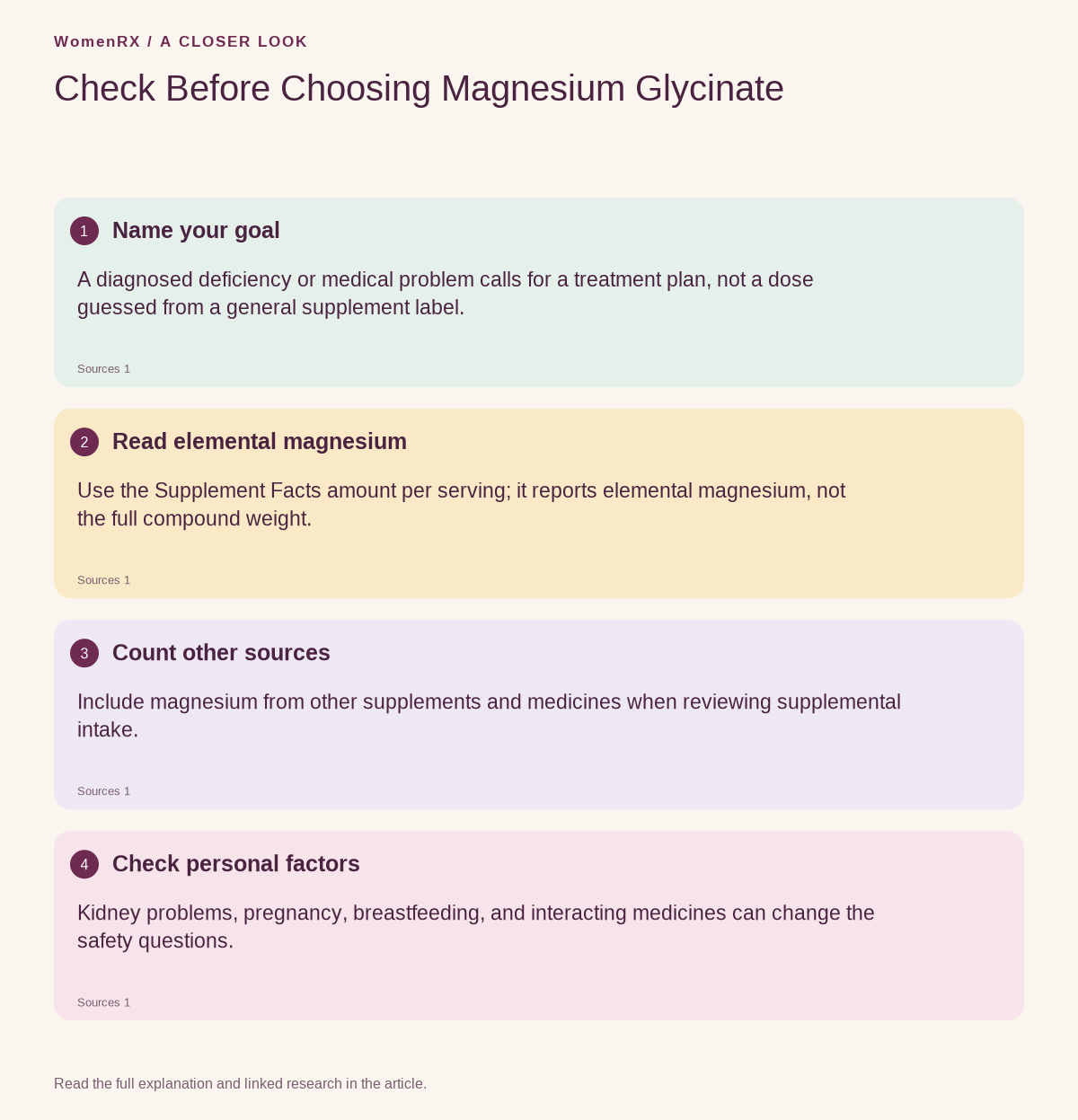
Check Before Choosing Magnesium Glycinate
Name your goal: A diagnosed deficiency or medical problem calls for a treatment plan, not a dose guessed from a general supplement label.1
Read elemental magnesium: Use the Supplement Facts amount per serving; it reports elemental magnesium, not the full compound weight.1
Count other sources: Include magnesium from other supplements and medicines when reviewing supplemental intake.1
Check personal factors: Kidney problems, pregnancy, breastfeeding, and interacting medicines can change the safety questions.1
Read the figure as text
Use these steps to distinguish your reason for taking magnesium, the amount on the label, and personal safety considerations.- Name your goal: A diagnosed deficiency or medical problem calls for a treatment plan, not a dose guessed from a general supplement label.1
- Read elemental magnesium: Use the Supplement Facts amount per serving; it reports elemental magnesium, not the full compound weight.1
- Count other sources: Include magnesium from other supplements and medicines when reviewing supplemental intake.1
- Check personal factors: Kidney problems, pregnancy, breastfeeding, and interacting medicines can change the safety questions.1
More questions, answered
Can a blood test tell me whether I need magnesium?
A serum magnesium test is commonly used, but it doesn’t closely reflect the body’s total magnesium stores or levels in particular tissues. A clinician may consider test results alongside your symptoms, diet, health conditions, and medicines. 1
Does a higher magnesium number on the front mean more elemental magnesium?
Not necessarily. The Supplement Facts panel lists elemental magnesium; the weight of the magnesium-containing compound can be different. Compare the elemental amount per serving and check the serving size. 1
Sources you can check
- Magnesium - Health Professional Fact SheetAccessed 2026-09-25Return to first citation
- Combined vitamin D and magnesium supplementation does not influence markers of bone turnover or glycemic control: A randomized controlled clinical trial.Dall RD, Cheung MM, Shewokis PA, Altasan A, Volpe SL, Amori R, Singh H, Sukumar D. · Nutrition research (New York, N.Y.) · 2023Return to first citation